What Is Urethral Sounding? A Complete Guide to Safety, Pleasure & Getting Started
Discover what urethral sounding is, why people enjoy it, and how to start safely. Covers risks, equipment, step-by-step technique, and aftercare.
 By Kevin Voss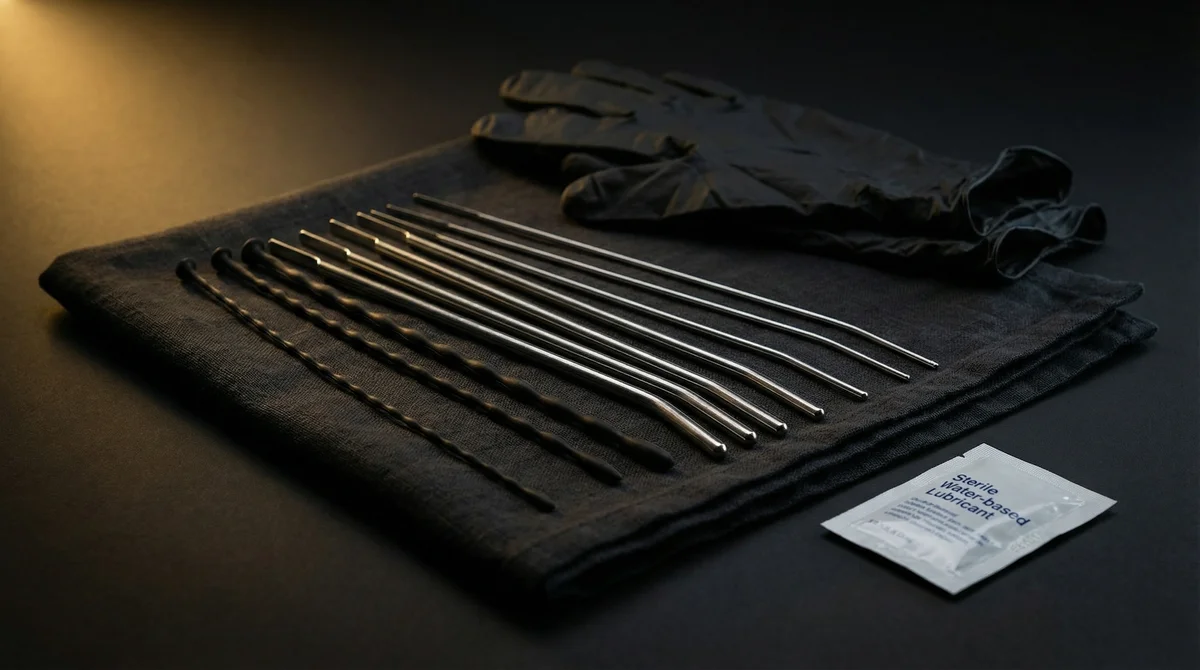
What is urethral sounding? It's the practice of inserting a smooth, sterile rod or toy into the urethra for sexual pleasure. Urethral sounding started as a medical procedure — doctors have used sounds to widen the urethra and clear blockages for centuries — but it's become an increasingly popular form of sexual exploration.
If you're reading this, you're probably curious, maybe a little nervous, and definitely wondering if people actually do this. They do. I've been doing it for about ten years, and I started this site because the resource I needed as a beginner simply didn't exist. Everything out there was either a clinical article that treated sounding like a medical emergency, or a product page trying to sell you something.
This guide covers what sounding actually is, why it feels good, what the real risks are, and how to try it safely. I'm not a doctor. This is based on my personal experience and research. Always consult a healthcare provider for medical concerns.
What Is Urethral Sounding?
Urethral sounding is the insertion of a smooth, purpose-built instrument into the urethra, the tube that carries urine out of your body. The instrument itself is called a "sound," which is where the name comes from. It's not about audio. It's a medical term for a probe used to explore or widen a passage.
In a clinical setting, urologists use sounds to treat urethral strictures (narrowing), clear blockages, and access the bladder. The practice is centuries old. But people discovered that the urethra is packed with nerve endings, and stimulating them can feel intensely pleasurable. That's how recreational sounding was born.
You might also hear it called urethral play, cock-stuffing, or catheter play. Some people use the term "bougies" for the instruments themselves. Regardless of the label, the core practice is the same: a smooth object goes into the urethra, and when done right, it feels incredible.
You'll also see two closely related but distinct categories on store shelves: dilators (longer rods used to gradually widen the urethra over a planned schedule) and penis plugs (shorter inserts worn in the first inch or two). The penis dilator buyer's guide covers how a dilator differs from a sound, which is the most common point of confusion.
The first time I heard the word "sounding," I genuinely thought someone was talking about music production. Took me a few search results to realize nobody was discussing audio equipment. If you're here because a Reddit thread or a partner brought this up, welcome. You're in the right place.
Why Do People Try Urethral Sounding?
The Anatomy Behind the Pleasure
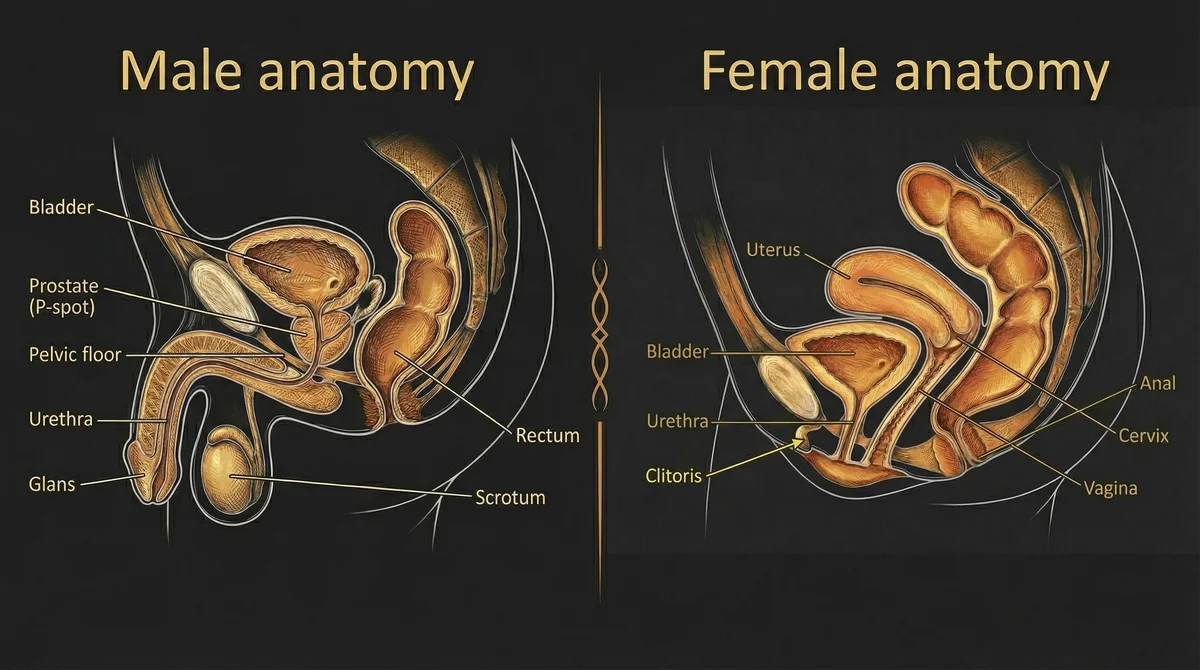
The urethra isn't just plumbing. It runs through some of the most nerve-dense tissue in your body.
In people with a penis, the urethra passes through the glans (the head), which is already one of the most sensitive areas. A sound stimulates these nerves from the inside, a sensation that external touch can't replicate. Go deeper, and the sound can directly stimulate the prostate (sometimes called the P-spot), which many people describe as producing some of the most intense orgasms they've ever experienced.
In people with a vulva, the urethra is shorter but passes through tissue very close to the clitoris and the area often called the G-spot. Sounding stimulates these structures from a completely different angle than any other form of play.
Researchers describe this as the "reflexogenic pathway": the nerves lining the urethra (the dorsal nerves of the penis or clitoris) contribute directly to sexual arousal when stimulated. It's not just psychological. There's a real physiological reason this feels good. The anatomy is only half the story, though. For the psychology half (the motivations, the community, who gets into this and how to decide if you should), see my deep-dive on the sounding kink and why people do it.
What Does It Feel Like?
The honest answer: it depends on you. But here's what I can tell you from experience.
The first time is more strange than anything else. There's a feeling of fullness, this deep, internal pressure that surface stimulation can't touch. Many beginners describe a "need to pee" sensation that fades as you relax. That's normal and temporary. For the full read on how sounding actually feels across sessions and bodies, I cover that in its own guide.
As you get comfortable, the sensations shift. The gentle stretch of the urethral opening around the sound. Warmth radiating outward as your body relaxes. And if you're using a heavier steel sound, the weight of it sliding deeper on its own is unlike anything else.
I've had orgasms with a sound inserted that were on a completely different level: longer, deeper, more full-body than anything I'd experienced before. Not everyone gets there on the first try, and some people find it's not for them. Both are completely valid.
The Psychology of Taboo
There's a mental component too. Most people have explored vaginal and anal sex, but the third hole? That's uncharted territory for almost everyone. Sharing something that few partners have ever gone near creates a connection that's hard to replicate with more familiar acts.
Sounding feels transgressive in a way that many people find genuinely arousing. You're doing something with your body that most people haven't even considered, and that boundary-pushing carries its own thrill.
For couples, the vulnerability involved (letting someone insert something into an incredibly sensitive part of your body) builds a level of trust and intimacy that goes beyond what conventional sex offers. And the potential for stronger, different orgasms keeps people coming back.
Is Urethral Sounding Safe?
The short answer: yes, when done properly. But the risks are real, and ignoring them is how people end up in emergency rooms.
Sounding isn't inherently dangerous, despite what you'll read online. The urethra is designed to have things pass through it. But it's delicate tissue, and introducing anything foreign carries risk. The key is minimizing those risks through proper technique, hygiene, and the right equipment. The full protocol lives in my sounding safety guide.
Risks You Should Know About
UTIs are the most common issue. Bacteria on a poorly sterilized sound can cause urinary tract infections — the NIDDK notes that bladder infections happen when bacteria enter the bladder and multiply. This is almost entirely preventable with proper sterilization.
Micro-tears and tissue damage happen when people rush, skip lube, or use objects that aren't designed for sounding. The urethral lining is thin and easily scratched.
Urethral stricture (scarring that narrows the urethra) can develop from repeated trauma. According to Mayo Clinic, urethral injury and infection are common causes of stricture disease. This is a long-term risk from rough or frequent sounding without adequate care.
Object getting stuck is rare with purpose-built sounds (they're flared at the end for this reason), but it does happen with improvised objects. Never use anything that isn't specifically designed for urethral insertion.
Minor bleeding: a small amount of pink-tinged urine after your first session isn't unusual. But bright red blood means stop immediately.
When to get help immediately: Fever or chills after sounding. Inability to urinate. Persistent bright red bleeding. Worsening pain that doesn't fade within hours. Unusual discharge. Any of these mean you need a doctor, not tomorrow, today.
Who Should Not Try Sounding
Some conditions make sounding much riskier:
- An active STI outbreak (herpes, gonorrhea, chlamydia)
- A history of frequent urinary tract infections
- Previous urethral injury or surgery
- Prostate conditions (prostatitis, BPH, prostate cancer)
- Abnormal urethral discharge
- Being under the influence of alcohol or drugs (impaired judgment + numbed pain signals = bad combination)
If any of these apply, talk to a kink-friendly healthcare provider before trying sounding. It's not necessarily off the table, but you need professional guidance.
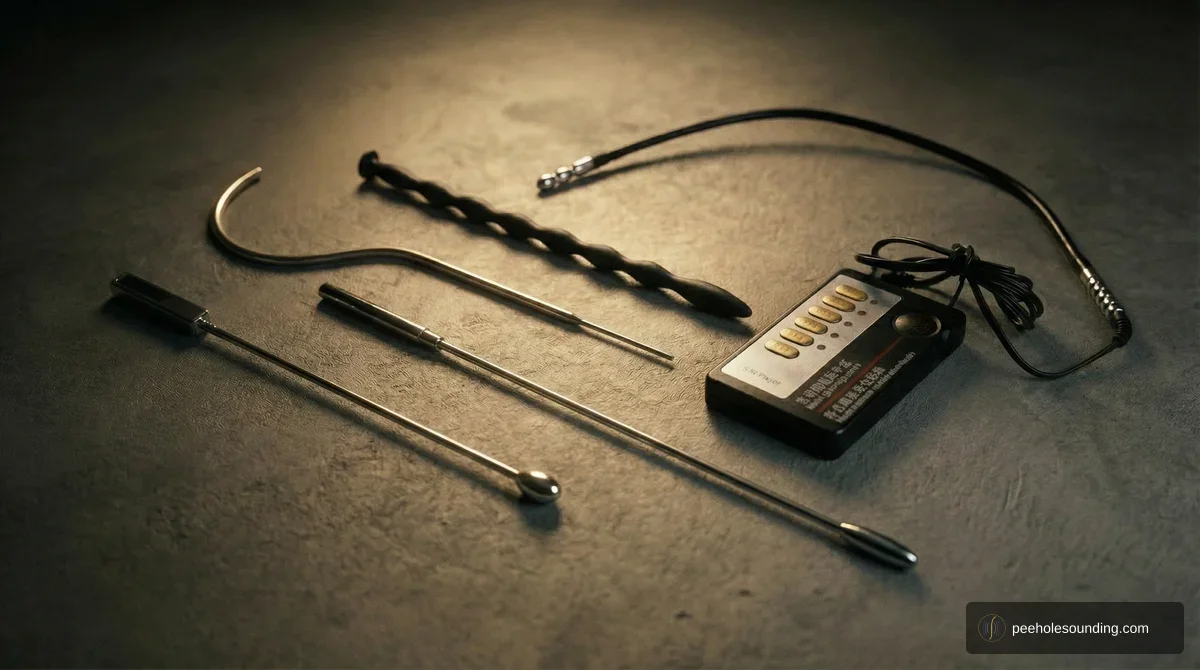
Types of Urethral Sounds
Not all sounds are the same, and picking the right one matters, especially for your first time. This is the short version. If you want every shape covered properly, that's my full breakdown of sound types.
Plugs vs Sounds vs Catheters
Plugs are short, usually an inch or two, and designed to sit in the urethral opening. Many have a decorative ball or ring on the outside. They're about the feeling of something being in you rather than deep stimulation. Great for a taste of the sensation without committing to depth.
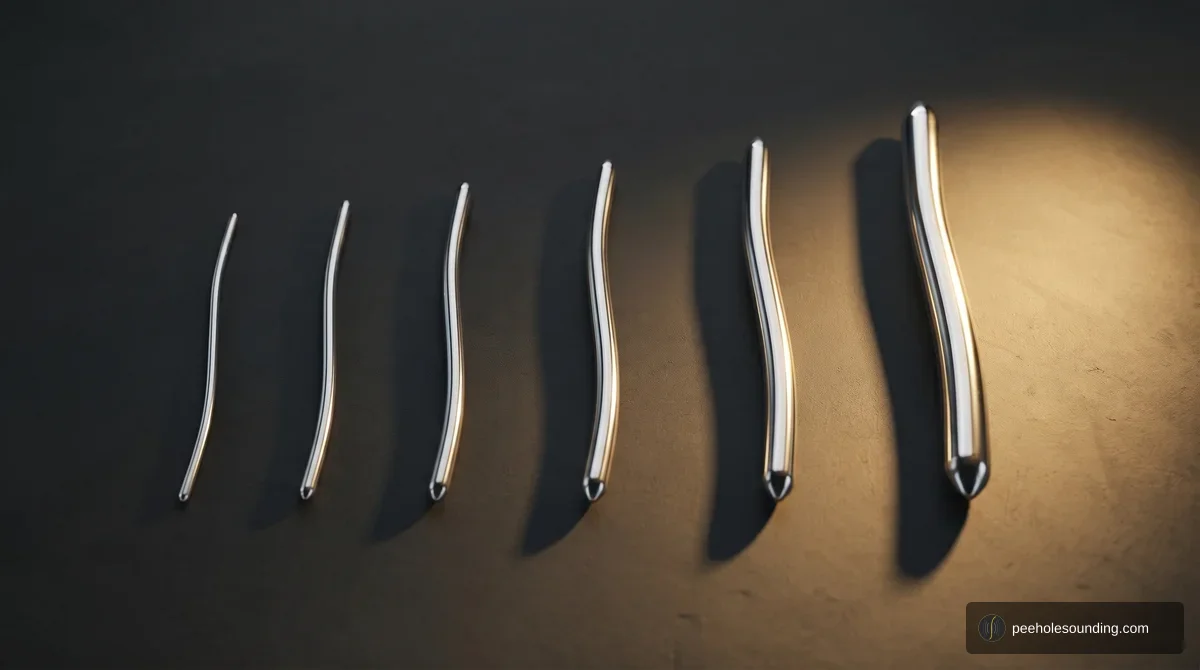
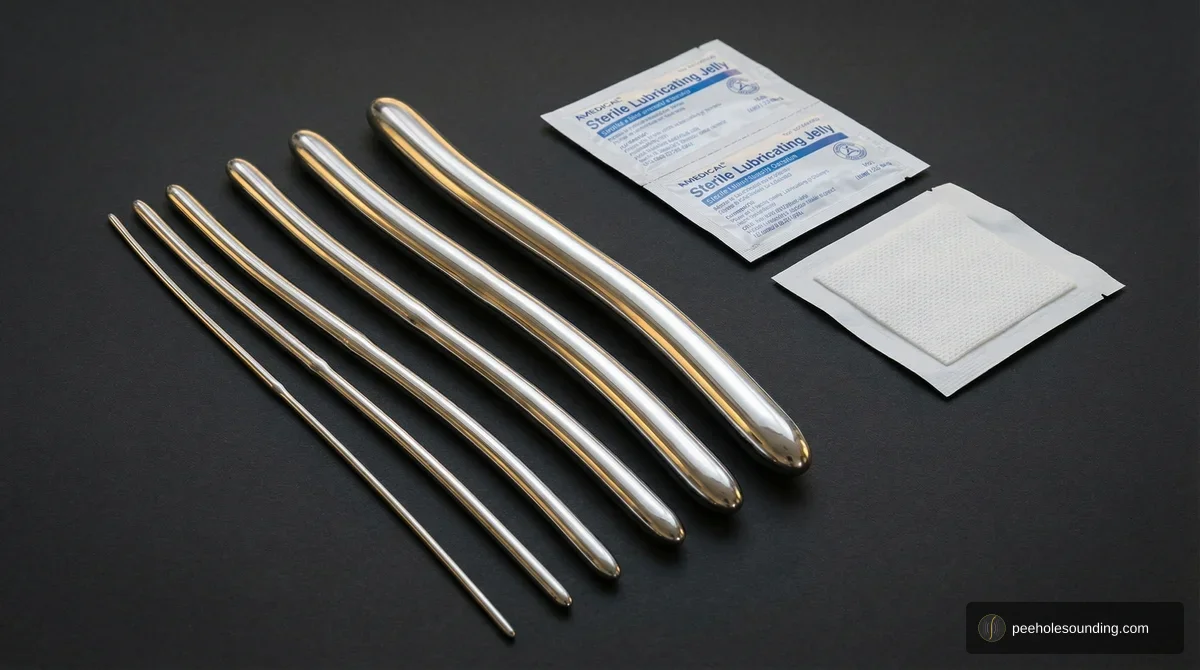
Sounds (sounders) are longer rods, typically 3 to 8 inches, designed for deeper insertion. These are what most people think of when they hear "urethral sounding." They come in graduated sets so you can start small and work up.
Catheters are flexible, medical-grade tubes that go the deepest. They're a more advanced option. If you're just starting out, stick with sounds.
Silicone vs Steel: Which Is Better for Beginners?
This is one of the most common questions I get, so here's the straight answer:
Stainless steel is smooth, heavy, and easy to sterilize by boiling. The weight means gravity does most of the work during insertion; you don't push it, you guide it. It's less forgiving of mistakes, but the smoothness makes it glide in with minimal friction. Most experienced practitioners prefer steel. I started with steel, and I still reach for it most often.
Silicone is softer, more flexible, and gentler on tissue. It's more forgiving if you accidentally angle it wrong. The trade-off: silicone has more surface friction, so it needs more lube and more manual guidance. You can't boil most silicone for sterilization, so check the manufacturer's instructions.
My recommendation: if you're nervous, start with silicone for the forgiveness factor. If you can handle "go slow, let gravity work" as your mantra, steel is actually easier to insert and the better long-term investment.
Understanding Sizes and French Gauge
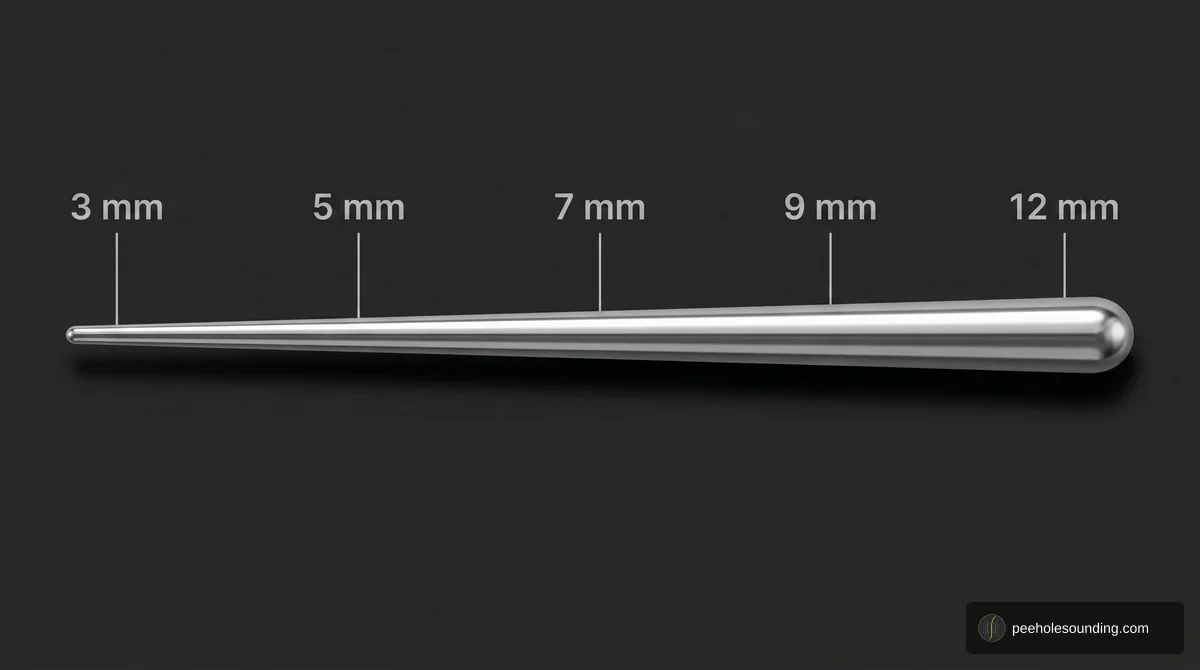
Sounds are measured using the French gauge (Fr) system (full Fr / mm / inches reference if you want every size at once). Higher numbers mean thicker sounds. Which size you actually start with is its own decision, and I walk through it in the sizing guide. A quick reference:
- 8 Fr (2.7mm): thin, for experienced users
- 10 Fr (3.3mm): common beginner starting point
- 12 Fr (4.0mm): moderate
- 14 Fr (4.7mm): intermediate
Here's a counterintuitive tip from both my experience and the medical literature: don't start with the thinnest sound available. A very thin sound is more likely to poke or scratch because it concentrates pressure on a tiny point. A slightly thicker sound (10-12 Fr) distributes pressure more evenly and is actually safer for beginners.
For a deeper dive into sizing, check out our beginner's guide to urethral dilation, which covers progression in detail.
How to Do Urethral Sounding Safely: Step by Step
This is the practical section. Follow these steps in order.
Step 1: Sterilization and Hygiene
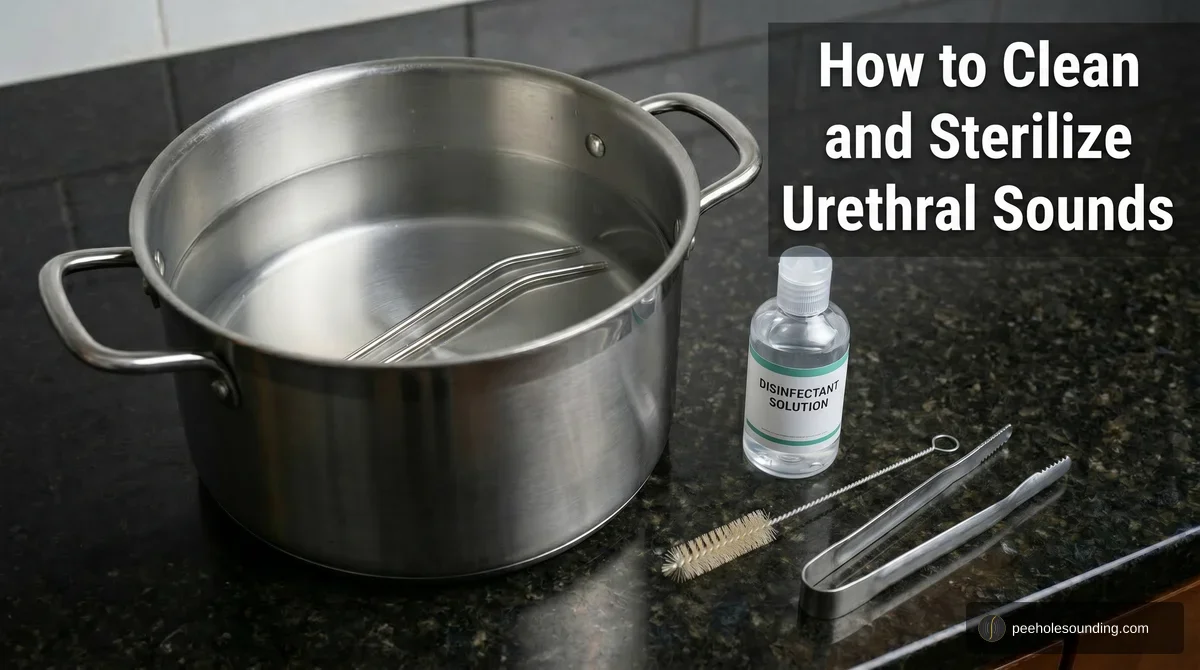
Sterilization isn't optional. It's not a suggestion. It's the single most important thing you do every session.
For steel sounds: submerge them in a rolling boil for a full 10 minutes, or soak in a betadine solution. For silicone: follow the manufacturer's cleaning instructions, since some can be boiled and others can't. Every method with its timings is in my sterilization guide.
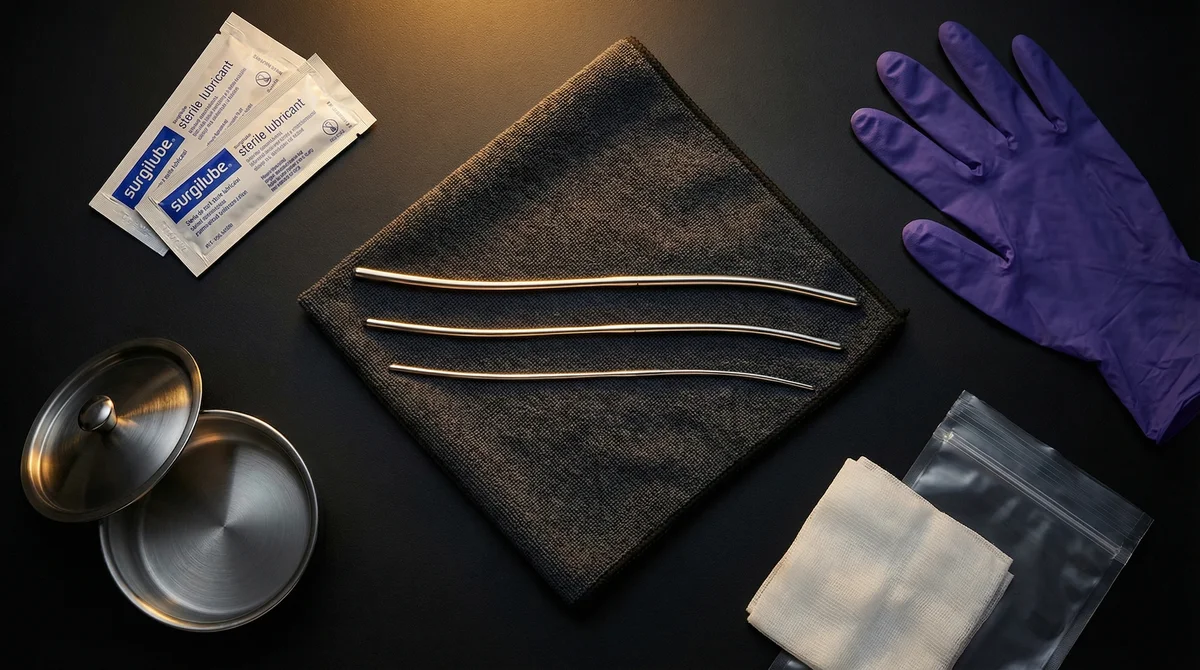
Wash your hands thoroughly with unscented soap. Wash your genital area the same way. Lay out a clean towel. Set your sounds on it. Don't drop them on the floor; if you do, sterilize again.
Step 2: Choosing the Right Lube
Use a sterile, water-based lubricant without fragrance, flavoring, glycerin, or parabens. Individually wrapped, medical-grade lube packets are ideal. Which products actually qualify, and which ones to put back on the shelf, is in my lube guide.
Never use numbing lube. Pain is your body's signal that something is wrong. If you numb the pain, you can't feel when you're causing damage. And you cannot use too much lube for this. Apply it generously to both the sound and your urethral opening.
Step 3: Getting Into Position
Get comfortable. Sit, stand, lie down, whatever works for you. The only thing that matters is that you can relax.
If you have a penis, get partially erect, not fully hard. A full erection tightens the urethral opening and makes insertion harder. If you have a vulva, gently spread the labia to access the urethral opening.
Take a breath. Relax your pelvic muscles. Rushing is how people hurt themselves.
Step 4: Insertion
Use one hand to gently open the urethral opening. Use the other to position the sound at the tip.
For steel sounds: hold the sound vertically and let gravity pull it in. Don't push. Guide it gently, but let the weight do the work.
For silicone sounds: you'll need to apply gentle, steady pressure since they're lighter. Go slow.
If you feel resistance or pain, stop. Don't force it. Remove the sound, add more lube, and try again. Or try a slightly smaller size. The biggest mistake I see beginners make is trying to push through resistance. Your urethra is telling you something. Listen to it, and if you are not sure what it is saying, does sounding hurt walks through every sensation and what each one means.
Step 5: Exploration and Stimulation
Once the sound is in and you're comfortable, experiment. Gently move it in and out in small increments. Try different angles. Pay attention to what feels good.
You or a partner can massage the genital area externally while the sound is inserted. Some people use a vibrator on the outside for additional stimulation. And yes, if you're with a partner, having them hum against the end of the sound creates vibrations that travel down the entire length. It sounds strange. It feels incredible.
Step 6: Removal and Aftercare
Remove the sound slowly and gently. Add more lube near the opening if it feels tight. If you have a penis, wait until you're less erect before removing.
Urinate immediately after removal. This flushes out any bacteria or lube that entered the urethra. It may sting or burn slightly for a day or two; that's normal. If the burning lasts beyond 48 hours, see a doctor.
Clean everything again: hands, genitals, the sound. Sterilize the sound and store it somewhere clean and dry.
Sounding for Different Bodies
Male Urethral Sounding
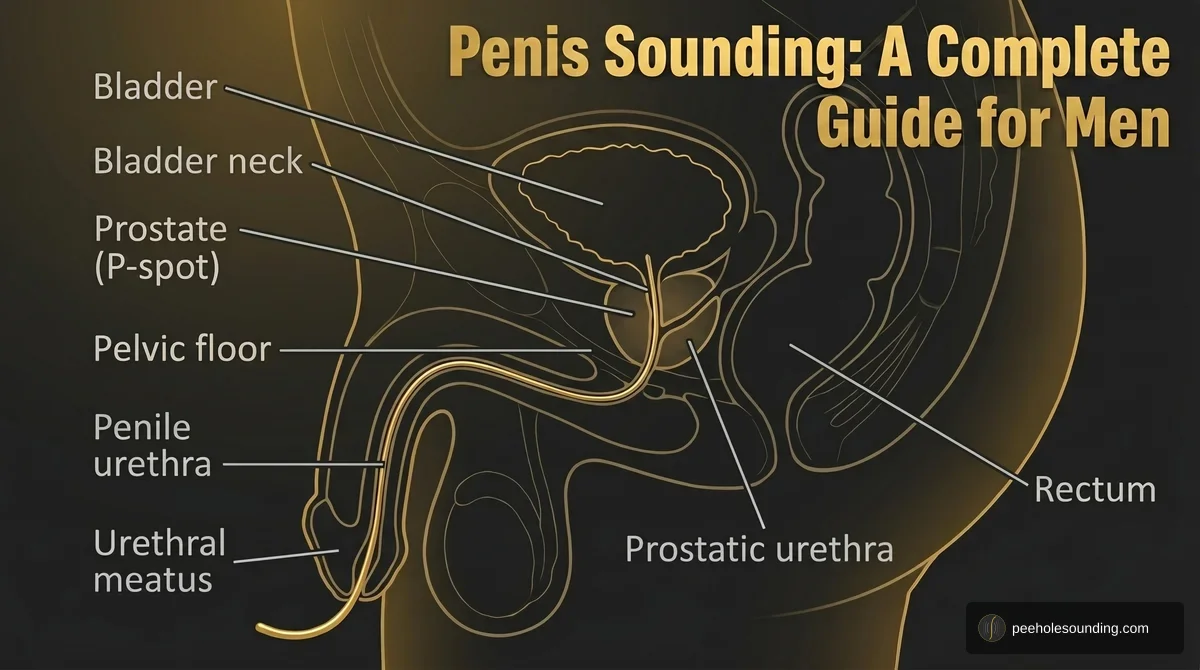
The male urethra is roughly 7-8 inches long (the StatPearls histology reference on NCBI puts the average at about 20 cm) and follows a curved path through the penis, past the prostate, and into the bladder. This length means more to explore, but also more anatomy to work with carefully.
The curve matters: the urethra bends as it passes through the pelvic floor, which is why curved sounds (like Van Buren sounds) exist for deeper insertion. Beginners should stick with the straight section, the first few inches, until they're comfortable.
For a detailed guide specifically for men, including prostate technique and male-anatomy sizing, see our penis sounding guide for men.
Female Urethral Sounding
The female urethra is much shorter, roughly 1.5 inches, which means smaller sounds and shallower depth. But shorter doesn't mean less pleasurable. The proximity to the clitoris and G-spot means sounding can produce unique, intense stimulation.
For a detailed guide specifically for women, including anatomy tips and recommended starter sounds, check out our female urethral sounding guide.
Sounding Is for Everyone
Sounding isn't limited by gender, orientation, or experience level. I've explored this with partners of different genders. The anatomy differs, the communication basics don't.
If you're trans or non-binary, your anatomy may not match the general male/female categories above, and that's completely fine. Work with the body you have, start small, and let sensation guide you.
Sounding with a Partner
Partner sounding adds layers of trust, vulnerability, and intimacy. It also adds complexity: you're handling someone else's most sensitive tissue.
Communication comes first. Discuss boundaries before you start: how deep, what sounds, what the stop signal is. A safeword is non-negotiable. "Stop" works fine, but agree on it explicitly.
The person being sounded should control the pace. The inserter's job is steady hands and patience. Go even slower than you think you need to. Verbal check-ins throughout: "Does this feel okay?" "More lube?" "Want me to stop?"
Aftercare matters. Sounding is physically and emotionally intense. Talk about it afterward. Check in with each other.
What to Do If a Sound Gets Stuck
Don't panic. Panicking tenses your muscles, which makes it worse.
First, try to relax. Take deep breaths. If the sound has a flared end (it should), it won't travel further than where it is. Try adding more lube around the opening. Sit in warm water; this relaxes the tissue and may help the sound slide out.
Gently feel from the outside to locate the tip. Try pressing softly from outside to encourage it downward.
If it won't come out after gentle attempts: go to the emergency room. Be honest with the medical staff. They have seen this before. This is not the most unusual thing that's walked through their doors this week. Getting embarrassed is understandable. Not getting help is dangerous.
When to See a Doctor
See a healthcare provider if you experience any of the following after sounding:
- Fever or chills, a sign of possible infection
- Inability to urinate, which could indicate swelling or obstruction
- Persistent bright red bleeding (minor pink-tinged urine is normal; bright red is not)
- Pain that gets worse instead of fading within a few hours
- Unusual discharge from the urethra
- A sound that won't come out: don't wait on this one
If you feel awkward bringing it up, try: "I was using a urethral sound and I'm experiencing [symptom]." Doctors and nurses are trained professionals. They want to help, not judge.
Frequently Asked Questions
Related Guides
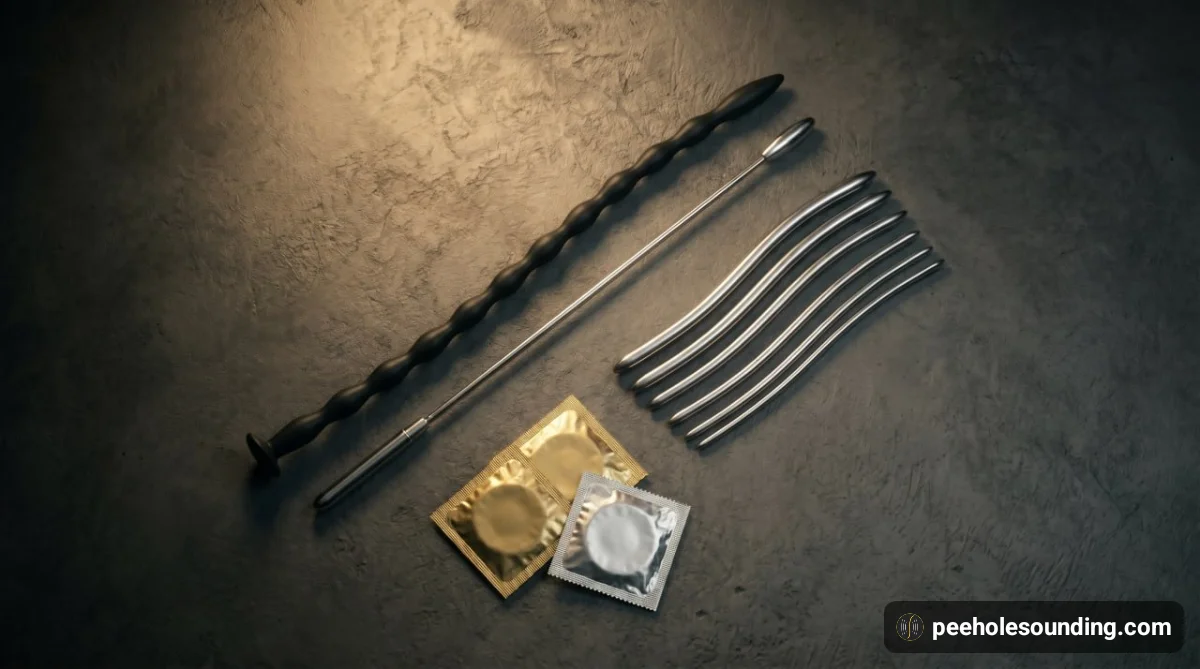
Urethral Play: The Complete Guide to Sounds, Plugs, Stretching & Vibration
Jun 19
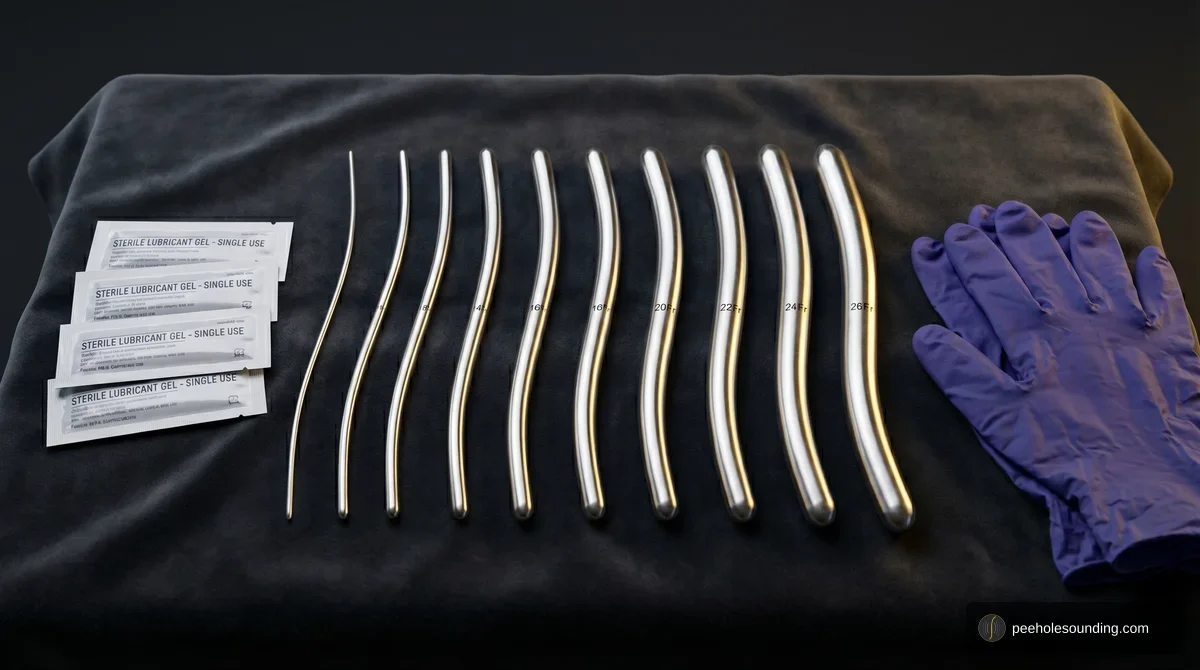
Urethral Sounding for Beginners: Sizes & First Session
Apr 5
Sounding Kink: Why People Do It & How to Start
Jun 7

Sounding Pleasure: What It Feels Like & Why People Chase It
Feb 22

Female Urethral Sounding: Beginner Techniques & Safety
Mar 30

Sounding Myths Debunked: 10 Misconceptions That Keep People From Exploring Safely
Mar 1
Penis Sounding for Men: Sizes, Safety & Prostate Technique
May 9
Sounding Rods Sizes Chart: French Gauge to mm to Inches
Apr 28
Urethral Stretching Guide: Safe Progressive Dilation for Beginners
Apr 24
Is Sounding Safe? Sounding Safety Protocols & Risks
Mar 5
Sounding Toy Guide: Types, Materials & How to Choose
Mar 10
How to Insert a Urethral Sound (Step-by-Step)
Mar 25
How to Clean and Sterilize Urethral Sounds
Mar 20