Female Urethral Sounding: Beginner Techniques & Safety
Step-by-step female sounding guide covering anatomy, sizing, sterilization, insertion technique, orgasm tips, and aftercare for your first session.
 By Kevin Voss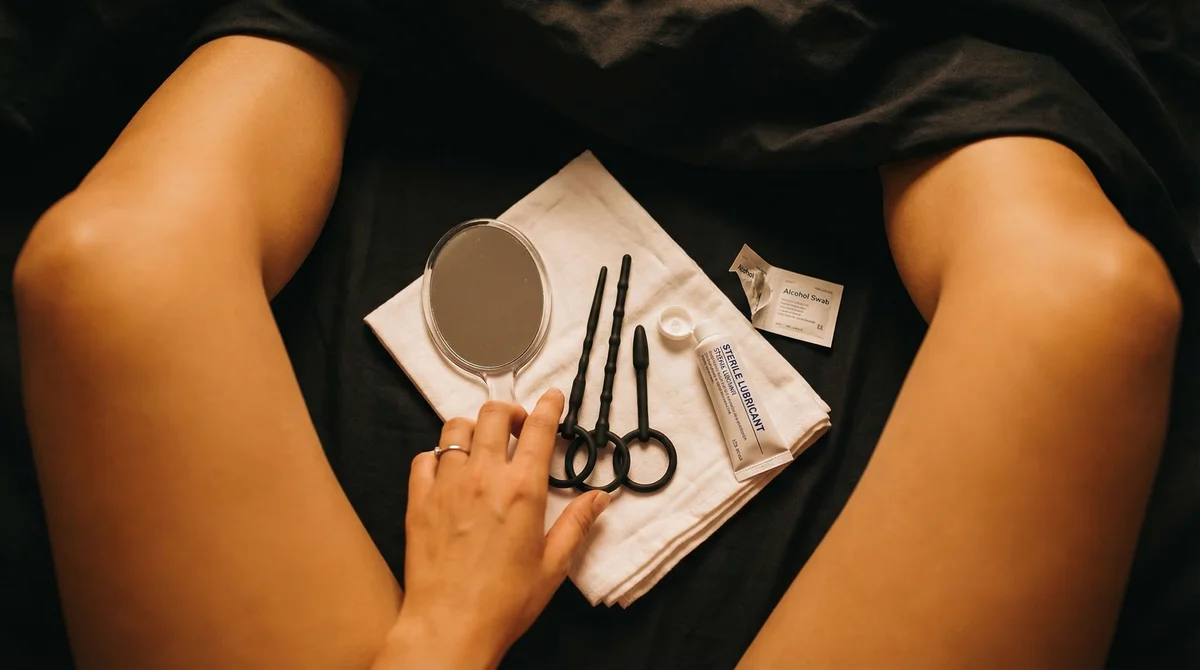
I've been practicing sounding for about ten years, and some of the most rewarding experiences I've had were introducing women partners to female urethral sounding for the first time. Every single one of them started with the same mix of curiosity and nervousness. And every one of them wished there had been a straightforward guide written specifically for them.
This is that guide. Whether you're exploring solo or with a partner, curious about the sensations, or just want to understand what female sounding actually involves before deciding if it's for you, I'll walk you through everything step by step. No judgment, no rushing, just honest practical information from someone who's actually done this.
I'm not a doctor. This guide is based on my personal experience with partners and years of community knowledge. If you have specific medical concerns, talk to a healthcare provider.
What Is Female Urethral Sounding?
Female urethral sounding (also called peehole sounding, urethral play, or simply female sounding) is the practice of inserting smooth, sterile rods called sounds into the urethra for sexual pleasure. If sounding is entirely new to you, start with my intro to urethral sounding first — this guide assumes you already know what sounds are and how the practice works. The urethra is lined with thousands of nerve endings, and for many women, stimulating them produces sensations that nothing else can replicate.
Women explore sounding for different reasons. Some are drawn to the unique internal stimulation that sits right between the clitoris and vaginal canal. Others discover it enhances their orgasms or adds a new dimension to partner play. And some are simply curious. That's reason enough.
This isn't a fringe practice. Thousands of people do this safely. The key is preparation, the right equipment, and patience with yourself.
Sounding is also only one way in. If you want the wider picture first, including external stimulation that needs no equipment at all, my guide to female urethral play maps the whole range and what each step actually feels like.
Can Women Do Urethral Sounding?
Yes — and in my experience, women often take to it more easily than they expect. The female urethra is shorter and straighter than the male one, so there's less distance to cover and fewer curves to work around. The fundamentals don't change: sterile sounds, the right size, plenty of lube, and patience. What's different is the anatomy and the landmarks — and that's exactly what the rest of this guide walks you through.
Understanding Female Urethral Anatomy
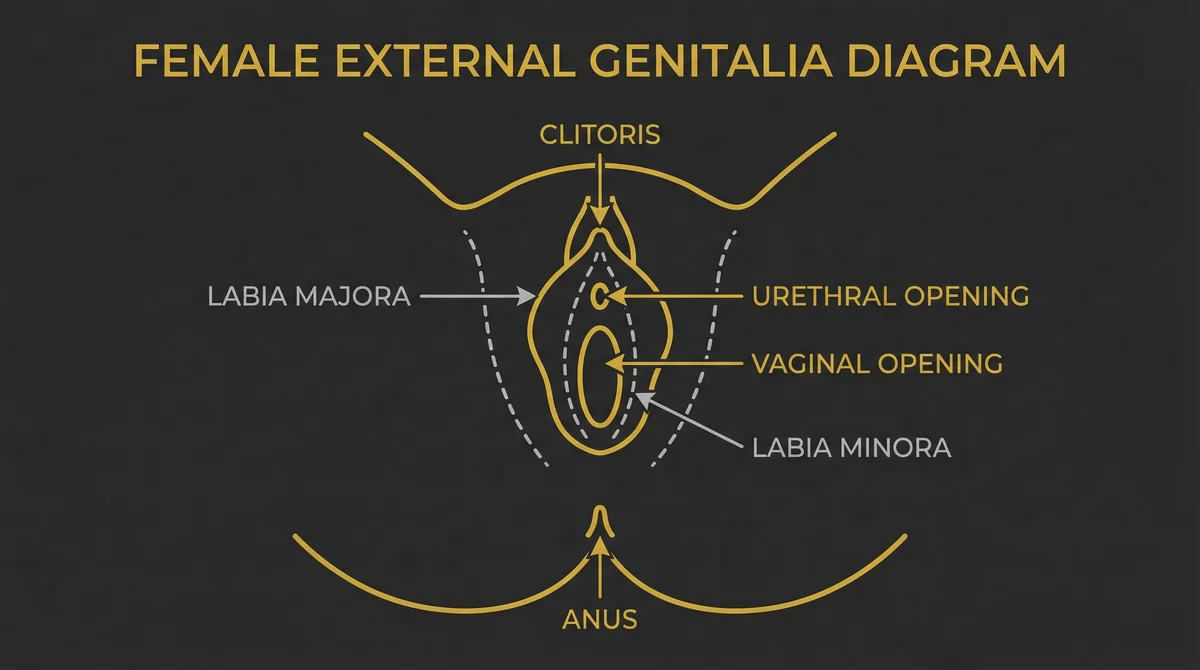
The female urethra is a short tube, roughly 1.5 to 2 inches (about 3.5 to 5 cm) in length, that connects the bladder to the outside of the body. Its opening sits between the clitoris and the vaginal opening. Peer-reviewed anatomical studies published via the NIH/NCBI Bookshelf confirm this short anatomical course from the bladder neck to the external urethral orifice.
That's much shorter than the male urethra, which runs about 8 inches through the length of the penis. For women, this means you won't be inserting sounds very deep. But it also means there's less distance to navigate, which makes learning easier. The shorter female urethra is also why women are far more prone to urinary tract infections — something the NHS notes affects roughly half of UK women at some point in life — so hygiene during sounding is non-negotiable.
Here's why it feels good: the urethra passes through tissue rich in nerve endings that it shares with the clitoris. When you stimulate the urethra from the inside, you're activating nerves that are directly connected to the same structures responsible for clitoral pleasure. It's a deep, internal pressure that surface stimulation can't replicate.
If you're thinking "this sounds like a gynecologist visit" – it's nothing like that. At the doctor's office, you're not aroused, the instruments are clinical, and nobody's prioritizing your comfort. With sounding, you're aroused, you're in control, and the rods are much smaller and smoother than anything a doctor uses. Arousal relaxes the tissue, increases blood flow, and makes the whole experience pleasurable rather than clinical. It's a completely different situation.
What You'll Need
Choosing Your First Sounds
For your first time, I recommend starting with silicone sounds. Silicone is flexible, forgiving, and if you accidentally go slightly too far, it bends rather than causing damage. That margin of safety matters when you're learning.
Stainless steel sounds are the other main option. They're easier to sterilize, incredibly smooth, and many experienced practitioners prefer them. But they're rigid, which means there's a slightly higher chance of a mistake while you're still learning. Save steel for after you've gotten comfortable with the basics.
Whichever material you choose, buy a set with multiple sizes. You'll need the range to find what fits comfortably and to progress gradually.
Sizing: Where to Start
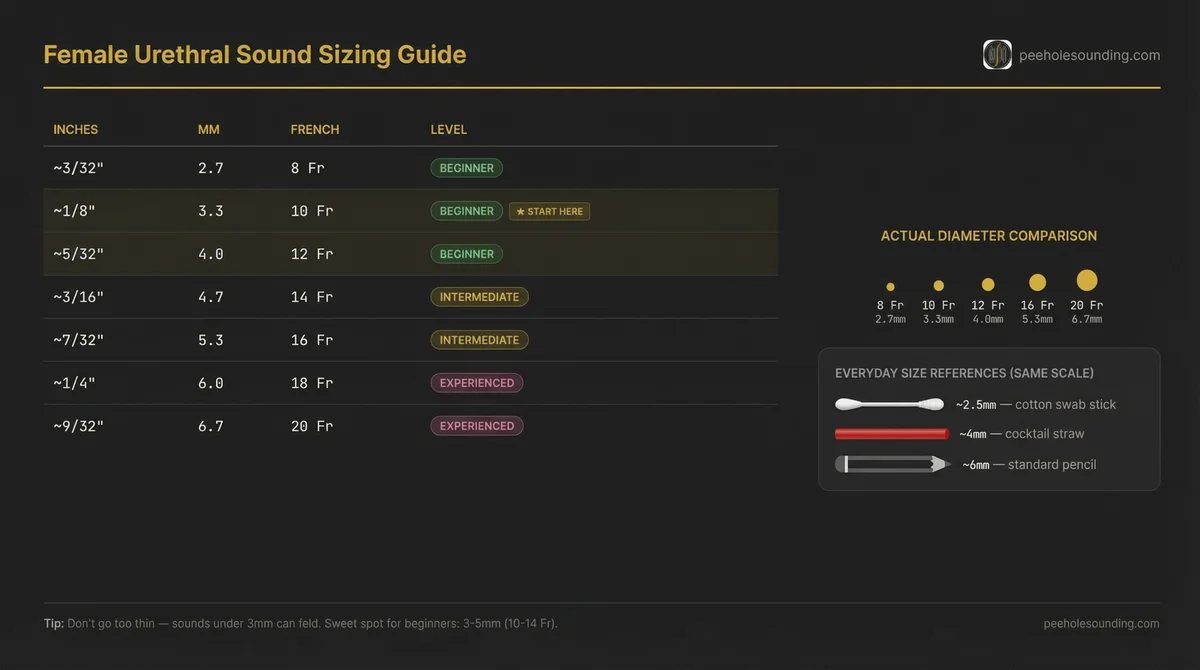
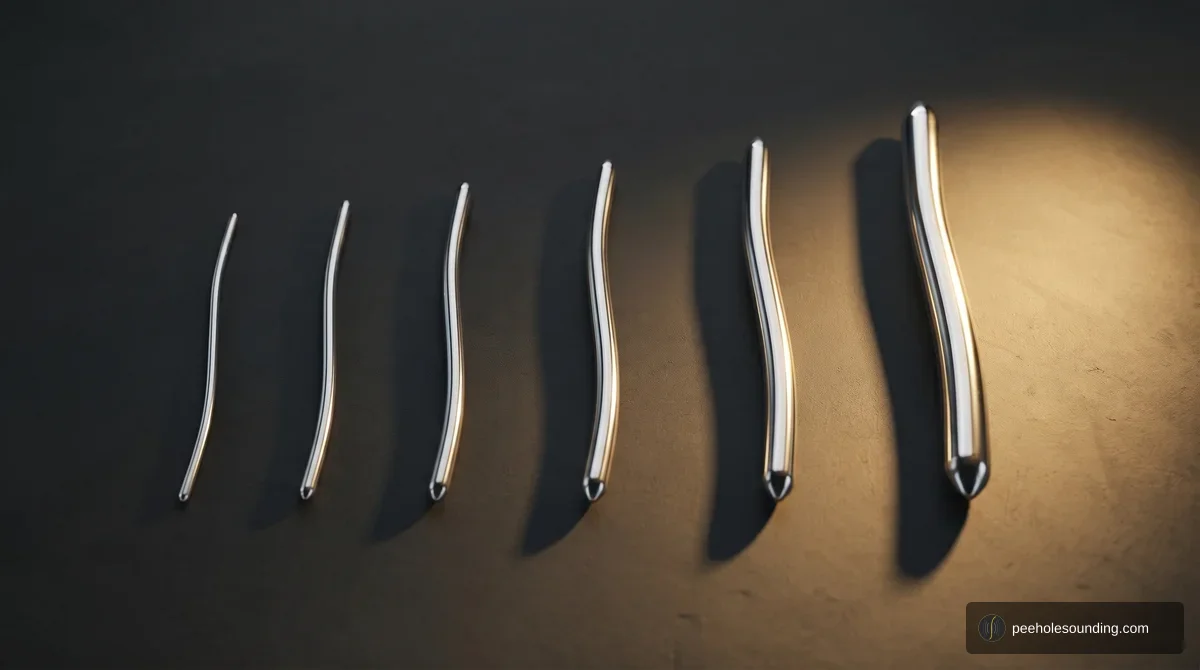
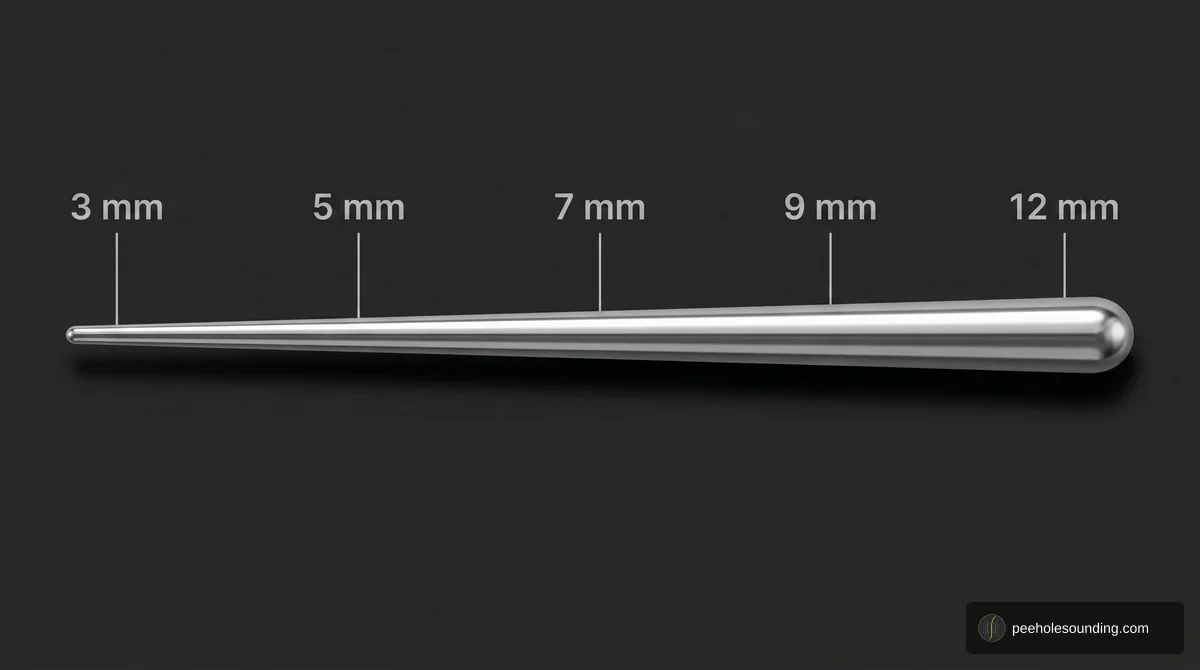
Start with a diameter between about 1/8" and 3/16" (3-5mm / 9-15 French gauge, and if you want every value at once, that's the full Fr / mm / inch chart and the general sizing guide). This range works for most beginners. Wide enough to feel secure without being overwhelming.
Once you're experienced and comfortable, you can work up to around 7/32" (5.5mm / 16 French gauge) or beyond. But there's no rush to get there.
Why size matters in both directions:
- Too small is actually dangerous. A very thin sound can fold inside the urethra, get stuck, or damage the surrounding tissue. Don't assume thinner is safer.
- Too large causes painful stretching and can tear delicate tissue. If you feel sharp pain during insertion, the sound is too big.
The sweet spot is a sound that slides in with gentle pressure and a bit of lubricant – snug enough to feel present, but not tight.
Supplies Checklist
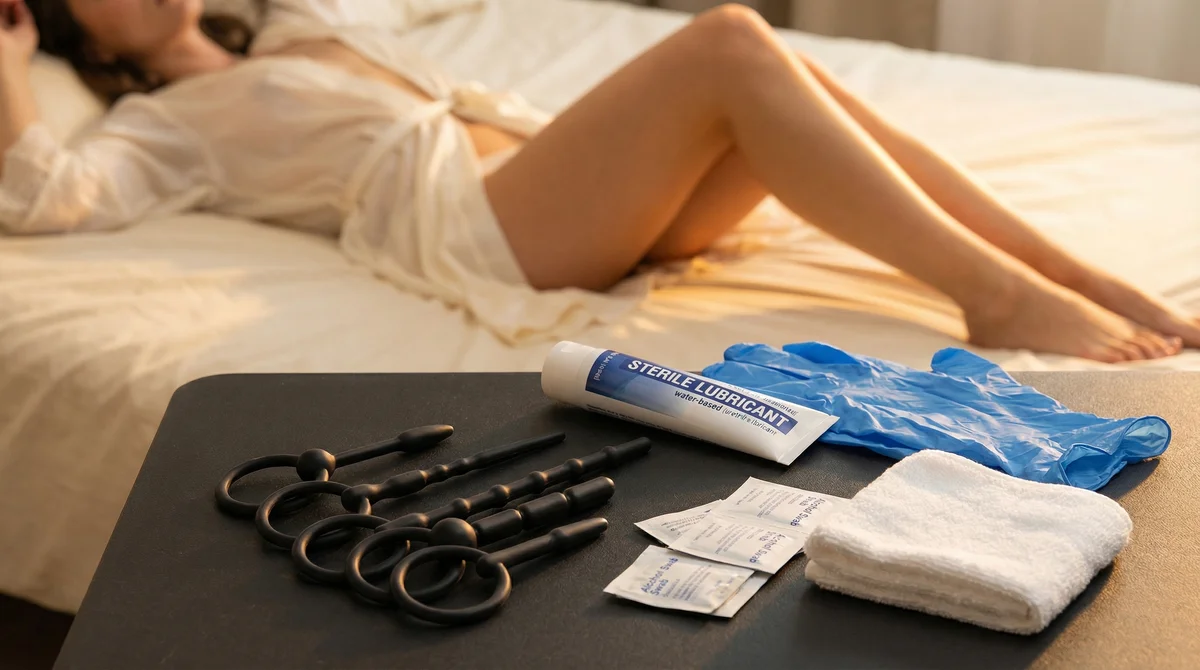
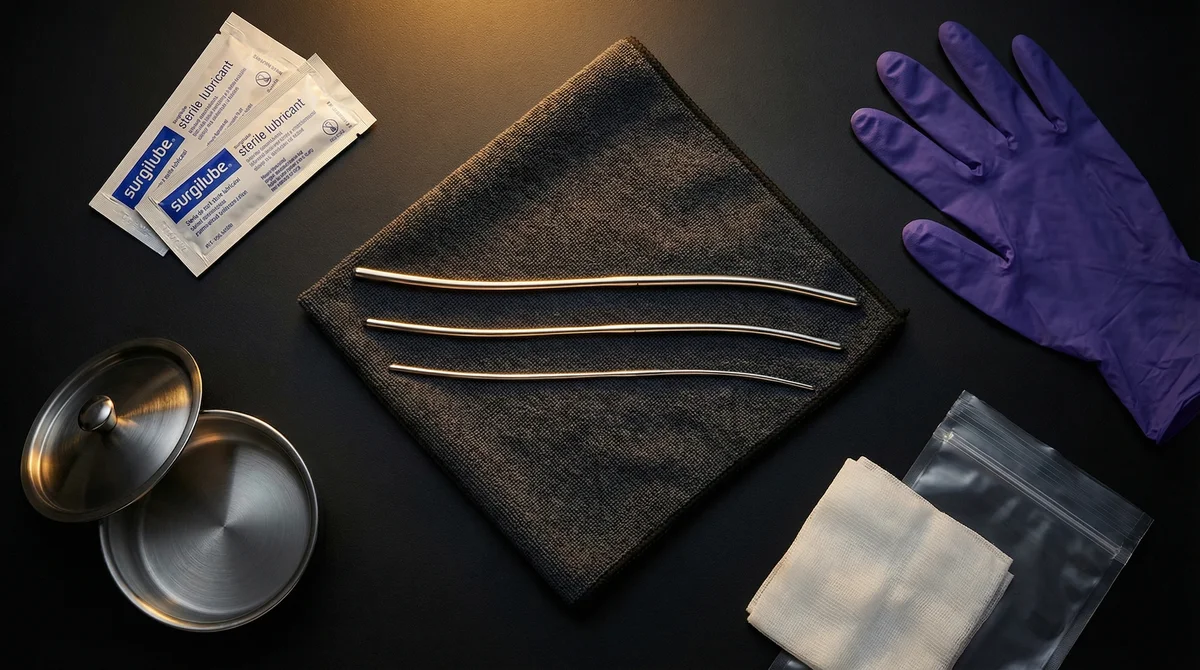
Before your first session, gather everything in advance so you're not scrambling mid-play:
Session Prep
Preparation and Sterilization
Sterilizing Your Sounds
Sterilization is not optional. The urethra leads directly to the bladder, and introducing bacteria can cause a urinary tract infection fast. Mayo Clinic notes that most UTIs are caused by E. coli migrating from the rectum or vagina into the urethra — exactly the kind of transfer good sterilization prevents.
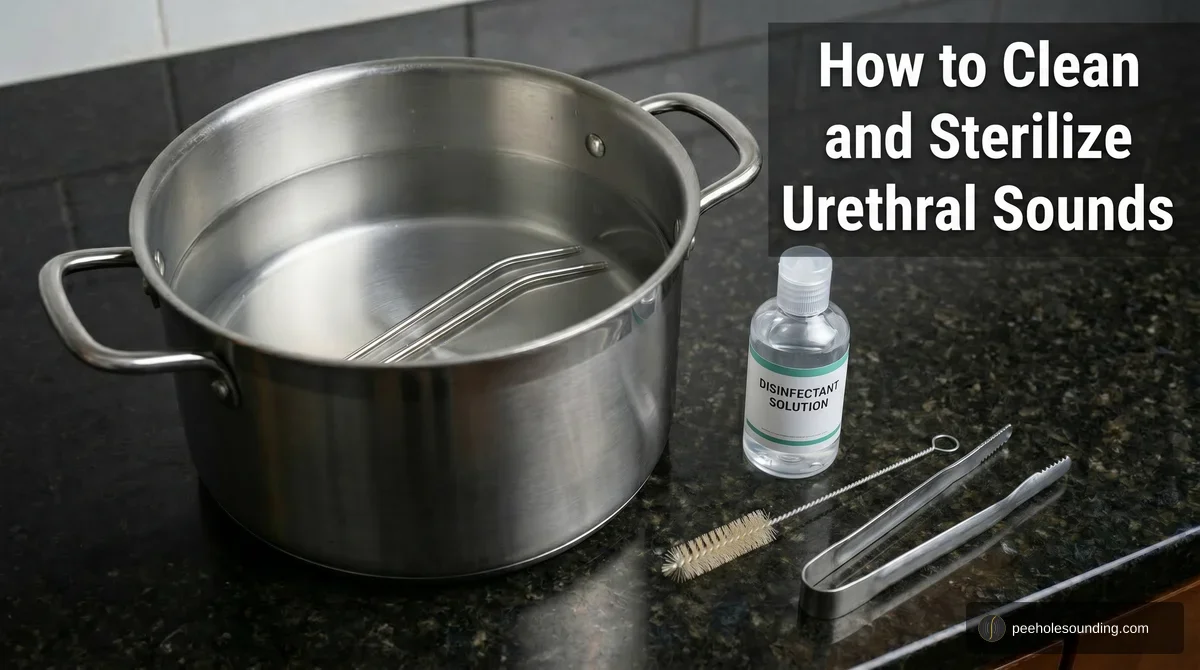
For stainless steel sounds, boil them in water for a full 10 minutes and let them cool completely before use (every method, with timings, in my sterilization guide). For silicone sounds, wash thoroughly with antibacterial soap and warm water. Some medical-grade silicone can also be boiled, but check the manufacturer's instructions first since cheaper silicone may not handle the heat. Either way, finish with an alcohol swab wipe-down right before insertion for an extra layer of protection.
Cleaning Yourself
Follow this order – it matters:
- Wash your hands thoroughly with antibacterial soap
- Set up your space – lay out the towel, position the mirror, place your sterilized sounds and lubricant within reach. Do all of this now while your hands are still "general use"
- Wash your vulva and the area around the urethra with gentle soap and warm water. Take your time here – this can double as a moment to get familiar with the area and start relaxing into the experience
- Wash your hands one more time – this is the last thing you do before the fun starts
- From this point, your hands only touch the sound and the warm, sensitive skin between your legs. No phone, no adjusting pillows, no touching other surfaces. It's just you and the sensation now
You can also use an alcohol swab on the area around the urethral opening for extra protection, but let it dry completely before proceeding. Alcohol on wet skin stings.
The Clean-Hand Rule
This is a non-negotiable rule: one hand stays clean – the only thing it touches is the sound. Your other hand handles everything else – spreading, adjusting the mirror, touching your body.
Think of it like cooking: one hand touches raw chicken, the other handles everything else. Same logic, easy habit to build.
This rule applies whether you're solo or with a partner. If a partner is handling the sound for you, they follow the same rule – one clean hand dedicated to the sound, nothing else.
Step-by-Step: Your First Session
Getting Comfortable
Lie on your back with your upper body slightly propped up on a couch armrest or a firm pillow – you want to be reclined, not flat. Bend your knees and let your legs fall open comfortably. This position gives you a clear view of the area and easy access with both hands, while keeping your body relaxed.
If you're doing this solo, position a mirror between your legs so you can clearly see the urethral area. The reclined position with the mirror is essential when you're navigating everything yourself.
With a partner, you don't really need the recline or the mirror – you can just lie back flat and relax. In my experience, women I've guided actually enjoyed it more this way because they could close their eyes, focus entirely on the sensation, and let their partner handle the visual side of things. Unless, of course, you want to watch something being slowly inserted into a brand new area – which has its own appeal.
Locating the Urethral Opening
The urethral opening is small, and finding it for the first time can be tricky. That's completely normal. It sits between the clitoris and the vaginal opening, but it's not always immediately obvious.
Here's a technique that helps: apply gentle pressure with a finger just above where you think the opening is, and watch in the mirror for any slight indentation or movement. You can also place the tip of a well-lubricated sound against the area and feel for where it naturally wants to slide in – but don't push. Let the anatomy guide you.
The mirror is essential for your first few sessions. Once you know where the opening is, you'll be able to find it by feel, but there's no shortcut to learning that.
Applying Lubricant
Apply a generous amount of sterile, water-based lubricant to both the sound and the area around the urethral opening. And I mean generous. You cannot use too much lube for this.
Reapply frequently during the session. Water-based lubricants can dry out, and a dry sound creates friction that leads to micro-scratches inside the urethra. You won't feel them in the moment, but you'll notice a burning sensation when you urinate later. Stay ahead of it by reapplying every few minutes.
Insertion
Place the lubricated sound at the urethral opening and apply gentle, steady pressure. Let the sound guide itself in – never force it. With silicone, you may need to guide it more actively. With steel, gravity often does the work.
Once the tip passes the opening, you can go deeper slowly. Try gentle back-and-forth movements as you go – this helps the urethra relax and accommodate the sound. It also feels good. That gentle sliding and stretching sensation is part of what makes sounding pleasurable.
If you feel sharp resistance at any point, stop. Add more lubricant and try again. If it still won't go, try a smaller size. Forcing past resistance is how injuries happen.
How Deep Is Safe?
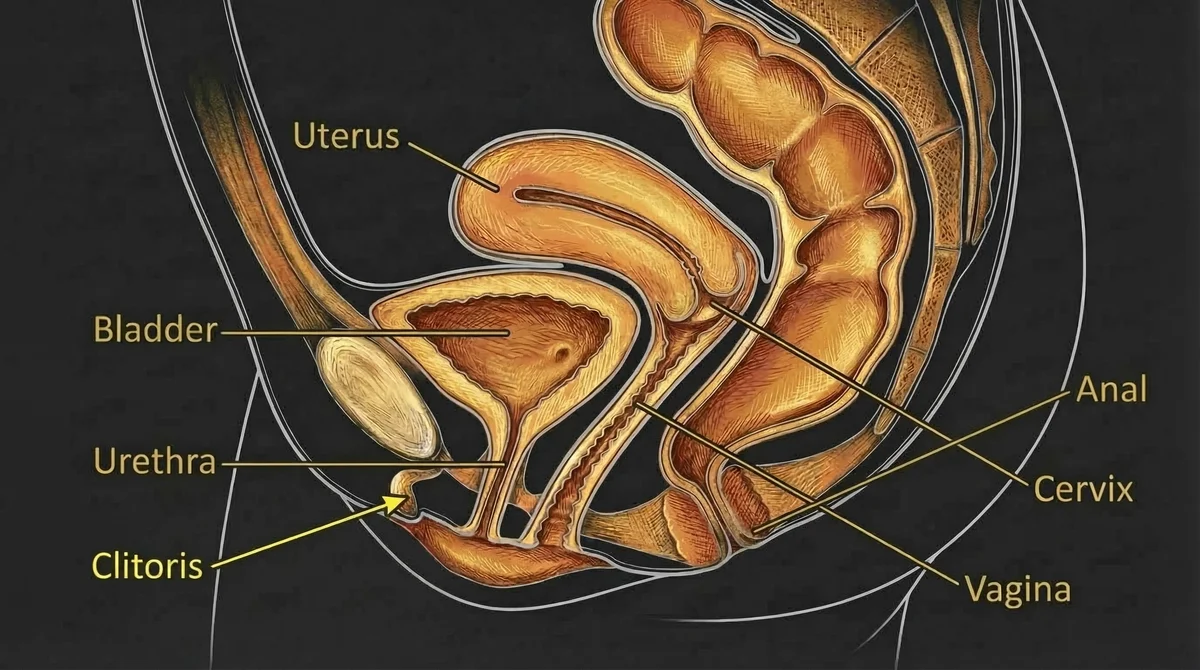
Go slowly until you feel an area of resistance deeper inside. This is the entrance to the bladder – the internal urethral sphincter. For your first time, do not push past this point.
Since the female urethra is only 1.5 to 2 inches long, you won't be going very deep before you reach it. That's fine. Depth isn't the goal. Comfort and pleasure are. As you gain experience, you'll develop a feel for where your boundaries are and you can explore further at your own pace.
Important: if you feel even a slight persistent discomfort during back-and-forth movement near the deeper end or past the resistance area – stop. Don't push through it. The urethral sphincter area isn't very sensitive to pain, which means you can damage it without really feeling it in the moment. If it doesn't fade within a few seconds, just pull back a bit or call it a day. There's no rush – you can always pick it up next time.
Movement and Sensation
Once the sound is comfortably inside, you can explore gentle in-and-out movement. You'll feel fullness, pressure, and a subtle stretch – this is normal and for most women, deeply pleasurable.
The feeling is unique. It's a deep internal pressure that sits right behind the clitoris, stimulating nerves that surface play can't reach. Some women describe it as a warm, radiating fullness. Others feel a pulsing intensity that builds with movement.
You can also combine sounding with external clitoral stimulation – either with your free hand or a vibrator. The combination of internal urethral pressure and external clitoral stimulation can be intensely powerful.
Orgasm During Sounding
Yes, you can absolutely orgasm with a sound inserted – and many women find that sounding makes orgasms way more intense. The internal pressure from the sound adds a dimension of fullness and depth that amplifies the contractions.
That said, here's what to be aware of: if the sound is too large, orgasm contractions can push against it and cause discomfort or pain. This isn't a sign that something is wrong – it just means you need a slightly smaller size. You want a sound that feels present during orgasm without creating painful pressure when your muscles contract.
During orgasm, you can either leave the sound in place or remove it slowly as the contractions begin. Some women prefer the intensity of keeping it in. Others find removal during orgasm adds its own satisfying sensation.
One more thing: if the sound went past the bladder entrance, some urine may release during or after orgasm. This is completely normal and not a cause for concern. It's just a result of the internal pressure. Keep a towel underneath you and don't worry about it.
Solid vs Hollow Sounds
There are two main types of sounds you'll encounter for female play: solid and hollow.
Solid sounds are exactly what they sound like: smooth, solid rods with no opening. They tend to be smaller in diameter and simpler in design. For your first time, start with a solid silicone sound. It's the simplest and most forgiving option.
Hollow sounds, sometimes called tunnel plugs, have an opening running through the center that allows urine to pass through. These are popular for longer-wear scenarios or certain types of partner play. They tend to be slightly larger in diameter than solid sounds because of the tunnel.
The good news is that there are hollow sounds available in sizes comfortable for beginners. But I'd still suggest starting solid – learn the basics with the simplest tool, then explore hollow sounds once you're comfortable with insertion and know your preferred sizing.
One useful thing about hollow sounds: if you see urine starting to flow through the opening, that tells you the tip has reached or passed the bladder sphincter. It's a built-in depth indicator – handy for knowing exactly where you are without guessing.
Solo vs Partner Play
For your first time, I strongly recommend going solo. You need to discover your own boundaries before involving someone else: where comfort lives, where discomfort starts, and where your hard limits are.
Solo play gives you complete control over speed, depth, pressure, and timing. You can stop instantly. You can take all the time you need. You don't have to think about anyone else's experience while you're learning your own body.
If you do choose to start with a partner, or once you're ready to bring one in, communication is everything. Remember: your partner can't feel what you feel, and it's easy for them to apply more pressure than you would on yourself without realizing it. The partner handling the sound must follow the clean-hand rule. And they need to check in constantly: "How does that feel?" "Should I go deeper?" "Tell me when to stop."
The person being sounded should feel completely comfortable saying "stop" at any moment. No hesitation, no worrying about ruining the mood. If your partner can't handle that kind of direct communication, they're not ready for this type of play.
Aftercare and Recovery
Immediately After
Remove the sound slowly and gently. No rush. Then go urinate right away. Urinating after sounding flushes any bacteria that may have entered the urethra during the session. This is the single best thing you can do to prevent a UTI — the Urology Care Foundation lists staying hydrated and emptying the bladder fully among its top prevention tips.
This is why I tell you to drink water before your session. Your bladder needs to be ready when you are. Keep a glass of water nearby and hydrate throughout.
After urinating, wash the genital area with gentle soap and warm water. Clean your sounds thoroughly and sterilize them before storing.
How Long Between Sessions
Wait at least a few days between sessions, especially when you're starting out. Even when everything goes perfectly, your urethra goes through micro-stretching during sounding and needs time to bounce back.
A good rule of thumb is 1 to 10 days between sessions, depending on how your body feels. If you have any lingering discomfort – even mild – wait until it's completely gone before sounding again. Don't push through soreness. Your urethra isn't a muscle you can train by working through pain.
Warning Signs – When to Stop or See a Doctor
Normal after sounding: A mild stinging or burning sensation when you urinate for the first day. This should fade quickly.
Not normal – stop sounding until resolved:
- Pain that persists beyond 24 hours after a session
- Discomfort that appeared after passing the bladder entrance area – this could indicate tissue damage
- Unusual discharge or changes in urine color
See a doctor immediately:
- Blood in your urine (a small amount of pink-tinged urine can be normal the first time, but bright red blood is not)
- Fever or chills after a sounding session
- Inability to urinate
- Severe or increasing pain
Don't be embarrassed about seeking medical help. Doctors have seen it before, and your health is more important than any awkwardness. Be honest about what you were doing – they need accurate information to help you.
Frequently Asked Questions
This guide is based on personal experience and community knowledge. I'm not a medical professional. If you experience persistent pain, bleeding, fever, or any symptom that concerns you, see a healthcare provider. There's no shame in getting checked out – your health always comes first.
Related Guides
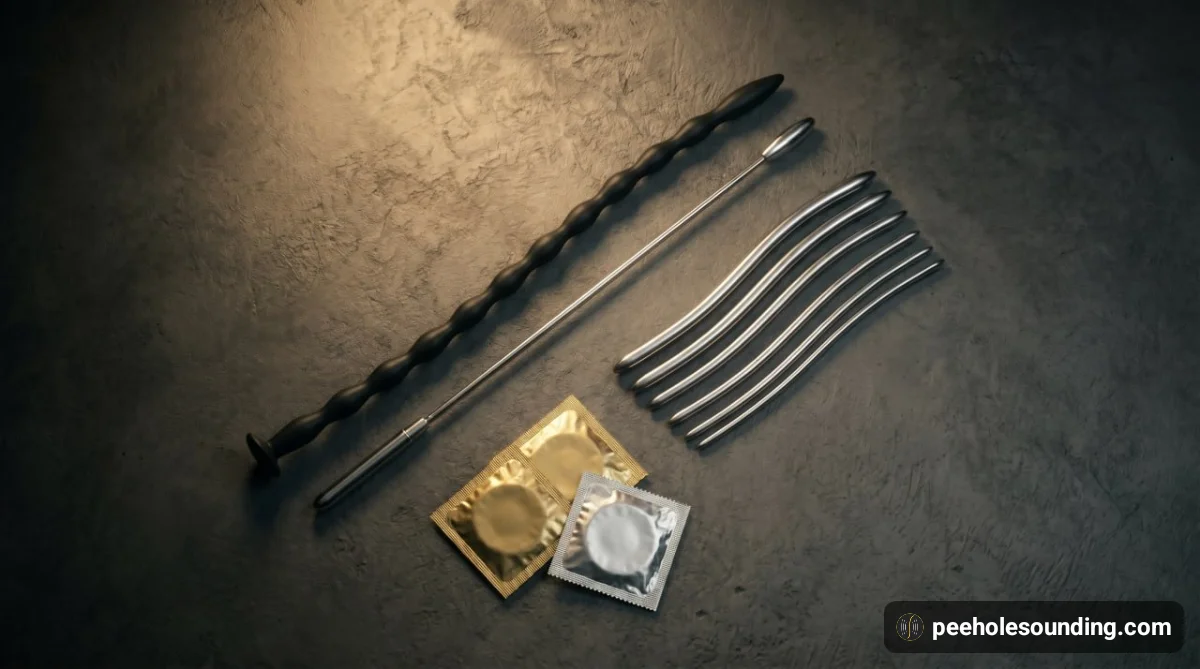
Urethral Play: The Complete Guide to Sounds, Plugs, Stretching & Vibration
Jun 19
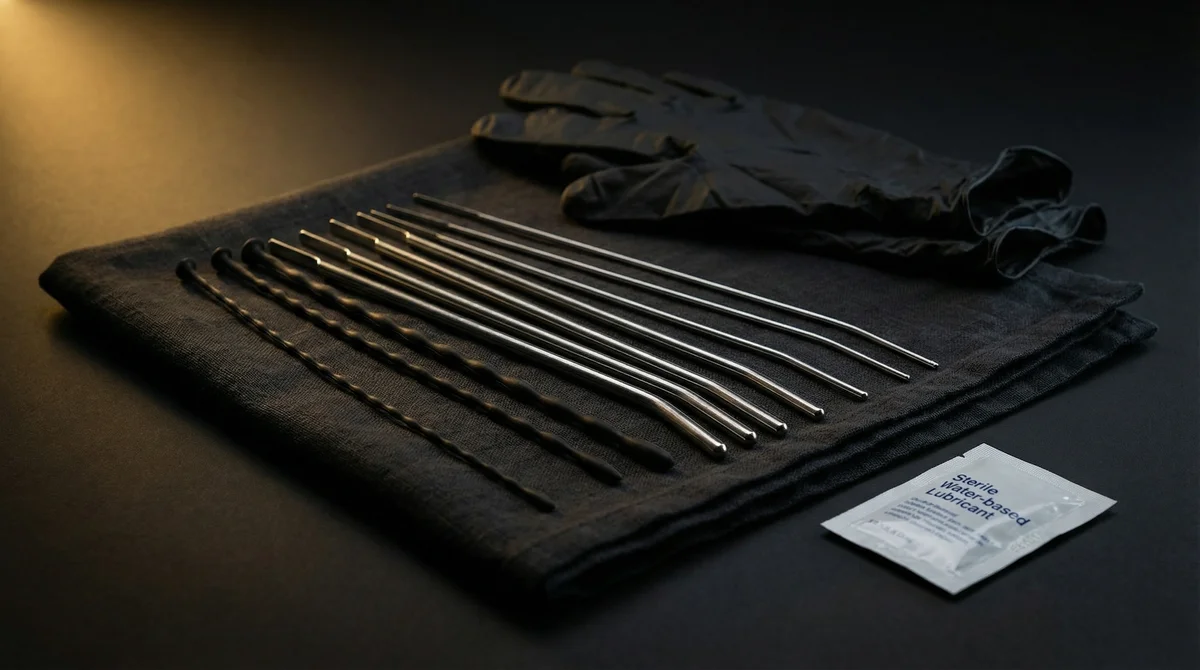
What Is Urethral Sounding? A Complete Guide to Safety, Pleasure & Getting Started
Feb 15
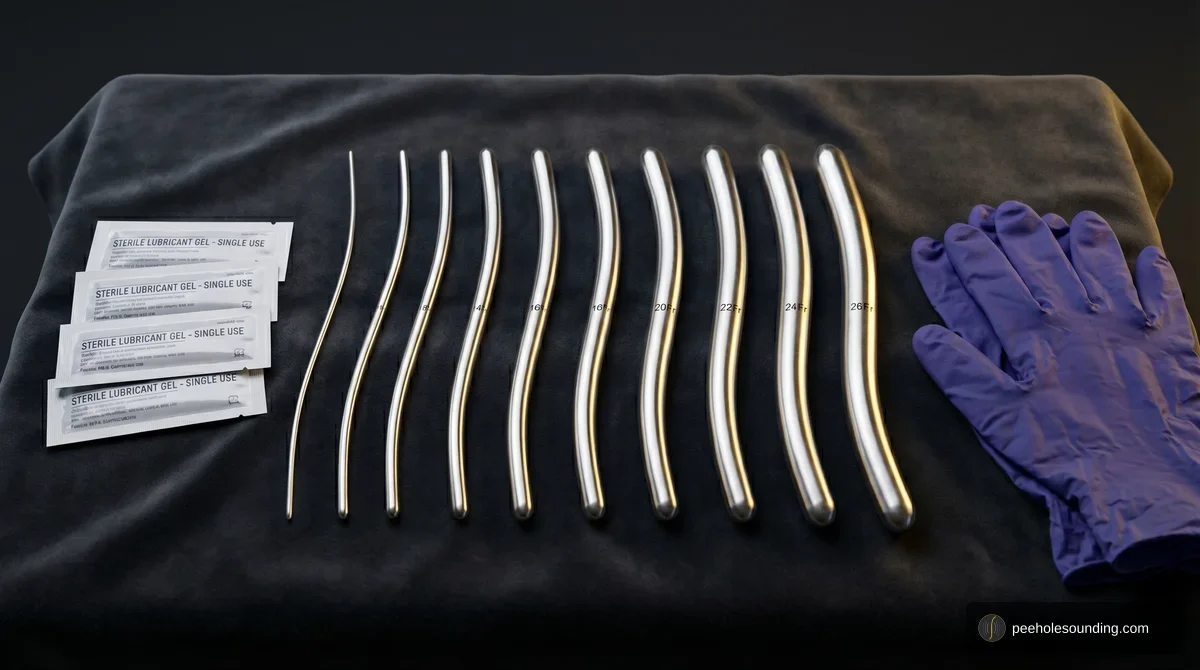
Urethral Sounding for Beginners: Sizes & First Session
Apr 5

Sounding Pleasure: What It Feels Like & Why People Chase It
Feb 22
Urethral Stretching Guide: Safe Progressive Dilation for Beginners
Apr 24
Sounding Rods Sizes Chart: French Gauge to mm to Inches
Apr 28
Is Sounding Safe? Sounding Safety Protocols & Risks
Mar 5
How to Clean and Sterilize Urethral Sounds
Mar 20