Urethral Sounding for Beginners: Sizes & First Session
What urethral sound to buy first, starting size (1/8–3/16 inch / 3–5mm), safest materials, first session, pee-after timing. Beginner-safe, all bodies.
 By Kevin Voss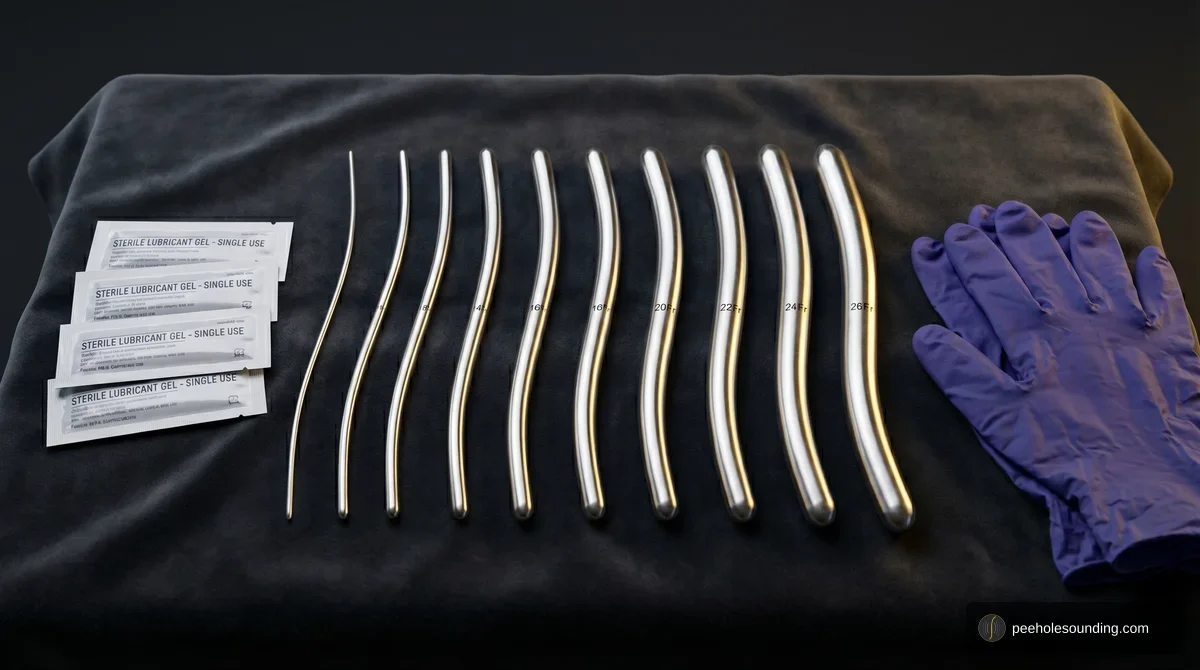
Urethral sounding (also called urethral dilation) is the practice of inserting smooth, sterile instruments into the urethra. Doctors have been doing it for centuries to treat strictures (narrowing from scar tissue), passing progressively larger dilators to stretch the urethra back toward its normal width (Urology Care Foundation on urethral stricture disease). The instruments are called "sounds," which is where the name comes from. Recreationally, people do it because the urethra is packed with nerve endings and the sensations are unlike anything else.
I've been doing this for about ten years. This guide covers everything I wish someone had told me when I started, from picking your first size to knowing when you're ready for the next one. It works for all bodies. If you want to see how sounding fits alongside plugs, stretching, and vibration, start with the urethral play overview.
I'm not a doctor. This is harm-reduction education based on my personal experience and research. Always consult a healthcare provider for medical concerns.
What You Need Before Your First Session
Before your first urethral sounding session, gather everything you need. Once you start, you don't want to be reaching for supplies with contaminated hands.
Equipment Checklist
-
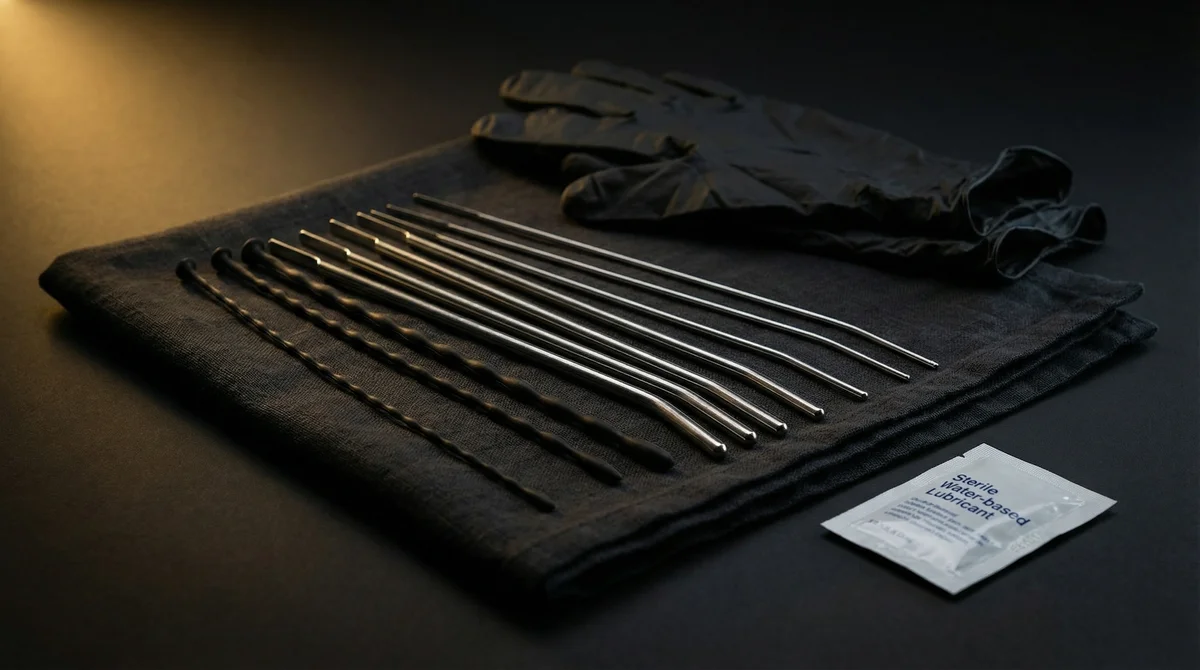
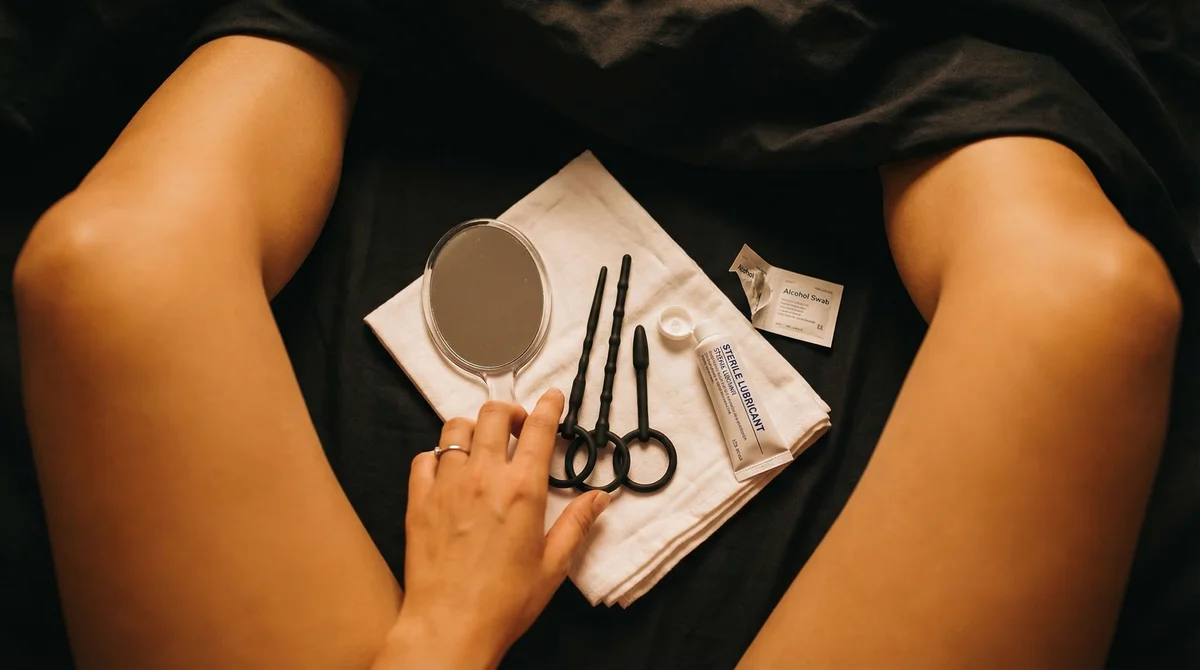
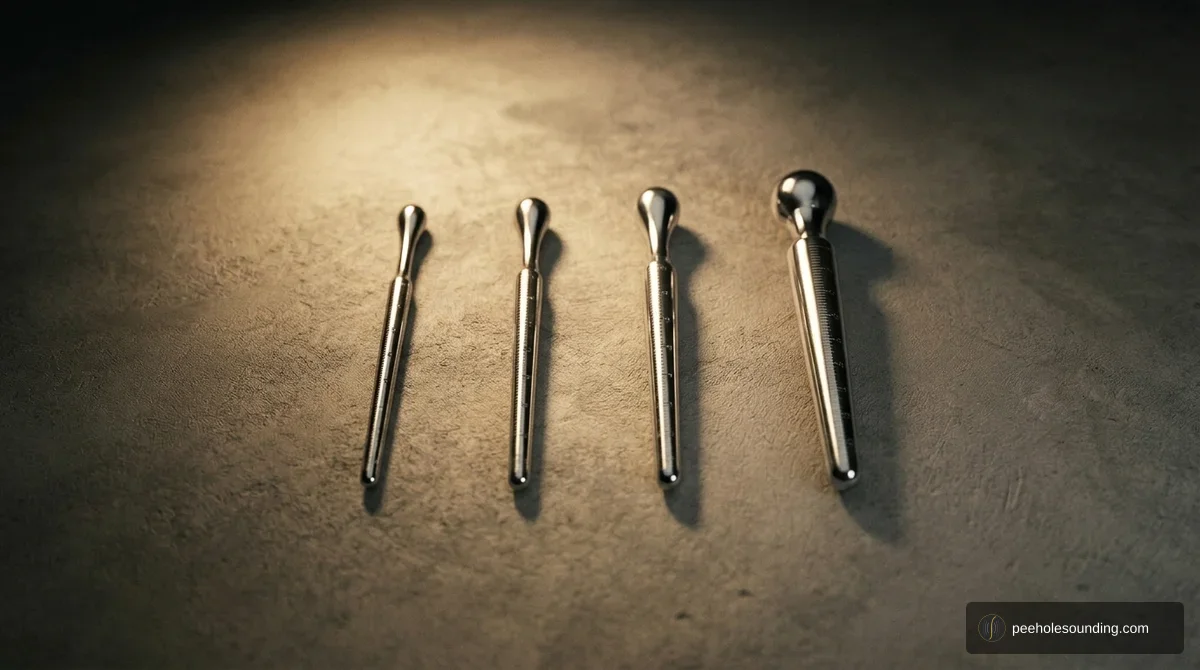
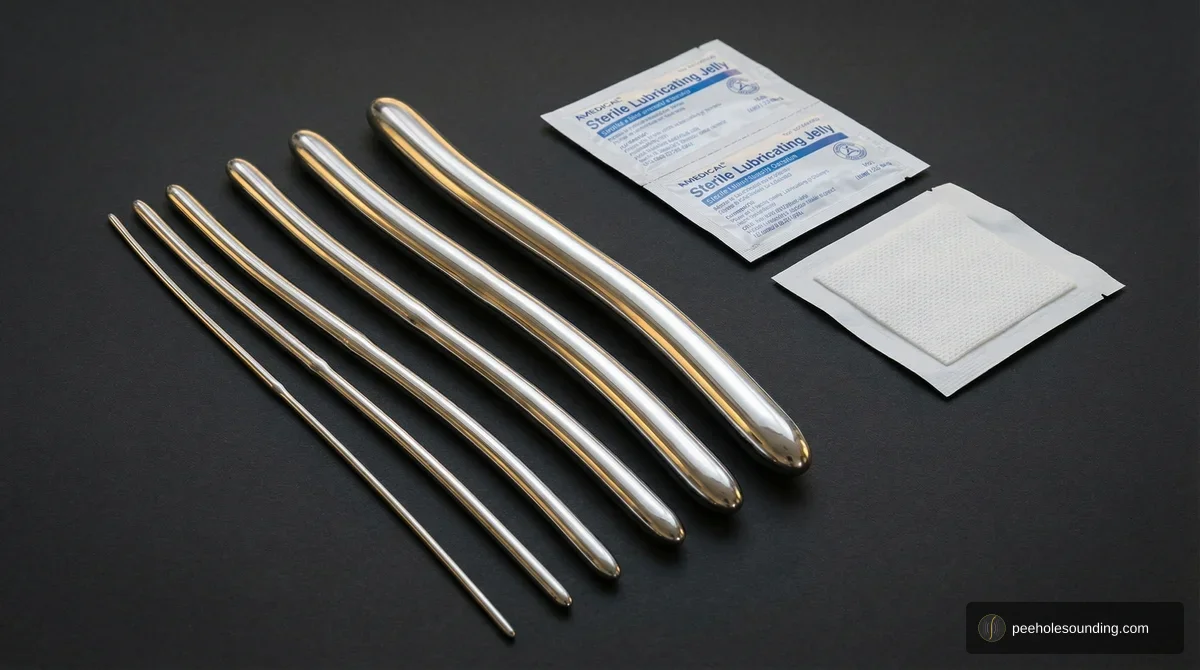
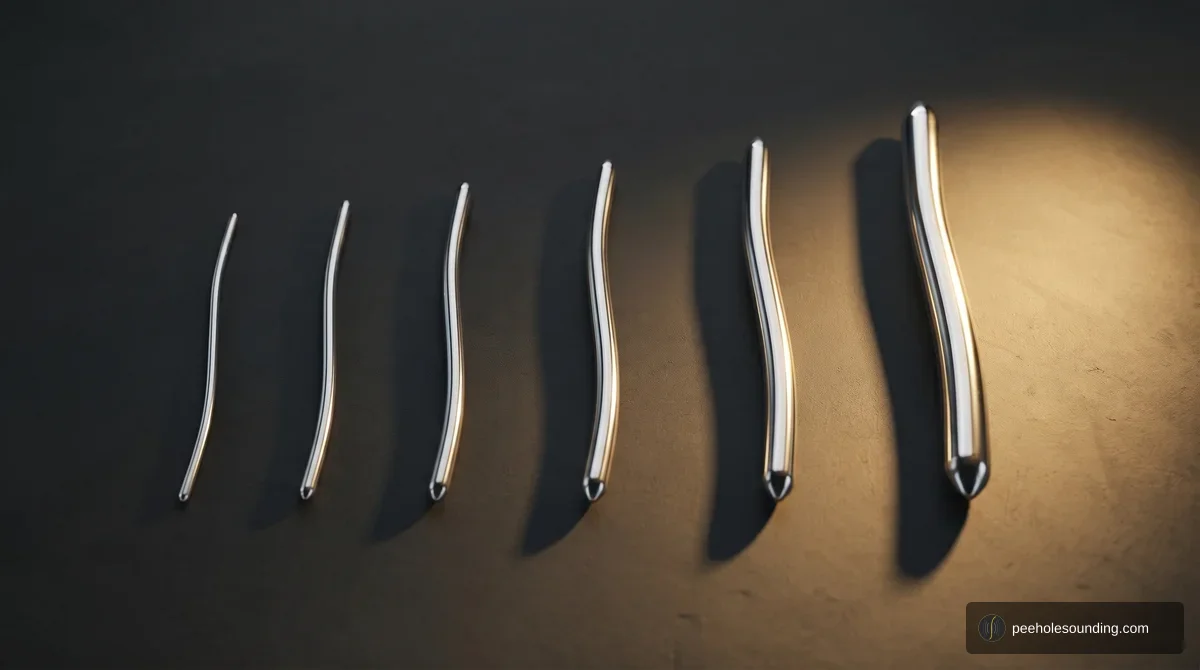
A graduated sound set. A Hegar set is the most popular choice because each rod is dual-ended with two different diameters in tiny increments (roughly 1/64 inch apart), giving you fine size control built in. Silicone tapered sets also work, especially if you're nervous about starting with steel. See our complete guide to sound types for a detailed breakdown.
-
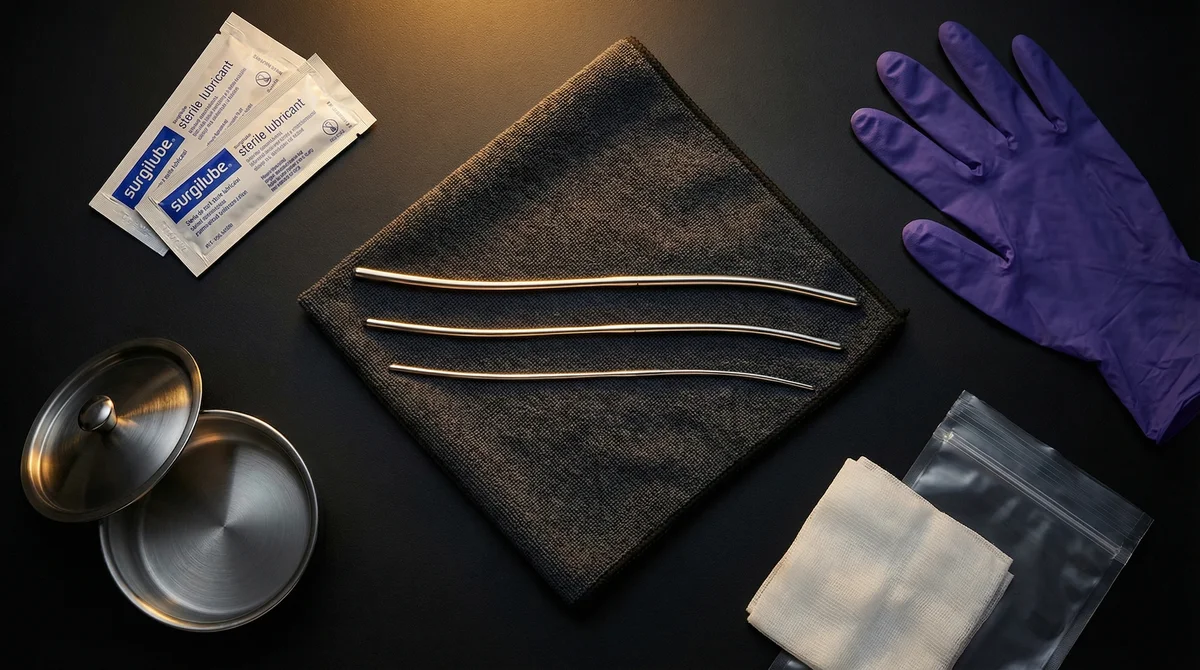
Sterile, water-based lubricant. Individually wrapped, medical-grade lube packets are ideal. No fragrance, no flavoring, no glycerin, no numbing agents. You need to feel what your body is telling you. You cannot use too much.
-
A clean, flat surface. A freshly laundered towel on a table or countertop works. This is your sterile workspace. Anything that touches this surface should be clean.
-
Surgical gloves (optional but recommended). They keep bacteria off your hands and make handling lubricated sounds easier.
-
A mirror (for vulva owners). The urethral opening is small and hard to spot at first. A handheld mirror between your legs makes the first few sessions much easier.
Materials: Steel vs Silicone
For beginners, silicone is the safer choice. It's flexible, so if you angle it wrong or push a little too hard, it bends instead of poking into the urethral wall. Steel is rigid and unforgiving of mistakes. That flexibility alone makes silicone far less likely to cause injury when you're still learning.
Stainless steel has real advantages once you're comfortable: it's heavy enough to slide in by gravity alone (no pushing), it's non-porous so you can fully sterilize it by boiling, and the rigid diameter gives you precise feedback on your size. Many experienced practitioners prefer it. But for your first sessions, silicone is the move.
For a full breakdown, check our safety protocols guide, which covers material safety in detail.
Sterilization
This isn't optional. Sterilize your sounds before every single session.
For steel: boil in water for 10 minutes, or soak in a betadine (povidone-iodine) solution. For silicone: follow the manufacturer's instructions, since some can be boiled and others can't. The CDC classifies instruments that contact mucous membranes as semicritical devices requiring, at minimum, high-level disinfection before reuse, which is the bar you should hold your own kit to (CDC guideline on disinfection and sterilization). Our sterilization guide covers every method in detail, including chemical sterilization and pressure cooker protocols.
Finding Your Starting Size
One of the most common beginner mistakes in urethral sounding is starting too thin. A very thin sound concentrates all its force on a tiny contact area, so it's easier to scrape or puncture the urethral wall. A slightly thicker sound distributes pressure evenly around the circumference and practically guides itself.
The "Snug but Slides" Test
The right starting size should:
- Feel snug against the urethral walls, a gentle sensation of fullness
- Slide in smoothly with sterile lube and minimal force
- Not cause pain, sharp pressure, or a feeling of overstretching
If it slides in and you feel almost nothing, go up one size. If it won't go in without pain, go down one size. You want to feel it without fighting it.
Starting Size Ranges
| Body | Starting Diameter (inch / mm) | French Gauge | Notes |
|---|---|---|---|
| Penis owners | 1/8–3/16 in (3–5mm) | 9–15 Fr | Start at the 2nd or 3rd rod in a Hegar set, smaller end |
| Vulva owners | 5/32–1/4 in (4–6mm) | 12–18 Fr | Use shorter sounds (3–4 inches max) |
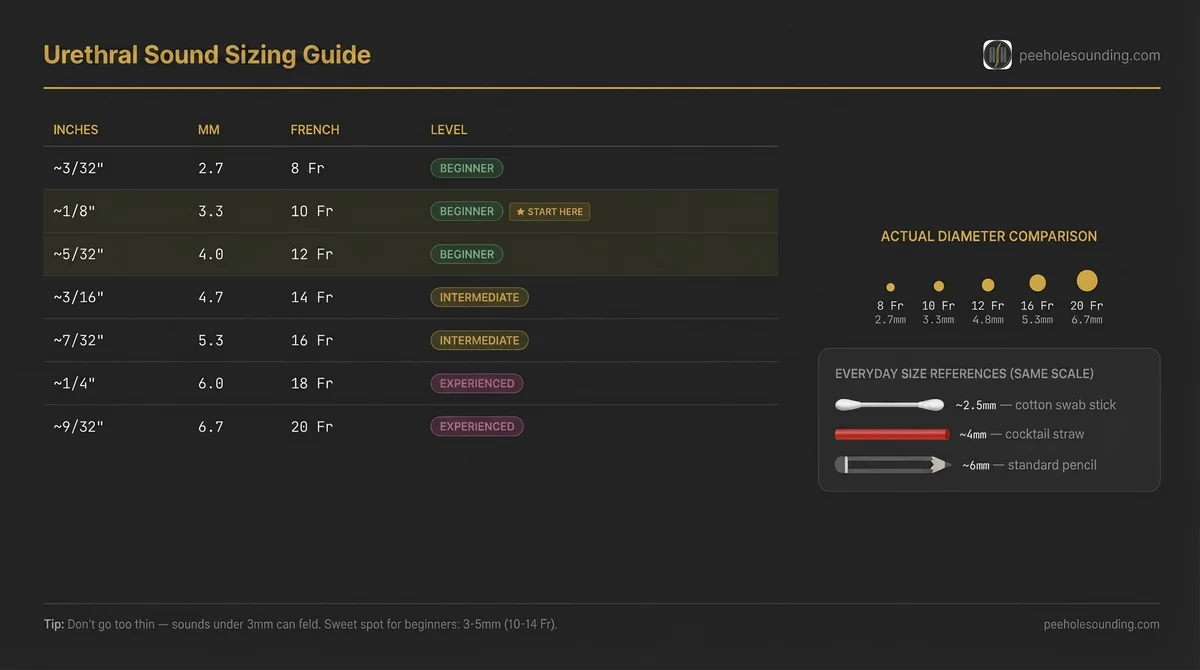
For a deeper dive into sizing, French gauge conversion, and sizing by sound type, see our dedicated sizing guide.
Your First Session Step by Step
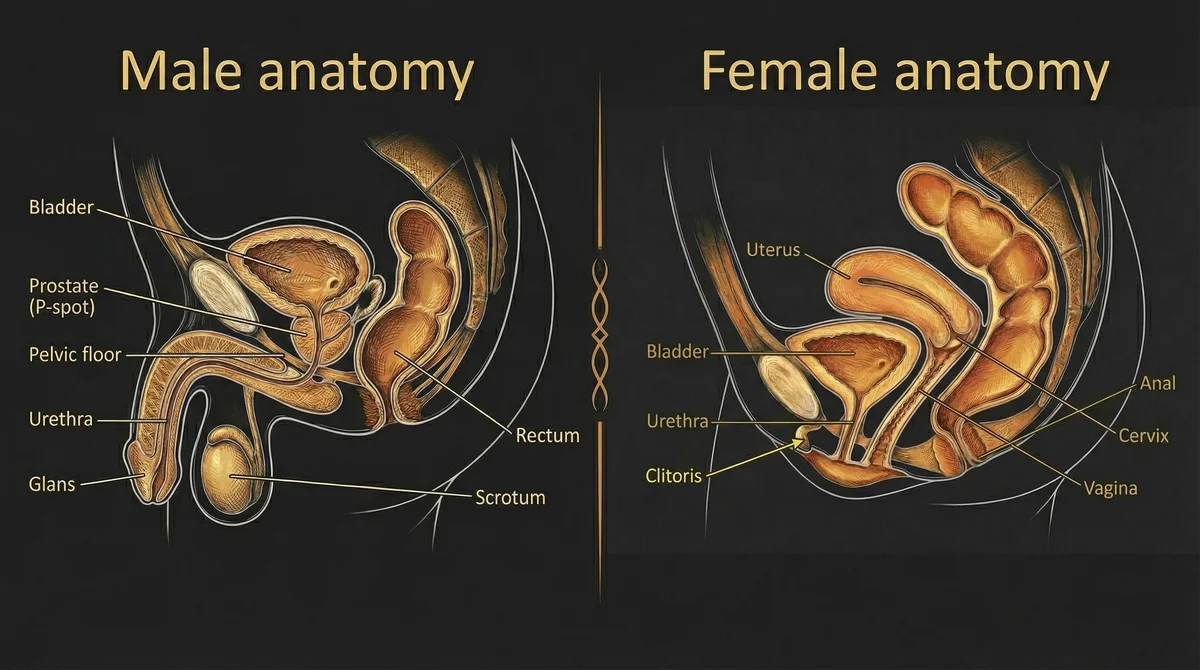
You've got your equipment. Everything is sterilized. Here's how your first urethral sounding session should go.
Pre-session: Drink a glass of water about 20 minutes before you start, so your bladder will be ready when you need to urinate afterward. Then pee to empty your bladder. Wash your hands thoroughly with unscented soap. Wash your genital area the same way. Lay out your clean towel, set your sterilized sounds on it, and open your lube packets.
For Penis Owners
Get to a partial erection, not fully hard. A full erection tightens the urethral opening and makes insertion harder. Hold the penis straight, pointing up toward your stomach.
Apply lube generously to the urethral opening and to the first inch of the sound. Hold the sound vertically above the opening and let gravity guide it in. Don't push. The weight of a steel sound is enough. If you're using silicone, apply very gentle, steady downward pressure.
For your first session, stay in the first 2 to 3 inches. Don't chase depth. Size and depth are separate progressions, and trying both at once is how people get hurt.
You'll likely feel a "need to pee" sensation. That's normal. It's your urethra registering internal pressure it isn't used to. It fades as you relax.
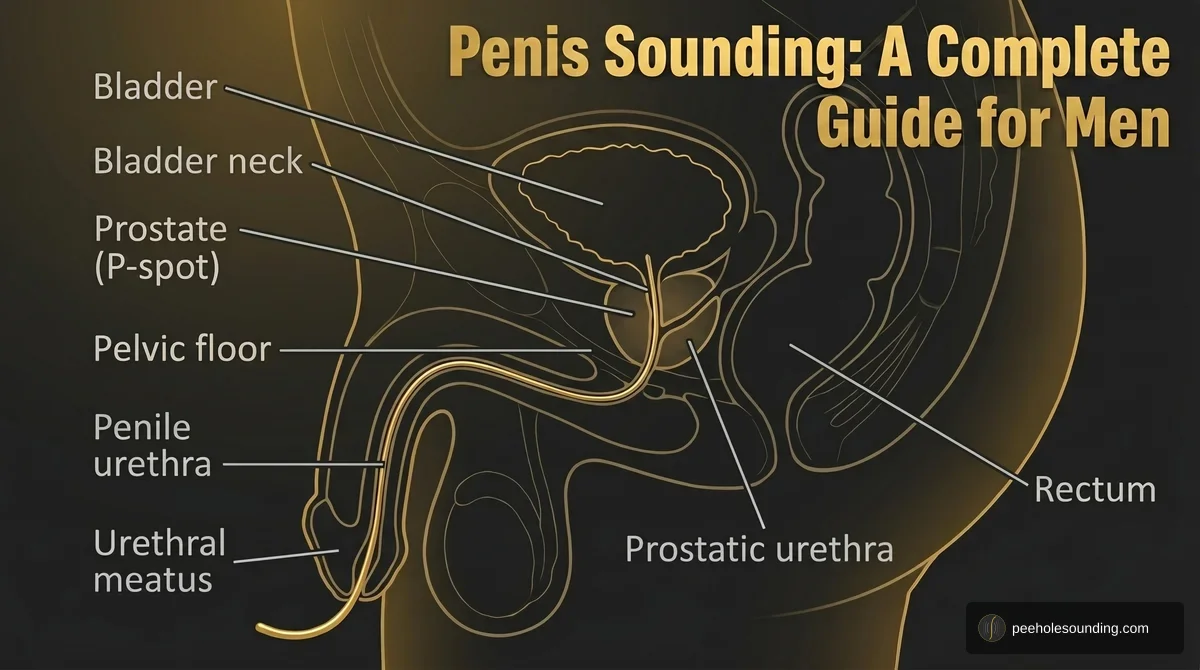
For a deeper walkthrough of male anatomy, prostate technique, and size choices for men, see our men's technique guide.
For Vulva Owners
The female urethra is roughly 1.5 inches long (about 3 to 4 cm), much shorter than the male urethra (NIH/PMC review of female urethral anatomy). This means you need shorter sounds and shallower insertion depth, but the proximity to the clitoris and urethral sponge (Skene's glands) means the sensations can be just as intense.
Position a mirror between your legs so you can see what you're doing. The urethral opening is small and can be tricky to find the first time. It sits between the clitoris and the vaginal opening. Gently spread your lips, apply lube to both the opening and the sound, and insert slowly and gently. You won't go deep, and you don't need to.
Never use a sound vaginally and then urethrally. Always keep them separate. For a complete walkthrough of technique, anatomy tips, and recommended starter sounds, read our female urethral sounding guide.
During the Session
Once the sound is in and comfortable, just let it sit for a minute. Get used to the sensation of fullness. Then try gentle, small movements: an eighth of an inch (a few millimeters) in and out, or a slow rotation. Pay attention to what feels good.
Your first session should be 5 to 15 minutes. That's it. You're introducing your urethra to something entirely new. Overdoing it leads to irritation, soreness, and a worse second session. Less is more at the start.
For detailed insertion technique, angles, and troubleshooting resistance, see our step-by-step insertion guide.
Aftercare
Remove the sound slowly. If it feels tight at the opening, add a drop of lube around the meatus before pulling out. If you have a penis, wait until you're less erect before removing.
Urinate immediately after. This is non-negotiable. Urination flushes bacteria and lube residue from the urethra. UTIs happen when bacteria enter the urinary tract through the urethra, so mechanically flushing the passage right after anything has been inside it is one of the single highest-leverage things you can do (CDC on urinary tract infection basics). It may sting slightly. That's normal and should resolve within a day or two.
Wash your hands and genitals. Clean and re-sterilize your sounds. Store them somewhere clean and dry.
Sizing Up Over Time
This is the section you won't find in most urethral sounding guides. Everyone tells you to "start small and work up," but nobody explains the actual process. Here it is.
Your urethra adapts between sessions, not during them. Think of it like exercise: your body gets stronger during rest, not during the workout. Skipping rest days won't speed things up.
Session Frequency
- First 2 weeks: 1 to 2 sessions per week maximum. Your urethra has never experienced this before. Give it time.
- Weeks 3+: 2 to 3 sessions per week once you're comfortable at your current size. That's the sweet spot for consistent progress without overworking the tissue.
- Always skip at least one full day between sessions. Two days of rest is even better when you're just starting.
If you're still feeling any tenderness or stinging from the last session, wait until it's completely gone before your next one.
When to Size Up (and When Not To)
You're ready for the next size when:
- Your current sound inserts easily with lube and minimal resistance
- You feel only gentle fullness, not stimulating tightness
- You've used this size comfortably for at least 3 to 5 sessions
- You've been at this size for a minimum of 2 to 3 weeks
You're NOT ready when:
- You still feel real tightness at your current size
- You've had any discomfort, irritation, or bleeding recently
- You've been at this size for less than 2 weeks
- You're sizing up because you're excited, not because your body is ready
The one-size-at-a-time rule: Never skip sizes. Go up by one increment only — roughly 1/64 inch with Hegar sounds (their smallest step), or 1 to 2 French gauge with other sets. A 1/32 inch jump in diameter adds about 1/8 inch to circumference, which is a bigger stretch than it sounds. This is why Hegar sets with their tiny steps are ideal for gradual progression.
How fast you progress depends entirely on your body. I personally spent about three months at each size when I was starting out, and that patience is the reason I never had a single injury. Some people move faster, some slower. Plateaus where your body just doesn't want to go further are completely normal and can last weeks or months. Don't force it.
If you want a deeper protocol for sizing up over months — including how stretching adapts urethral tissue and when to plateau — read our urethral stretching guide.
Common Problems and How to Fix Them
| Problem | Likely Cause | What to Do |
|---|---|---|
| Sound won't go in | Tension, not enough lube, or size too large | Relax, take deep breaths, add more lube, try one size smaller |
| Mild burning after session | Normal micro-irritation of the urethral lining | Drink extra water; should resolve within a day or two |
| Blood-tinged urine (pink) | Minor surface abrasion | Stop sounding for 3 to 5 days. If it happens again, drop a size |
| Bright red blood | Tissue tear or injury | Stop immediately. Do not sound again until fully healed. See a doctor if it persists |
| Regression after a break | Tissue returned to resting state | Re-start 1 to 2 sizes below where you left off |
| Plateau at a size for weeks | Anatomy (natural narrow points) or rushing | Stay at the current size longer. Patience, not force |
| Stinging lasts more than 48 hours | Possible irritation or early infection | Stop sounding. If burning persists or worsens, see a doctor |
Here's the thing: the single most important rule in all of urethral sounding is if it hurts, stop. Mild pressure and fullness are normal. Sharp pain, burning during insertion, or a feeling that something is catching or tearing means something is wrong. Listen to it every single time. If you want the sensation-by-sensation version, does sounding hurt sorts what to continue through from what to stop for.
When to Stop and See a Doctor
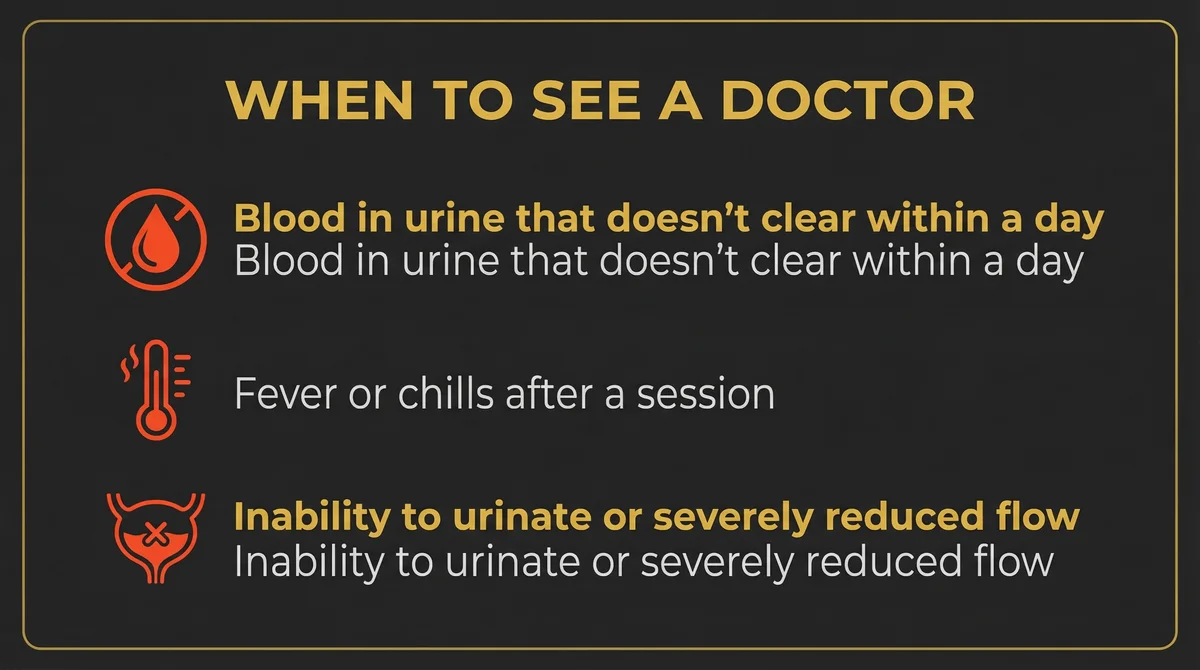
See a healthcare provider immediately if you experience any of the following after an urethral sounding session:
- Fever or chills, a sign of possible urinary tract infection spreading
- Inability to urinate, could mean swelling or obstruction
- Persistent bright red bleeding (minor pink-tinged urine is normal; bright red is not)
- Pain that gets worse instead of fading within a few hours
- Unusual discharge from the urethra
- A sound that won't come out, don't wait on this one
If you feel awkward bringing it up, try: "I was using a urethral sound and I'm experiencing [symptom]." Doctors and nurses are trained professionals. They've seen this before. They want to help, not judge.
For a full breakdown of every safety layer you should have in place, read our complete safety protocols guide.
If you're curious about what urethral sounding actually feels like, read Does Urethral Sounding Feel Good?. And if lingering fears are holding you back, our myths debunked guide addresses the ten most common ones. Still wondering why people are into this at all? The sounding kink guide covers the motivations and how to decide if it's for you.
Frequently Asked Questions
Related Guides
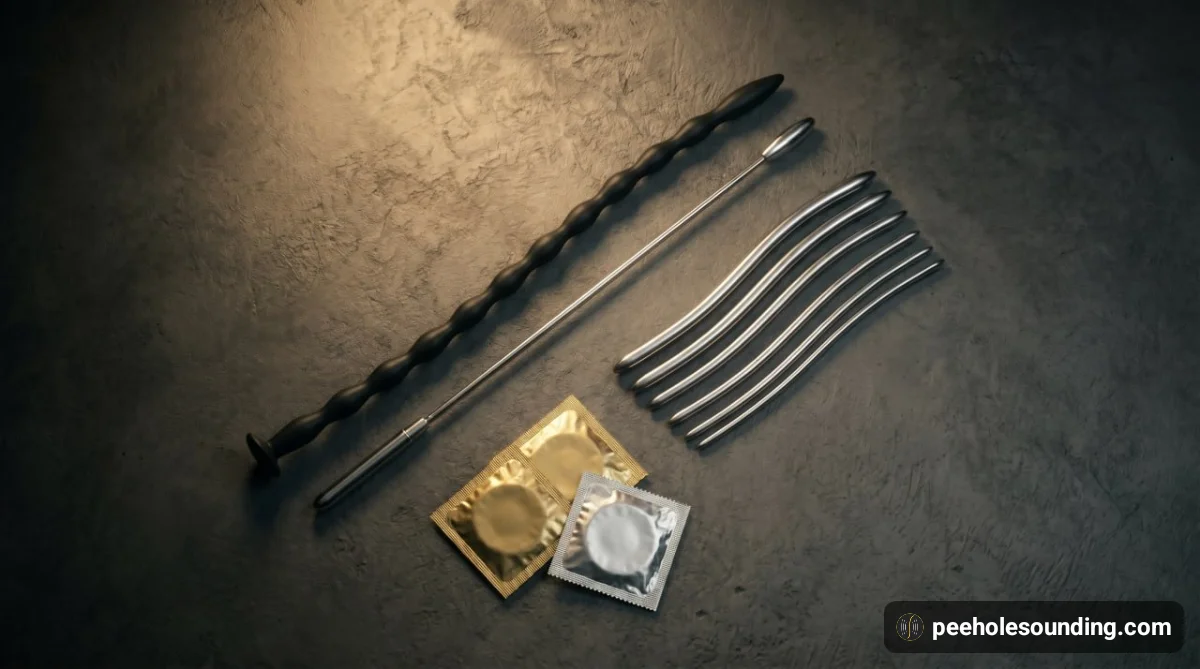
Urethral Play: The Complete Guide to Sounds, Plugs, Stretching & Vibration
Jun 19
What Is Urethral Sounding? A Complete Guide to Safety, Pleasure & Getting Started
Feb 15
Sounding Kink: Why People Do It & How to Start
Jun 7
Sounding Pleasure: What It Feels Like & Why People Chase It
Feb 22
Female Urethral Sounding: Beginner Techniques & Safety
Mar 30
What Size Sounding Rod Should Beginners Start With?
Mar 15
How to Insert a Urethral Sound (Step-by-Step)
Mar 25
Is Sounding Safe? Sounding Safety Protocols & Risks
Mar 5
Urethral Stretching Guide: Safe Progressive Dilation for Beginners
Apr 24
Penis Sounding for Men: Sizes, Safety & Prostate Technique
May 9