How to Insert a Urethral Sound (Step-by-Step)
Learn how to insert a urethral sound safely with this step-by-step guide. Covers technique, angle, lube, depth, aftercare, and common beginner mistakes.
 By Kevin Voss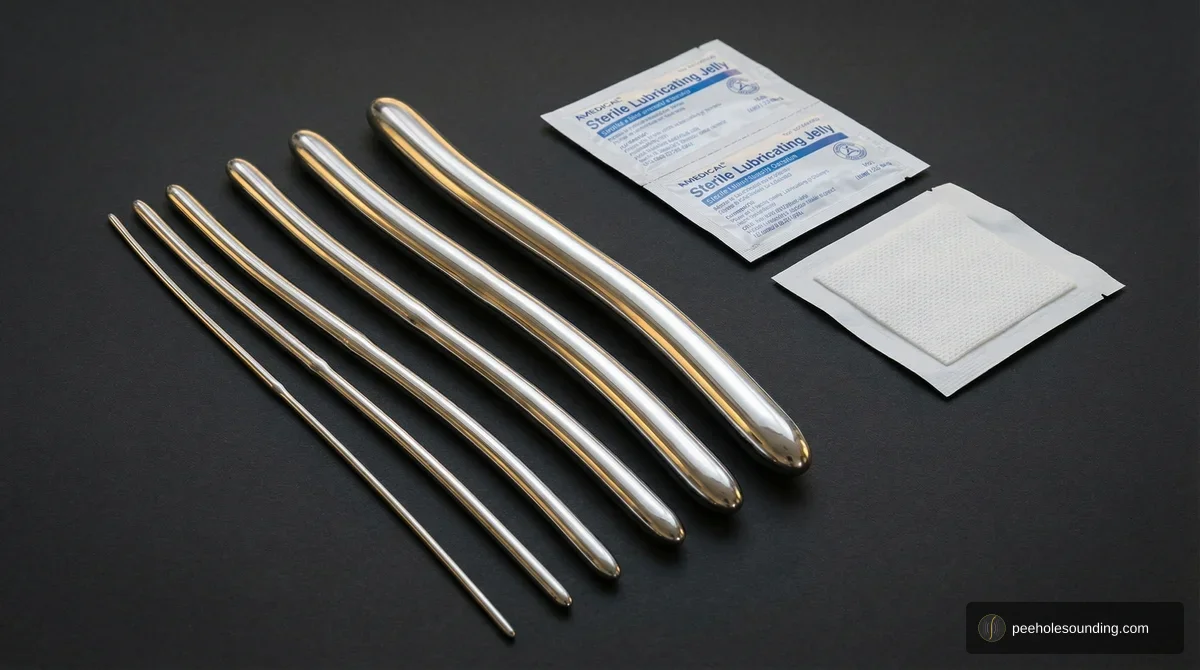
I still remember my first time trying to figure out how to insert a urethral sound. I sat on the edge of my bed with a Hegar sound in one hand and a packet of sterile lube in the other, staring at both like they were going to bite me. Every guide I'd found online said the same thing: "go slow, use lube." And then they stopped right where the useful information should have started.
This guide covers the actual technique to insert a urethral sound safely. Not vague reassurance, but the specific steps I use every time: how to hold the sound, what angle to use, what to do at resistance points, and how to tell the difference between normal sensation and a reason to stop. If you're still deciding whether sounding is for you, start with what urethral sounding actually is and come back when you're ready.
I'm not a doctor. This is based on my personal experience and research from about ten years of practice. If something feels wrong during or after a session, see a healthcare provider.
What You Need Before You Start
Choosing the Right Sound for Your First Insertion
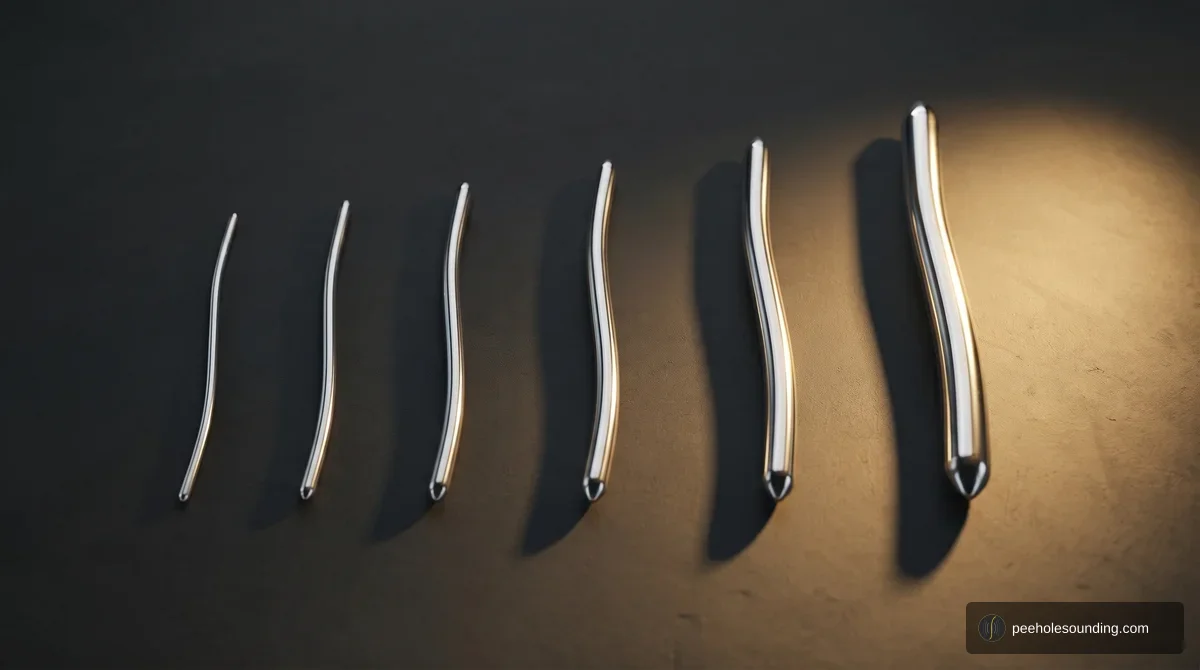
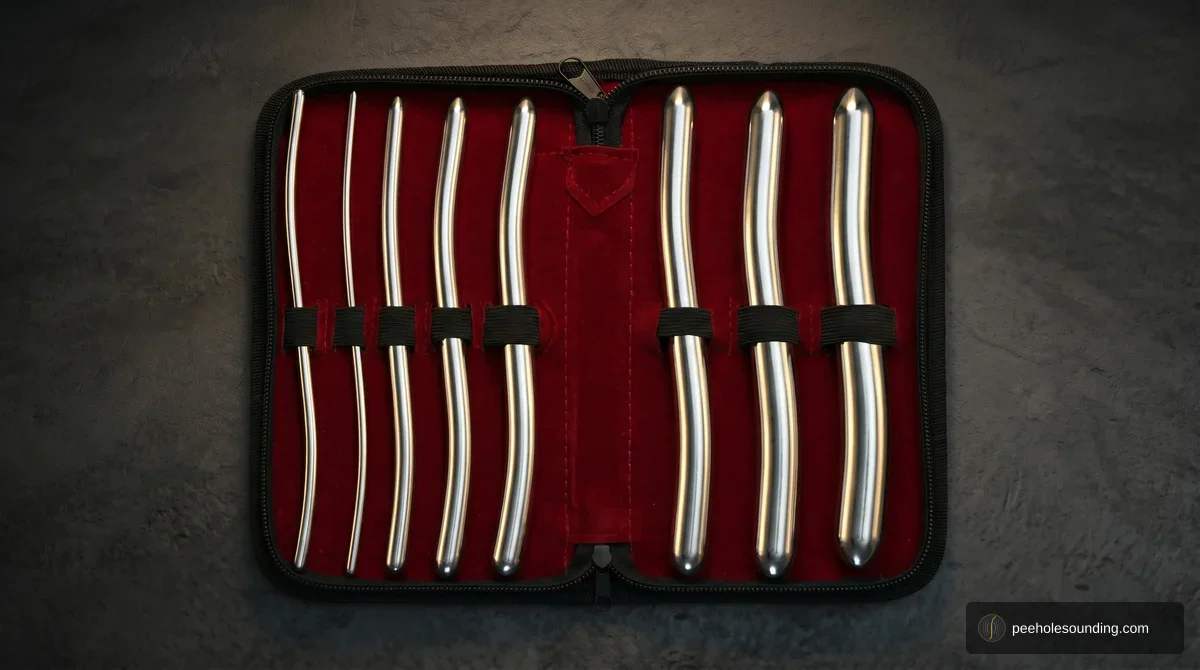
Start with a Hegar sound in surgical-grade stainless steel. Hegar sounds are gently curved, double-ended (two different diameters, one on each side), and have smooth, rounded tips. They're what most beginners start with, and what I still reach for most often.
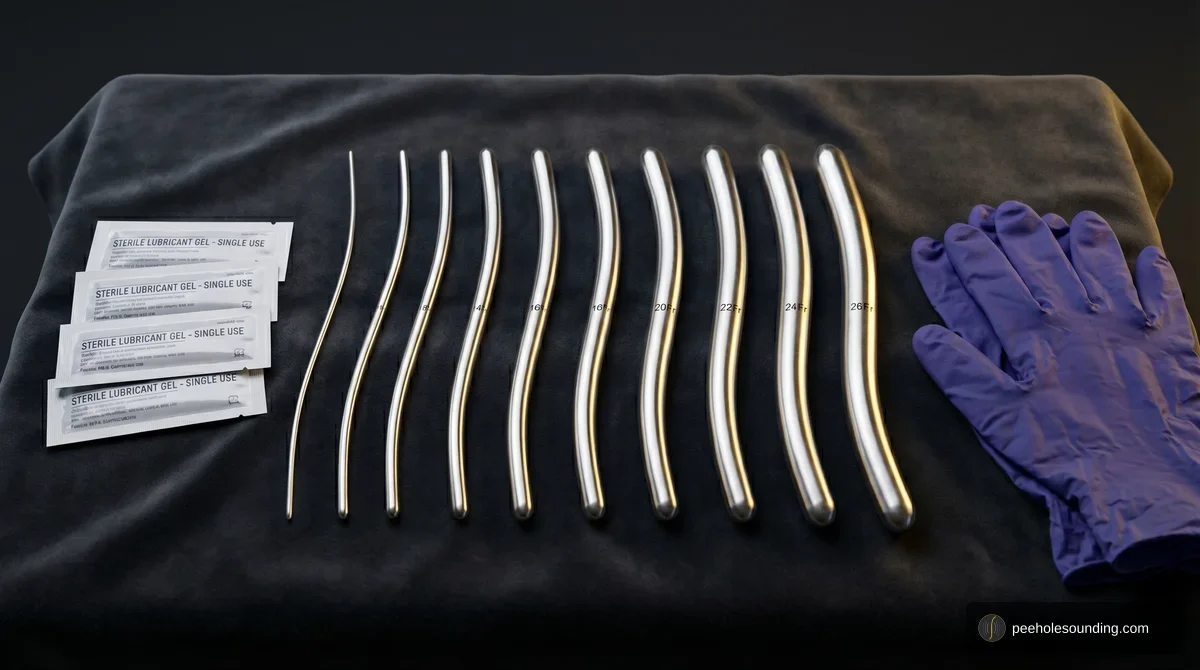
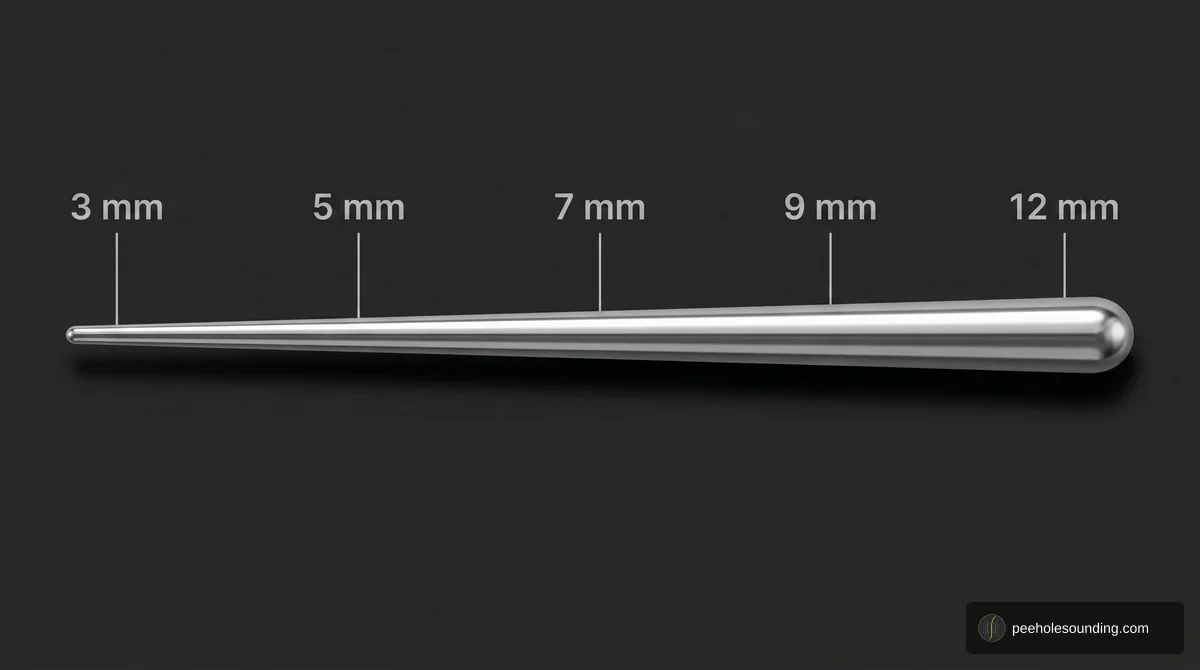
For size, go with something in the 1/8 inch to 3/16 inch diameter range. This is counterintuitive: most beginners assume thinner is easier. It's not. A sound that's too thin is harder to control and more likely to poke sideways into the urethral wall. A slightly thicker sound sits centered in the urethra and glides smoothly.
Women: consider starting with a flexible silicone sound instead of steel. Silicone is forgiving. If you go slightly too far, it bends rather than causing damage. The female urethra is short (about 1.5 inches), so that margin of safety matters. A 1/8 inch to 3/16 inch diameter is a good starting range for female anatomy.
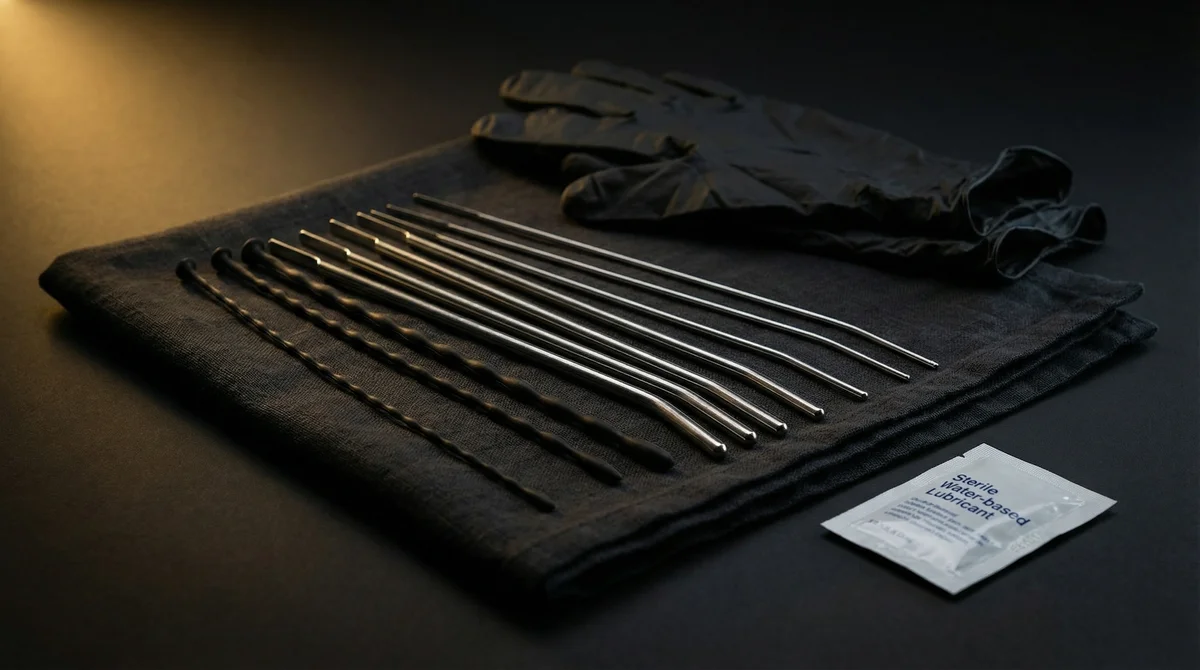
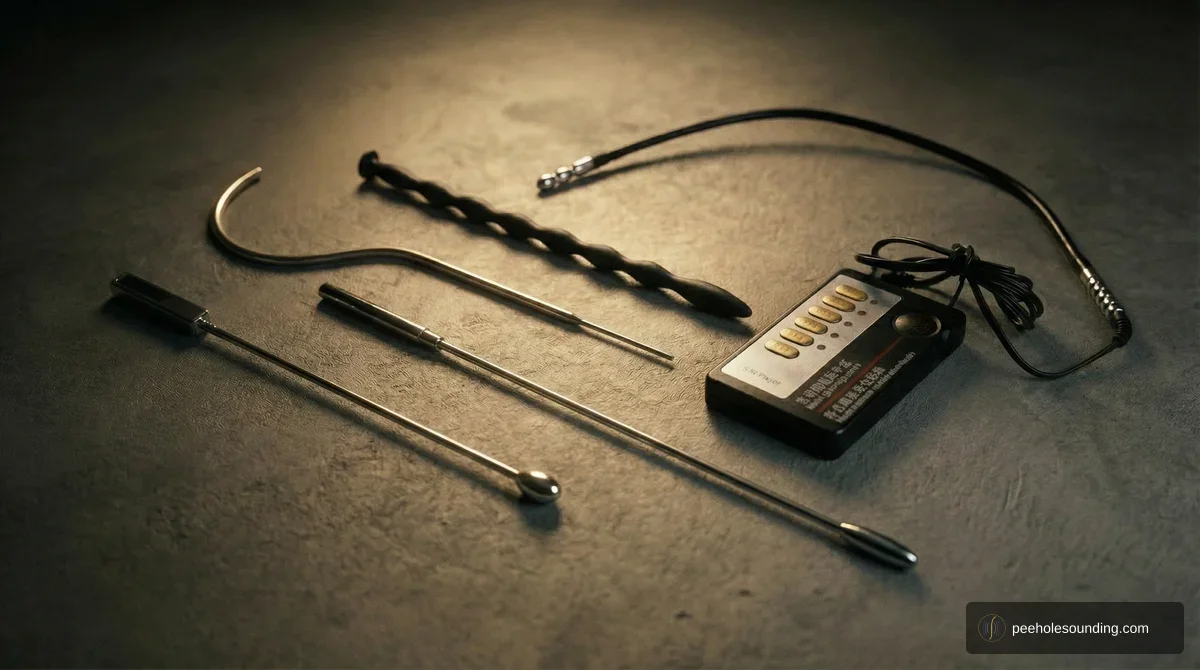
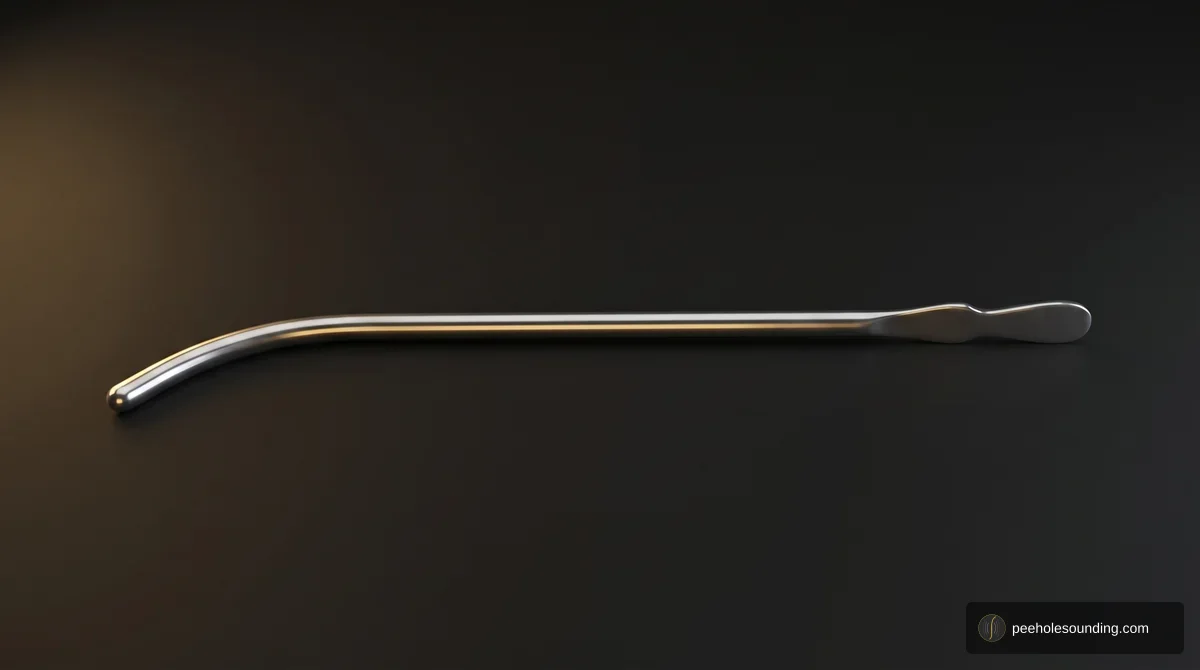
Avoid curved sounds like Van Buren or ribbed/textured designs for your first insertion. You want straight or gently curved, smooth, and simple. If you're looking for more detail on the different types, check out the full breakdown of sound types.
Sterile Lube: Non-Negotiable
Use sterile, water-based lubricant in single-use packets. Surgilube and sterile KY packets are the standard, and the lube guide goes through the specific products, the glycerin problem, and what to do when lube dries mid-session. Do not use regular lube from a bottle. The urethra is a direct path to your bladder, and non-sterile lubricant introduces bacteria into an environment that has zero defenses against them.
One technique that makes a real difference: use a lube syringe (a small, blunt-tipped syringe) to inject sterile lube directly into your urethra before insertion. It pre-lubricates the entire canal instead of just the opening. I didn't start doing this until about a year in, and the difference was immediately noticeable. Smoother insertion, less friction, less post-session irritation.
Sterilization in 60 Seconds
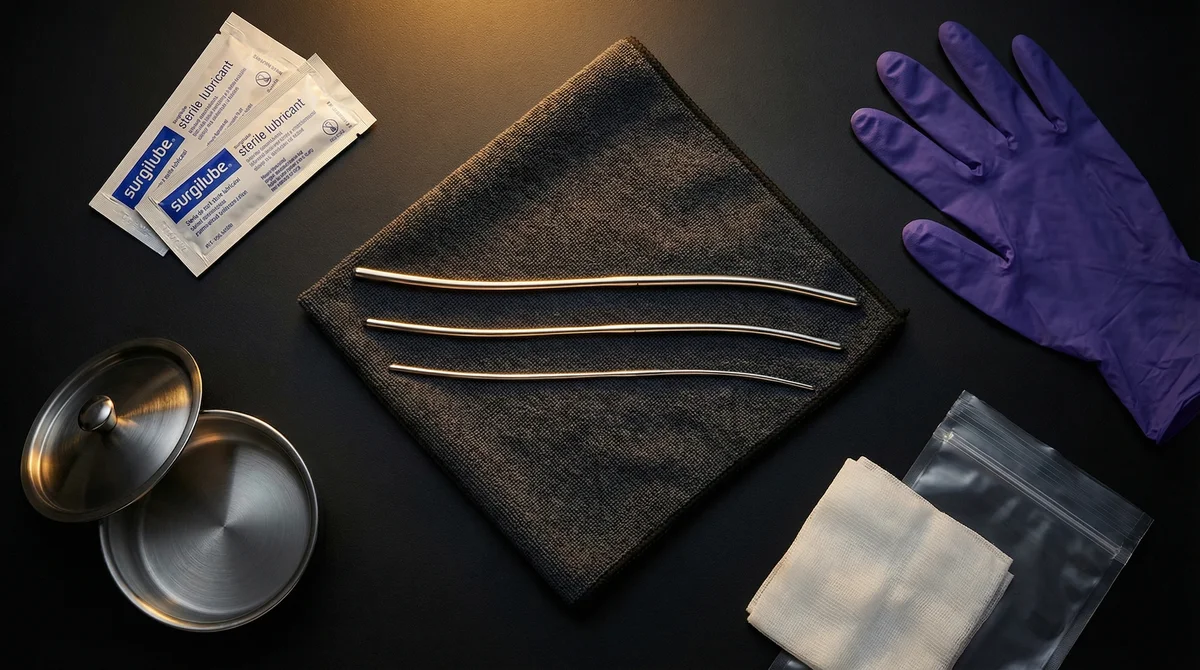
Sterilization is not optional. Before every session:
- Boil metal sounds for 10 minutes in clean water, or cold-sterilize with a solution like betadine or Cidex
- Wash your hands thoroughly with antibacterial soap
- Clean your genitals and the meatus (urethral opening) with mild, unscented soap
- Lay everything on a clean surface. A fresh towel works fine
For a deeper dive on sterilization methods, the safety protocols guide covers everything from boiling to autoclave options.
Pre-session checklist: Sterile sound. Sterile lube. Clean hands. Clean genitals. Empty bladder. If anything on this list is missing, don't start.
Getting the sound itself sterile is a separate job with its own timings, and it changes with the material. That's all in how to clean and sterilize urethral sounds.
Step-by-Step: How to Insert a Urethral Sound
Step 1: Urinate and Set Up Your Space
Empty your bladder before you start. A full bladder creates pressure that makes insertion uncomfortable, and urine in the urethra increases contamination risk. This also means you won't need to interrupt your session.
Lay out all your supplies within arm's reach: sound, lube packets, lube syringe if you're using one. You don't want to be hunting for lube with one hand occupied. A bed, recliner, or anywhere you can lie back comfortably works well.
Step 2: Lubricate Everything Generously
Coat the entire length of the sound with sterile lube. Not just the tip, the full shaft. Then apply lube to the meatus (the opening of your urethra). If you have a lube syringe, now is the time to gently inject a small amount of sterile lube into the urethra.
Here's my rule: if you think you've used enough lube, add more. Friction is the enemy. Every moment of resistance during insertion should make you think "more lube" before anything else.
Step 3: Find a Comfortable Position
Lying on your back or semi-reclined works best for most people, especially beginners. Your muscles are more relaxed in this position, and you have clear visual access. Sitting upright works fine once you have some experience, but for your first few sessions, recline.
The key is relaxation. Anxiety tightens your pelvic floor muscles, and tight muscles resist insertion. Take a few slow breaths. There's no rush.
Women: position a mirror between your legs so you can see the urethral opening clearly. It sits between the clitoris and the vaginal opening and can be tricky to locate the first time. The mirror is essential for your first few solo sessions. Once you know where the opening is, you'll find it by feel.
Step 4: Hold the Sound and Guide It to the Opening
With your non-dominant hand, hold your penis straight (not stretched, just straight) below the glans. If you have foreskin, pull it back gently.
With your dominant hand, hold the sound near the tip like you'd hold a pen. Rest the tip of the sound at the meatus. Don't push yet. Just let it sit there while you take a breath and relax.
Step 5: Let Gravity Do the Work
This is the part every other guide gets wrong. You are not "inserting" the sound. You are allowing it to descend.
A stainless steel sound has enough weight to slide into the urethra on its own, guided by gravity and lubrication. Your hand is there to control direction and speed, not to push. If you find yourself applying pressure, stop. Add more lube and let the weight of the sound do the work.
The moment I stopped trying to "push it in" and started just guiding it while gravity pulled, everything changed. The sound slid smoothly, there was no discomfort, and I realized I'd been fighting myself the entire time.
If the sound doesn't move at all: more lube, deeper breath, softer grip. Your body needs to invite it in.
Step 6: Navigate the Angle
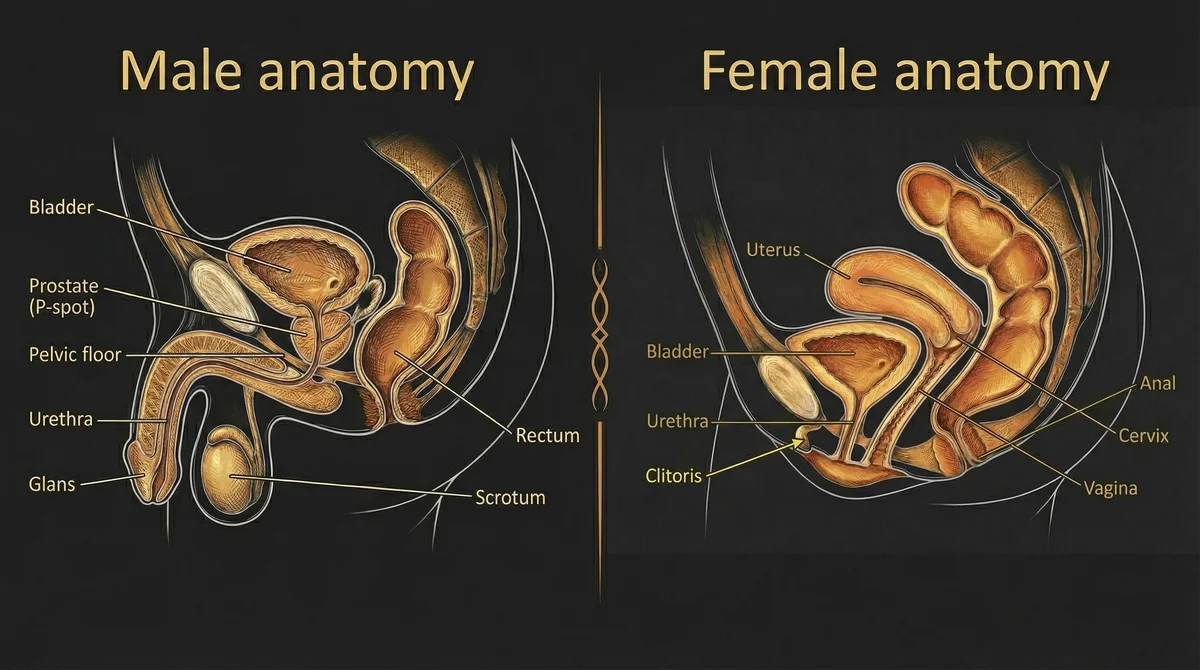
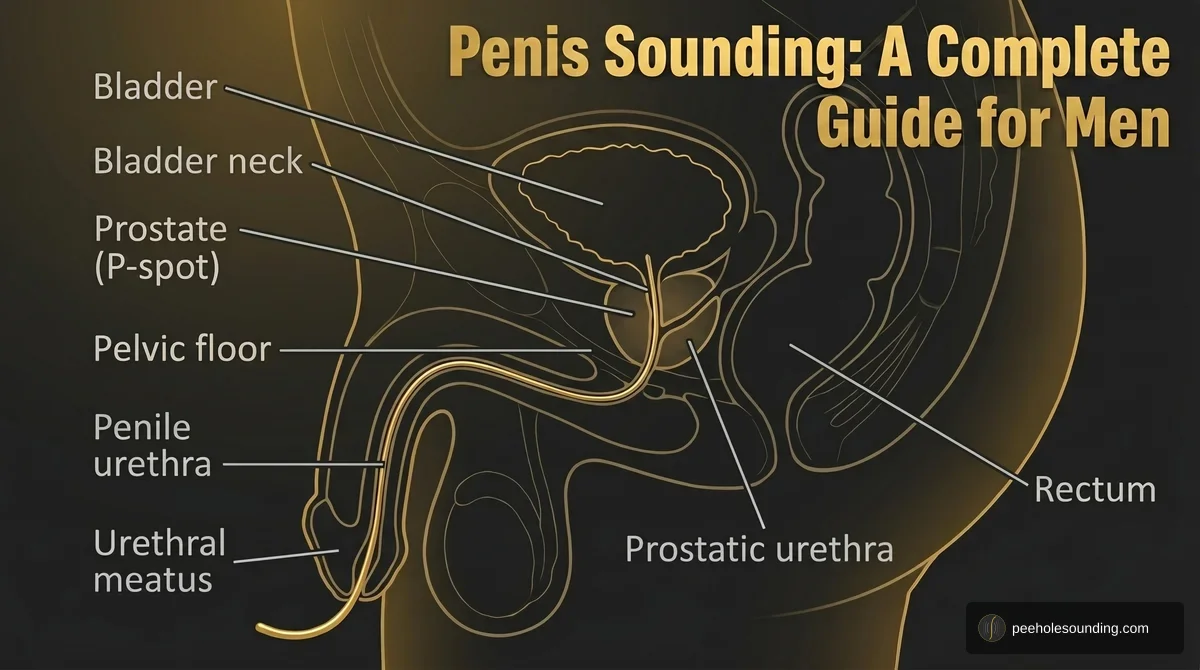
The urethra is not a straight tube. In male anatomy, it curves gently. Understanding this curve is the difference between smooth insertion and hitting a wall.
For male anatomy: Start with the penis held straight up (perpendicular to your body). As the sound descends past the glans and into the penile shaft, you may need to tilt the penis slightly toward your belly, maybe 15 degrees. This follows the natural curve of the urethra as it passes behind the pubic bone. Let the sound guide you. If it glides, the angle is right. If it stops, adjust slightly.
For female anatomy: The urethra is much shorter (about 1.5 inches) and relatively straight, so angle is less of a factor. Place the lubricated sound at the urethral opening and apply gentle, steady pressure. With silicone, you may need to guide it more actively since it lacks the weight of steel. Try gentle back-and-forth movements as you go. This helps the urethra relax and accommodate the sound, and it also feels good. The tissue here is delicate and shares nerve endings with the clitoris, so what starts as technique quickly becomes pleasure. The female urethral sounding guide covers anatomy, sizing, orgasm tips, and the clean-hand rule in full detail.
Step 7: Resistance Points (and What They Mean)
You'll likely feel resistance at one or two points during insertion. This is normal. The urethra has two sphincters, external and internal (ring-shaped muscles that control flow), and both will make themselves known as the sound passes through.
First resistance: the external urethral sphincter. This sits roughly where the penile shaft meets the body, at the base of the penis. It's the muscle you consciously squeeze when you stop your urine stream. You'll feel the sound slow down or stop here. Don't push. Pause, breathe, and consciously relax, the same way you would if you were starting to urinate. Some people find it helps to actually mimic that "about to pee" feeling (without doing it). Once the sphincter relaxes, you'll feel a slight give, and the sound will slide past. In my experience, this is the spot that trips up most beginners. They feel resistance and assume something is wrong. It's not. It's just a muscle doing its job. Give it a moment.
Second resistance: the internal urethral sphincter (bladder neck). If you go deeper (and beginners shouldn't on their first sessions), you'll hit a second ring of resistance where the urethra enters the bladder. This sphincter is involuntary, meaning you can't consciously relax it the same way. It takes patience, arousal, and experience to pass it comfortably. This is advanced territory. For now, treat the external sphincter as your depth limit. Once you're ready for prostate-reach work, the men's sounding guide covers deeper-insertion technique.
Women: your urethra is only about 1.5 inches long, so you'll reach the bladder neck (internal sphincter) much sooner. That first feeling of deeper resistance is your stopping point as a beginner. Don't push past it. Because the canal is so short, you may not feel the external sphincter as a distinct "gate" the way men do. Instead, the whole insertion may feel like one smooth glide followed by a firm stop. That firm stop is the bladder. Respect it.
The sound stops but there's no sphincter-like resistance. You've probably hit an angle mismatch. Try tilting the penis a few degrees in either direction. The sound should find its path and continue.
Sharp or localized pain. Stop. Withdraw the sound slowly and gently. Re-apply lube and try again in a few minutes. If the pain returns in the same spot, you're done for today. Sharp pain means the tip is pressing against tissue, and forcing past it risks injury. For the full green, yellow and red breakdown of what you might be feeling, see does sounding hurt.
The sound should never need force at any point. If it does, something is wrong: wrong angle, not enough lube, or your body isn't relaxed enough. Never push through resistance. Traumatic or repeated instrumentation of the urethra can damage the epithelium and heal as a stricture, which is exactly what careful technique prevents.
Step 8: Depth, How Far Is Safe?
For beginners, don't go past the length of the penile shaft. You'll feel a natural stopping point where the urethra curves more steeply toward the bladder. Respect it.
Going deeper (past the external sphincter and into the prostatic urethra or bladder) is advanced territory. It feels different: more intense, more pressure. It requires experience with how your body responds. That's not for your first five sessions.
For now, focus on the sensations in the penile urethra. There are plenty of nerve endings here, and most people find that even shallow insertion produces a satisfying feeling of fullness and internal pressure that surface stimulation can't replicate. What those sensations actually feel like, session by session, is its own deep dive.
Stop immediately if you feel sharp pain, see blood, or the sound won't move in either direction. Withdraw gently, add lube, and try again later. See a doctor if symptoms persist.
Erect, Semi-Erect, or Flaccid: Which Is Best for Insertion?
Start flaccid. The urethra is widest and most relaxed when the penis is soft. The angle is straightforward, and there's no engorgement pressing on the urethral walls.
Semi-erect works too, and some people find it easier to hold the penis steady. The urethra is slightly tighter, but not enough to cause problems for most sound sizes.
Fully erect is possible but harder. The urethra narrows, the tissue is engorged, and the angle changes. I can insert at full erection now without issues, but it took practice. If you're learning, flaccid is more forgiving.
One thing that catches beginners off guard: you may get an erection during insertion, or you may not. Both are completely normal. Arousal during sounding varies from person to person and session to session. Don't judge the experience by whether or not you get hard.
What to Do If Something Goes Wrong
The Sound Won't Go In
More lube. Always the first answer. Apply it to the sound and the meatus, and try again.
If that doesn't help, try a slightly larger diameter. I know that sounds counterintuitive, but a thinner sound can catch on the urethral walls and poke sideways. A sound that fits the urethra more snugly glides straighter.
Still no luck? Walk away for ten minutes. Anxiety and muscle tension are the most common reasons a sound won't enter. Come back when you're genuinely relaxed.
The Sound Feels Stuck
Don't panic. Tension makes it worse. Tightened muscles grip the sound harder.
- Add more lube to the meatus and around the protruding portion of the sound
- Breathe deeply and consciously relax your pelvic floor
- Position yourself so gravity helps. Standing or sitting upright lets the sound's weight assist
- A warm bath can help relax the muscles around the urethra
- Give it 15-20 minutes of patient relaxation
If the sound still won't move after 20 minutes, go to the emergency room. Be honest with the medical team about what happened. They've seen it before, and accurate information helps them help you faster.
Pain or Bleeding
Mild burning or a slight stinging sensation during your first few insertions is within the range of normal. The urethra isn't used to being touched, and mild irritation happens.
Sharp pain, visible blood, or persistent burning means stop immediately. Withdraw the sound slowly (never yank), add lube if needed to ease removal, and monitor your symptoms.
A small amount of pink-tinged urine after your first session isn't uncommon. Bright red blood, blood that doesn't stop, or pain that worsens over the following hours means see a doctor. No exceptions. Check the safety protocols guide for a full breakdown of warning signs and when to seek medical attention.
Aftercare: What to Do After Your Session
Aftercare matters as much as technique. Here's the protocol I follow every time:
Remove before ejaculation. If you're combining sounding with masturbation and you feel an orgasm building, withdraw the sound first. Ejaculating with a sound inserted can cause retrograde ejaculation (semen backing up into the bladder) and intense pain. Always remove first.
Urinate within 30 minutes. This flushes any bacteria that may have entered the urethra during the session. UTIs are usually caused by bacteria entering through the urethra, so flushing promptly matters. Yes, it might sting a little the first time. That's normal.
Drink extra water for the next few hours. More fluid means more urine, which means more flushing. This is your simplest defense against UTIs.
Mild burning during the first urination is normal, especially if this is your first session or you're still building up tolerance. It should fade within a few hours. If burning persists past 48 hours or gets worse, that's a possible UTI, and you should see a doctor.
Clean and sterilize your sound before putting it away. Soap and water first, then your sterilization method of choice for next time.
Common Insertion Mistakes (and How to Avoid Them)
These are the mistakes I see most often, and a few I made myself early on:
- Using non-sterile lube. Single-use sterile packets only. Regular bottle lube is not sterile once opened.
- Starting too thin. Very thin sounds are harder to control and can poke the urethral wall. 1/8 inch to 3/16 inch is a good starting range.
- Pushing instead of guiding. If you're applying downward pressure, you're doing it wrong. Let gravity and the sound's weight do the work.
- Skipping the angle adjustment. The urethra curves. If the sound stops, adjust the angle before adding force (which you should never do).
- Inserting while too tense. If you're clenching, the sphincter is clenching too. Breathe, relax, try again.
- Ejaculating with the sound in. Always remove before climax. This one matters.
- Rushing depth. You don't need to go deep to enjoy sounding. Shallow insertion in the penile urethra is pleasurable on its own.
- Reusing lube or touching non-sterile surfaces. Once your hands are clean and your field is set, don't touch your phone, the bedsheets, or anything else. Re-contamination is the most common hygiene mistake.
Frequently Asked Questions
Related Guides
What Is Urethral Sounding? A Complete Guide to Safety, Pleasure & Getting Started
Feb 15
Urethral Sounding for Beginners: Sizes & First Session
Apr 5
Is Sounding Safe? Sounding Safety Protocols & Risks
Mar 5

Female Urethral Sounding: Beginner Techniques & Safety
Mar 30
Urethral Stretching Guide: Safe Progressive Dilation for Beginners
Apr 24
Sounding Rods Sizes Chart: French Gauge to mm to Inches
Apr 28
Penis Sounding for Men: Sizes, Safety & Prostate Technique
May 9
Hegar Sounds: Sizes, Full mm/Fr Chart & How to Choose
Apr 12
Sounding Toy Guide: Types, Materials & How to Choose
Mar 10
Van Buren Sounds: Why They Curve, Sizes & How to Use Them
Aug 7