Sounding Pleasure: What It Feels Like & Why People Chase It
Sounding pleasure explained: first-person sensation descriptions, why people chase it, and what it actually feels like session by session.
 By Kevin Voss
Sounding pleasure, for me, starts as a focused pressure right at the meatus, then turns into a fullness that runs the length of the urethra and presses into the prostate or the urethral sponge depending on the body. The first session, it's mostly strange. By the third, it's warm, pressure-deep, and unmistakably sexual.
Yes, most people who practice sounding describe it as deeply pleasurable. The sensations are unlike anything else: a feeling of internal fullness, gentle pressure along the urethral walls, and direct stimulation of nerve pathways connected to the prostate and pelvic floor. But it's not instant. My first time was more weird than good. By my third session, something clicked, and I understood why people get hooked on this.
This guide is everything I wish someone had told me about what sounding actually feels like. Not the clinical version. Not the scary version. The honest version, from someone who's been doing this for about ten years. I'll cover sensations for all bodies, what to expect your first time, and why the pleasure builds over multiple sessions.
I'm not a doctor. This is based on my personal experience and research. Always consult a healthcare provider for medical concerns.
Does Urethral Sounding Feel Good?
The short answer is yes, for most people who try it with the right preparation and mindset. Sounding produces sensations that no other sexual practice can replicate, because you're stimulating nerves from the inside that external touch simply can't reach.
But here's the honest part: it doesn't always feel good immediately. The first session is often more about learning to relax than experiencing pleasure. Your body doesn't know what's happening, your brain is overanalyzing every sensation, and the unfamiliarity can override the physical pleasure. That's completely normal.
The pleasure builds with experience. Most people I've talked to, and this matches my own experience, say that sounding starts feeling genuinely good somewhere around the second or third session. Once your body knows what to expect, it relaxes. And when it relaxes, the sensations go from strange to incredible.
If you're curious about the basics of what sounding is and how to try it, start with my complete guide to urethral sounding.
What Does Sounding Actually Feel Like?
Clinical breakdowns only get you so far. Before I get to the anatomy, here's how I'd describe what sounding actually feels like in my own body, after about ten years of practice. The stage-by-stage mechanics come right after.
The first inch. A focused stretch right at the meatus, the kind that announces itself and then settles. Not pain. Not even much pressure. Just nerves you didn't know were that loud, lighting up at once.
The wobble, then the snug. Past the opening there's a wider chamber where the sound has room to shift around. The first time, I was sure I was doing something wrong. Then the walls grip, and everything calms down. The shift from "loose" to "held" is the moment my body stops fighting it.
The bladder reflex. A wave of "I need to pee" shows up a few inches in, even on an empty bladder. It used to alarm me. Now I read it as a marker that I've reached the part of the urethra where things get interesting.
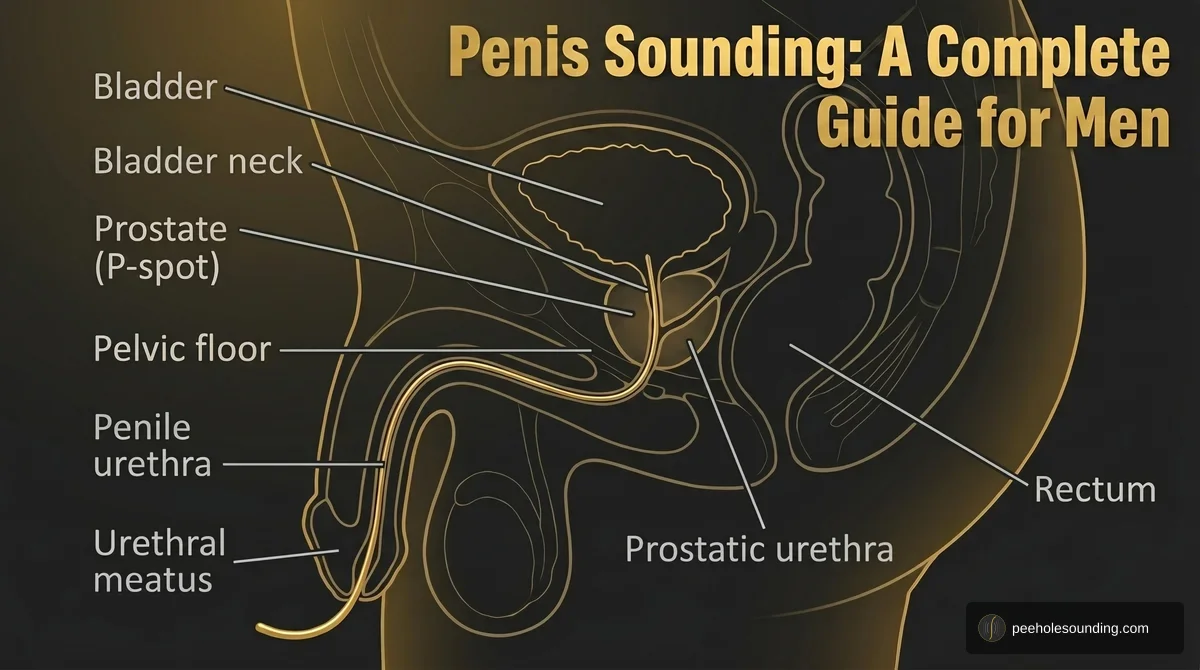
The pressure point. When the sound reaches the prostate region, the sensation localizes and goes deep. Not friction. Full-spectrum pressure that radiates into the pelvic floor and up into the lower abdomen. The female practitioners I've talked to describe the equivalent in different language: pressure on the urethral sponge that runs forward to the clitoris and back to the pelvic floor at the same time. Same architecture of nerves, different body.
The "new direction" feeling. Every sensation in normal sex moves inward from skin contact. Sounding moves the other way: same nerves, stimulated from inside the body. Even after ten years, I don't have a clean comparison from external sex. It's its own category. The closest I can get is this: imagine the most sensitive nerve endings you have, then imagine reaching them from the other side.
The warm spread. Once the pelvic floor relaxes (session three onward, for me), the focal pressure turns diffuse. Warm, slightly humming, spreading outward from where the sound sits. That's the part most people don't believe until they feel it.
That's the subjective version. Underneath it are three things beginners ask me about constantly, because all three feel wrong the first time and none of them are: the loose first inch, what movement and depth actually do, and the bladder reflex.
The First Inch, and Why It Feels Loose Before It Feels Right
There's an anatomical reason the opening stretch feels unconvincing, and almost nobody warns you about it. The meatus itself is the narrowest point of the whole male urethra, but right behind it sits the fossa navicularis, a small chamber at the tip of the penis that's wider than the urethra proper. A sound sized for the urethra therefore has room to shift around inside that chamber. It bumps the walls, it rattles a little, and your first instinct is that you've picked the wrong tool or the wrong angle.
You almost certainly haven't. This is the single most common "am I doing this wrong" moment in sounding, and it resolves on its own about an inch in, when the walls close around the sound and the fit tightens. The change is obvious when it happens. Bouncing around becomes smooth, held, controlled.
Here's the line that matters. If the loose, uncomfortable feeling clears once the sound is past the tip and into the shaft, you're fine and you can carry on. If it's still there after that point, it isn't the fossa navicularis, and you should stop and reassess: size first, then lube, then angle.
People with a vulva mostly skip this stage. The urethra is shorter and straighter with no equivalent wide chamber, so the wobble is rare. What women describe instead is the sponge engaging almost immediately: warm, spreading pressure that radiates forward toward the clitoris and back into the pelvic floor within the first moments of insertion.
Movement, Depth, and Fullness
A sound sitting still already feels like something. A sound that moves is a different practice entirely, and it's the part beginners tend to skip for months because they're concentrating so hard on getting it in at all.
Slow, shallow travel is the whole technique. Half an inch of movement, unhurried, is plenty. The sliding contact along the urethral wall is what most people mean when they say sounding feels like nothing else, and it needs almost no distance to work. Fast or deep stroking is not the advanced version of this. It's just friction, and friction inside the urethra is how you end up sore for two days.
For people with a penis, the fullness builds the deeper you go, and it changes character rather than simply getting stronger. Somewhere around the prostate the sensation stops being about the shaft and starts being about the pelvis. Some people describe it as electric. For me it's closer to a deep, spreading warmth that arrives about a second behind the pressure.
For people with a vulva, depth isn't the game. The urethra is only about an inch and a half long, so there's nowhere to travel to. The variable is pressure: how firmly the sound presses the sponge, and how the pelvic floor answers it. Small changes in angle do more here than any amount of depth.
Vibration is a third route: instead of moving the sound, you let the sound do the moving. I've tested that, and the honest summary is that the idea works better than the budget hardware does. I wrote up the cheap vibrating sound I bought and the vibration itself was fine for the money. The bendable wire it's mounted on is the part I couldn't recommend.
Where the "Need to Pee" Feeling Comes From
The mechanism is simple enough that knowing it takes most of the alarm out. The sound presses on the urethral sphincter, the muscle that holds urine in, and pressure at that spot is the only signal your body has ever used to mean "bladder full." Your brain has no other file for it, so it reports the one thing it knows. An empty bladder makes no difference to that.
The timing differs by anatomy. People with a vulva usually meet it within the first moments, because there's very little urethra between the opening and bladder-adjacent tissue. People with a penis meet it later, as the sound reaches deeper.
It fades. Not because the nerve stops firing, but because your brain stops misreading it once it has somewhere else to file the sensation. That took me three or four sessions. Plenty of experienced practitioners end up chasing the feeling rather than tolerating it, which sounds absurd until it happens to you.
One practical note: empty your bladder before a session anyway. It won't stop the reflex, but it removes the one variable that would make it genuinely urgent.
If you've tried sounding once and none of this matched what you felt, that's normal. The sensations don't fully arrive on session one. The next section is the anatomy underneath all of it: why these particular nerves answer the way they do.
Why Does Sounding Feel Pleasurable?
The Shared Nerve Pathways
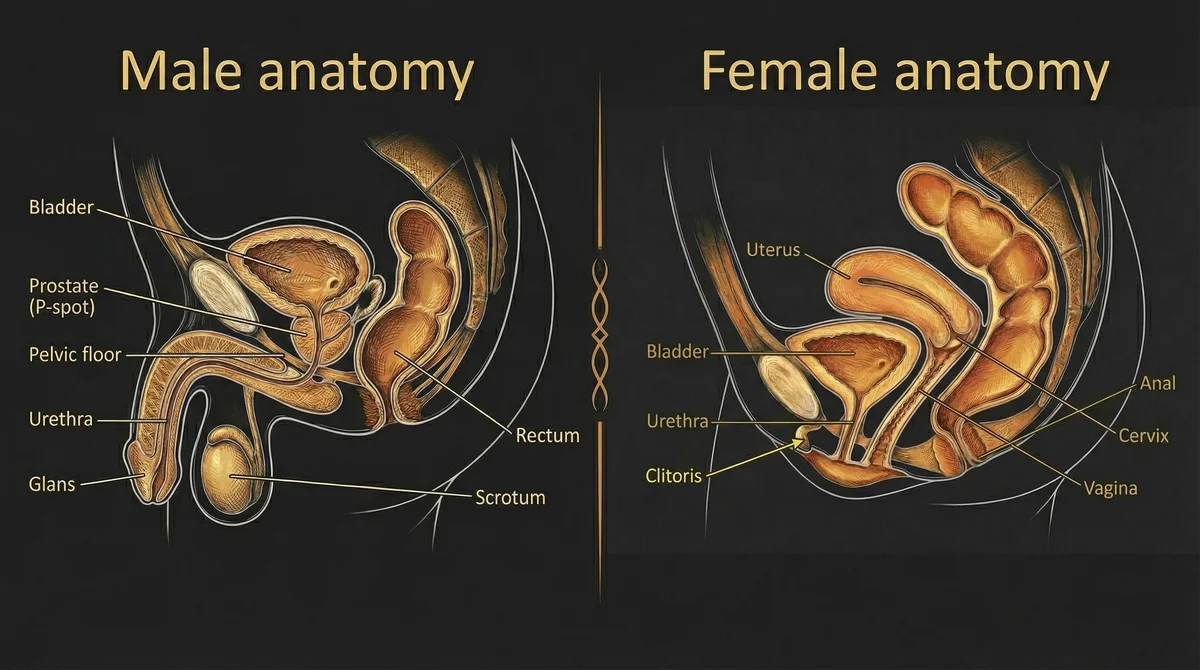
The reason sounding feels sexual, and not just weird, comes down to anatomy. The dorsal nerve of the penis and the dorsal nerve of the clitoris both send branches into the urethral lining (anatomical study of anterior urethral innervation, PubMed). These are the same nerves responsible for the reflexogenic arousal pathway: the mechanism that makes physical touch produce sexual arousal.
When a sound moves through the urethra, it stimulates these nerve branches from the inside. Your body's arousal response kicks in through a pathway that external stimulation alone can't access. This is why sounding can feel intensely sexual even without touching the outside of your genitals. That's the physiology. The psychology (vulnerability, taboo, control, medical play) is its own half of the answer, and I cover it in the kink and BDSM side of why people do this.
Prostate Stimulation From Within (People With a Penis)
For people with a penis, the urethra passes directly through the prostate gland (prostate anatomy overview, StatPearls/NCBI). A sound that reaches this depth creates internal pressure on the prostate, essentially a prostate massage without any anal penetration.
This is a major part of why many men describe sounding orgasms as unusually intense. The prostate is already one of the most pleasure-dense structures in the male body, and sounding stimulates it from the inside. No other sexual practice can do this. Anal prostate massage presses from behind. Sounding presses from within the urethra itself, directly through the prostate tissue. There's no other way to access this angle. If you're interested in building up to deeper insertion safely, my beginner's guide to urethral dilation covers the progression. The men's sounding guide goes deeper on prostate-reach work.
Urethral Sponge and Pelvic Floor (People With a Vulva)
For people with a vulva, the key structures are the urethral sponge (the tissue surrounding the urethra, also called the Skene's glands, which are homologous to the male prostate) and the pelvic floor muscles.
The urethral sponge is the tissue that many researchers believe is responsible for G-spot sensation and female ejaculation. Sounding stimulates this tissue from inside the urethra, a direction that no other form of play accesses. It's like pressing the G-spot from the other side.
The pelvic floor muscles also contract and engage around the sound, creating a feedback loop of pressure and stimulation. Some women report that this connection is what makes sounding orgasms feel "deeper" or more full-body than clitoral stimulation alone. For a complete walkthrough of the female sounding experience, see my guide to sounding for women.
Does Sounding Hurt?
First Time vs. Experienced: The Learning Curve
Sounding should not hurt. If it hurts, something is wrong: wrong size, not enough lube, too much tension, or too much force. Pain is a signal to stop, not push through. I wrote a whole guide on reading that signal, including a sensation-by-sensation table of what to continue through and what to stop for: does sounding hurt.
That said, the first time isn't usually pleasurable either. It's unfamiliar. My first time wasn't painful, but I was so tense that I couldn't enjoy it. My pelvic floor was clenched, I was overthinking every millimeter of insertion, and I pulled the sound out after about thirty seconds. Not exactly a revelation.
The second session was better. The third was when it actually started feeling good. This progression is remarkably consistent. Almost everyone I've talked to describes a similar curve.
For people with a penis, the learning curve tends to involve getting comfortable with depth. The urethra has curves and passes through muscles, and it takes a few sessions to learn how your body responds to a sound moving through that path.
For people with a vulva, the curve is often about managing the bladder-pressure sensation and learning to relax the pelvic floor. The shorter urethra means less physical territory to cover, so some women report feeling comfortable faster. But the intensity of the pelvic floor engagement can take adjustment.
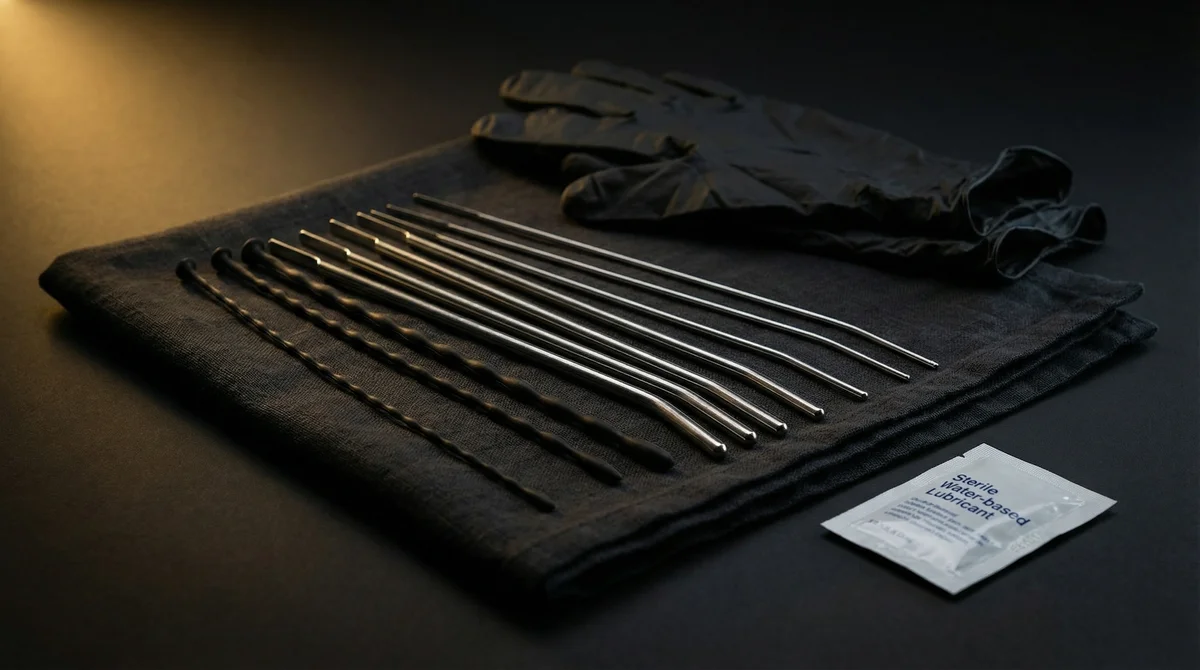
Technique, relaxation, and lube quality are everything. Sterile, water-based lubricant isn't optional. It's the difference between discomfort and pleasure.
When Discomfort Means Stop
There's a clear line between "this is new and I'm adjusting" and "something is wrong." A mild "I need to pee" sensation is normal. A gentle stretch is normal. Sharp pain, burning, resistance that doesn't ease with more lube, and any bleeding are not. Those are stop signals: remove the sound, add more lube or change the angle, and only resume if the sensation resets. For the full traffic-light system and what to do at each tier, see my sounding safety guide.
Can You Orgasm From Sounding?
How Much More Intense Is It, Really?
Yes, and many people describe sounding orgasms as noticeably more intense than what they experience from external stimulation alone.
The reason is layered stimulation. A sound provides constant internal pressure on nerve-dense tissue while you simultaneously stimulate externally through masturbation or partner play. The combination activates multiple arousal pathways at once.
For people with a penis, the sound creates direct pressure against the prostate and the ejaculatory duct during orgasm. Many men report that orgasms with a sound inserted are longer, more intense, and produce stronger contractions. Some describe a full-body quality that standard masturbation doesn't have.
For people with a vulva, the sound stimulates the urethral sponge while clitoral stimulation activates the external nerve pathways. Some women report orgasms they describe as deeper, more internal, and more satisfying than clitoral orgasms alone, similar to what's often called a "blended orgasm."
Hands-Free Orgasms: Real or Myth?
The community talks about hands-free orgasms from sounding, and they do happen. I've experienced it myself, so yes, it's real.
In my experience, the most common path is using masturbation to build arousal and edge close to orgasm, then stopping external stimulation and letting the sound's internal pressure carry you over. The prostate stimulation from inside the urethra keeps the arousal climbing even without touch. Once you're aroused enough, the sound alone can finish the job. It can also happen without masturbation at all, purely from the sound, but that usually requires being deeply aroused beforehand and very comfortable with the practice.
For people with a penis, this is more achievable than most "hands-free" claims because the prostate proximity is a real anatomical advantage. The direct internal stimulation builds in a way that external edging can't replicate.
For people with a vulva, hands-free orgasms from sounding are less commonly reported. Some women do describe reaching orgasm through urethral stimulation alone, likely through Skene's gland activation and pelvic floor engagement. It depends heavily on individual sensitivity.
Realistic expectation: Don't make hands-free orgasm the goal. If it happens, it's a bonus. The pleasure of sounding is worthwhile regardless.
Sounding and Edging
A sound creates constant low-level stimulation that makes edging remarkably effective. The internal pressure keeps your arousal high even when you pause external stimulation, which makes the build-and-pause cycle more intense.
Some practitioners, both men and women, use slow in-and-out movement of the sound as the primary edging tool, building toward release and then pausing. For people with a vulva, this controlled pressure buildup sometimes leads to squirting or fluid release, especially with shallower sounds that focus pressure on the urethral sponge.
Removing the sound at the moment of orgasm is another technique some people explore. For men, the sudden removal as ejaculation begins can intensify the release. For women, removal often brings a rush of pelvic floor relaxation that some describe as its own wave of sensation.
What Are the Benefits of Sounding?
Search for the benefits of urethral sounding and you'll find pages hinting that it does something for your prostate health or your urinary function. Let me be honest: it doesn't. Sounding is a medical procedure that people repurposed for pleasure, and the reason to do it is that it feels good. Nothing on this page is a health claim, and you should be suspicious of any page that makes one.
What people actually get out of it, roughly in the order I hear it:
A sensation with no substitute. This is the one nobody expects to matter as much as it does. After a while, most sexual sensation is a variation on something you already know. Sounding isn't. It's a genuinely new category, and for people who've been sexually curious for a long time, that alone is the draw.
Prostate access without anal play. For plenty of men, this is the entire reason. Same gland, different door, and none of the preparation, cleanup, or hang-ups that anal play carries for some people.
Orgasms with more behind them. The most consistently reported benefit, and the one I'd back myself: longer, deeper, more contractions, more of the body involved.
A better edging tool than your hand. Constant low-level internal stimulation holds arousal up through the pause, which is exactly what edging needs and exactly what external stimulation stops doing the moment you let go.
The half that isn't physical. Vulnerability, control, trust, the medical-play framing. For a lot of practitioners this is the larger share of the appeal, and it's why sounding sits comfortably inside a broader urethral play practice rather than standing alone as a technique.
Bottom line: the benefits live in the sensation and the headspace, not in the health column. That's a perfectly good reason to do something. It doesn't need to be dressed up as medicine.
What Affects Your Sounding Experience?
Material: Steel vs. Silicone
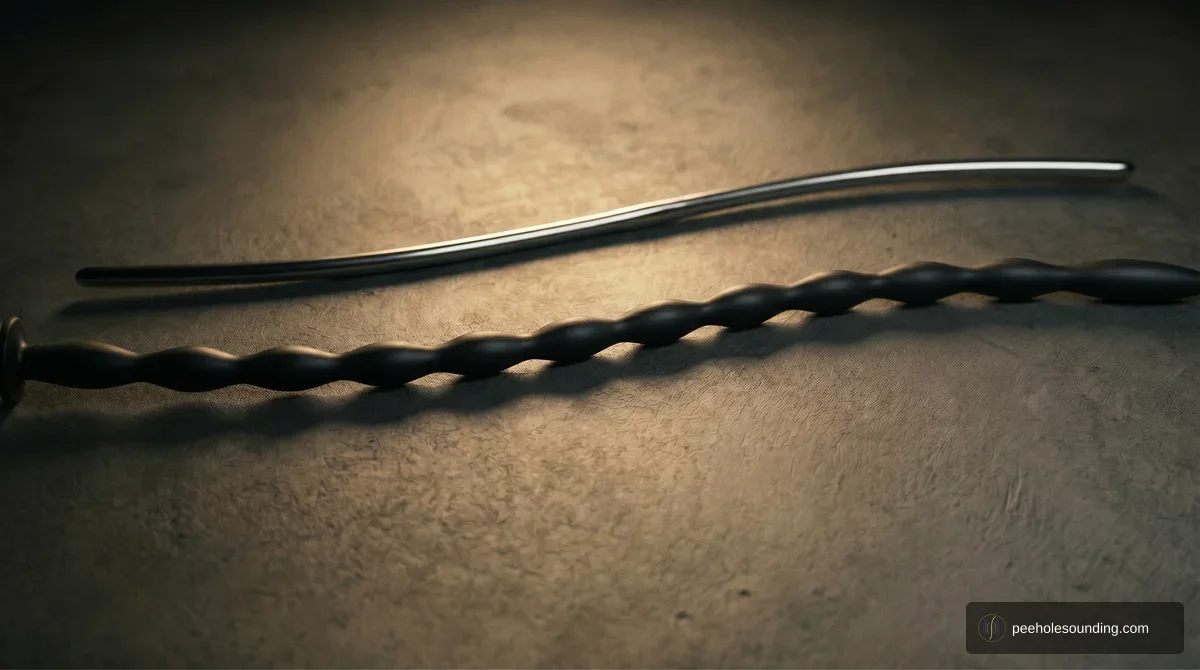
Steel sounds are smooth, heavy, and slide with gravity. The weight does a lot of the work. You hold the sound over the opening, and gravity pulls it gently inward. Steel is also great for temperature play: run it under cool water before a session, and that initial chill adds an extra dimension to the insertion sensation. In my experience, steel provides the most precise feedback. You can feel exactly where the sound is and what it's touching.
Silicone sounds are flexible, warmer to the touch, and create more friction against the urethral walls. They need more lube because they don't slide as freely. Some people prefer silicone for exactly that reason: the added texture creates a different kind of stimulation. Silicone is also more forgiving for beginners because it bends with your anatomy rather than requiring you to match the angle of a rigid rod. Still choosing a first set? My sounding kit guide compares materials, grades and piece counts.
Size and Girth
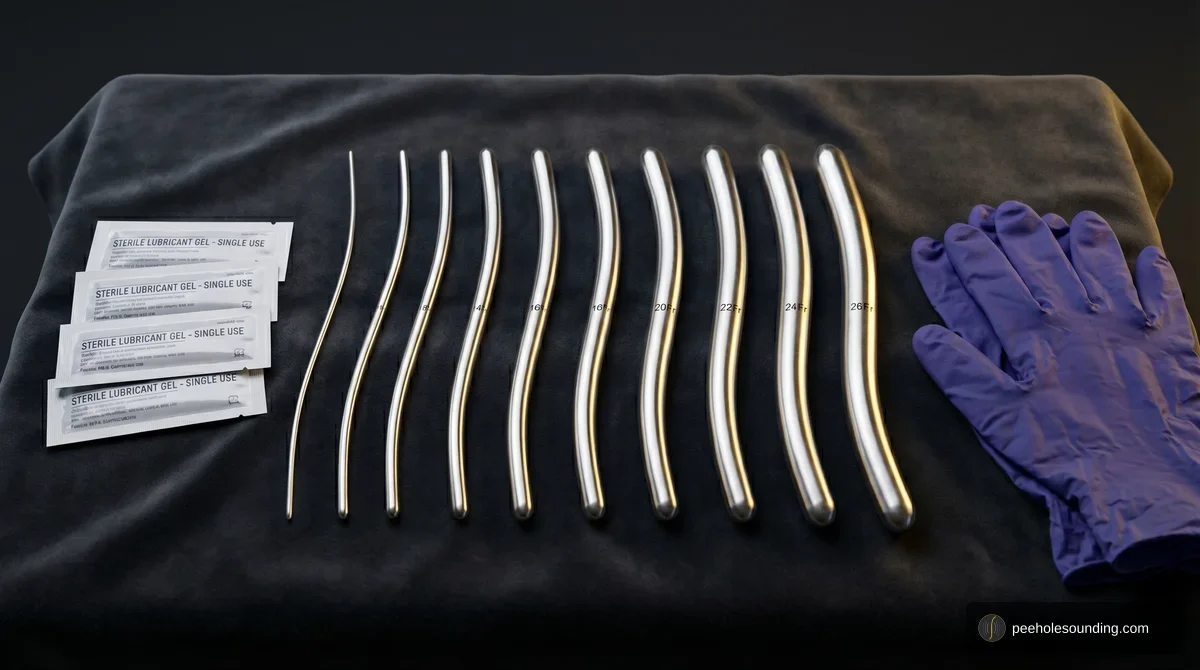
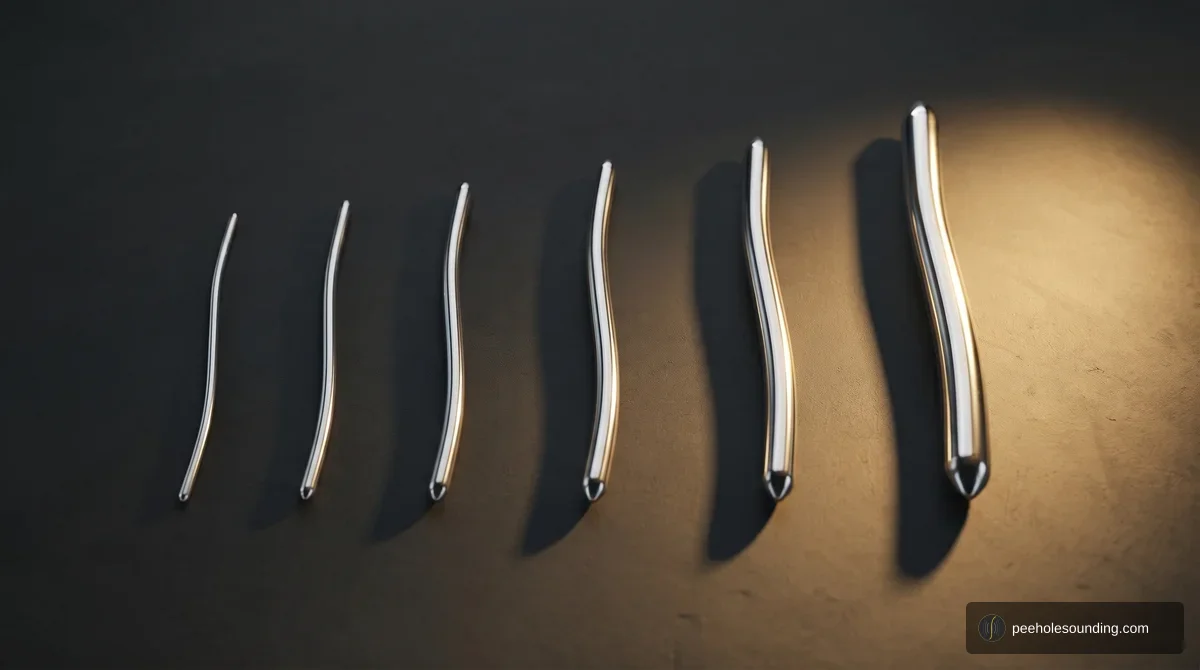
Girth changes the sensation profile, not just the fit. A thicker sound means more stretch, more fullness, more internal pressure, all of which intensify what you actually feel. Counter-intuitive note: thinner is not safer for beginners. Too slim and the sound pokes in unwanted directions and feels more like a needle than a toy. For starting gauges by anatomy, the sound-by-sound progression, and when to size up, see my sounding rod size guide and the urethral stretching guide.
Lube Quality
Lube is the difference between discomfort and pleasure, full stop. Use medical-grade, sterile, water-based lube and use more of it than feels reasonable. For brand picks, what to avoid (glycerin, parabens, warming agents), and a full breakdown of how lube quality changes sensation, see my complete guide to sounding lube.
Arousal Level and Relaxation
For people with a penis, insert when semi-erect. A full erection tightens the urethral opening and makes the glans more sensitive, which can make insertion uncomfortable. Flaccid works too, but a partial erection provides a good balance of access and arousal.
For people with a vulva, arousal causes engorgement of the urethral sponge. This can make the urethra slightly tighter but also makes the tissue more sensitive and responsive. Some women find that being aroused before insertion makes the experience much more pleasurable, even if the initial insertion requires a bit more lube.
For all bodies, a relaxed pelvic floor is everything. Tension creates resistance. Take a few deep breaths, consciously relax the muscles between your legs, and let the sound do the work. Your brain also plays a major role here: arousal reframes ambiguous sensations as pleasurable. The more turned on you are, the better everything feels.
First-Time Sounding Sensations: What to Expect Session by Session
Not everyone's timeline is the same, but here's what most people report, and it matches my own experience closely. The shape of the curve, in three snapshots:
| Stage | Physical feel | Mental feel | Peak sensation |
|---|---|---|---|
| Session 1 | Strange, wobbly, "need to pee" | Hyper-focused, over-analyzing | Mild stretch at the opening |
| Session 5 | Smooth fullness, stable pressure | Calmer, starting to trust the body | Warm, spreading pleasure mid-shaft |
| Session 20 | Snug, almost familiar | Relaxed, anticipating pleasure | Deep, full-body prostate or sponge response |
The prose version, in more detail:
Session 1: Mostly exploratory. You're learning to relax, getting used to the insertion feeling, and probably won't reach deep pleasure yet. You might feel the "need to pee" sensation strongly. That's fine. You're building familiarity. People with a vulva may progress a bit faster here, since the shorter urethra means less unfamiliar territory to cover.
Sessions 2-3: Your body starts recognizing the sensations. Anxiety drops. Pleasure begins to emerge. This is where most people have their "oh, I get it now" moment. For people with a penis, you might start getting comfortable with more depth. For people with a vulva, the pelvic floor engagement starts feeling less like pressure and more like stimulation.
Sessions 5+: Technique develops. You find your preferred depth, movement speed, and girth. You start understanding what your body responds to. The "need to pee" feeling is either gone or something you enjoy.
Sessions 10+: Confident and relaxed. Pleasure is the primary experience, not novelty or nervousness. You're exploring variations: different sounds, different positions, combining sounding with other stimulation.
It took me about three sessions before I stopped overthinking and started feeling. I've done this with partners of different genders over the years, and the progression looks different for every person, but the destination is the same.
Frequently Asked Questions
Related Guides
What Is Urethral Sounding? A Complete Guide to Safety, Pleasure & Getting Started
Feb 15

Sounding Kink: Why People Do It & How to Start
Jun 7

Female Urethral Sounding: Beginner Techniques & Safety
Mar 30
Urethral Sounding for Beginners: Sizes & First Session
Apr 5
Penis Sounding for Men: Sizes, Safety & Prostate Technique
May 9
Urethral Stretching Guide: Safe Progressive Dilation for Beginners
Apr 24