Sounding Toy Guide: Types, Materials & How to Choose
Sounding toy guide from a 10-year practitioner: every type, every material, and a beginner-friendly walkthrough for choosing your first one.
 By Kevin Voss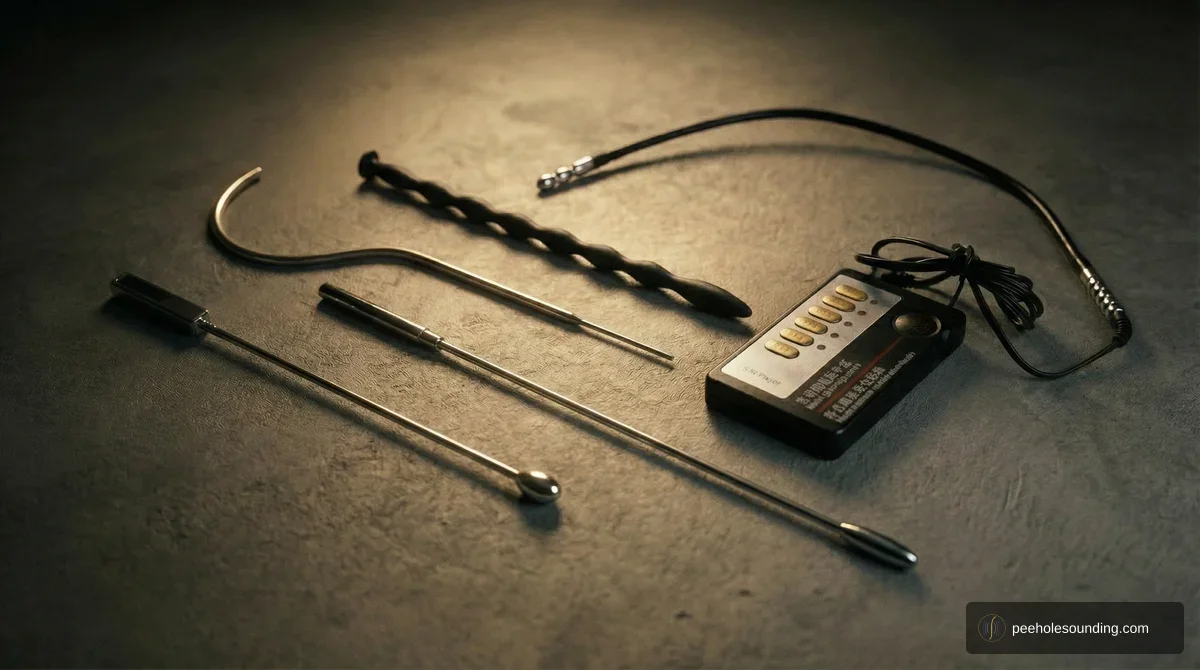
A sounding toy is a smooth, slender instrument designed to slide into the urethra for pleasure or progressive stretch training. Sounding toys come in stainless steel, silicone, glass, and titanium, with shapes ranging from straight beginner rods like Hegar and Rosebud to deep-curved advanced designs like Van Buren and Guyon.
There are dozens of them out there, and picking the wrong one as a beginner is the most common mistake I see. Classic medical designs, silicone variants, ribbed textures, hollow through-hole models, vibrating options, female-specific sizes. The range is enormous, and most guides only cover a fraction of what's out there.
My first sounding toy was a wide vibrating one I grabbed off Amazon without doing any research. It didn't go well. Too thick, too much stimulation, zero understanding of what I was doing. I had to learn the hard way that starting simple matters. If I'd picked up a basic Hegar set instead, my first session would have been completely different.
This guide covers every major category, what each one feels like, who it's for, and how to choose the right one for your body and experience level. It's based on roughly ten years of personal practice and research. Sounds are just one branch of urethral play, which also covers plugs, stretching, and vibration.
Medical Disclaimer: This content is for educational purposes only and is not a substitute for professional medical advice, diagnosis, or treatment. Always consult a qualified healthcare provider before starting any new practices.
How to Choose Your First Sounding Toy
If you're reading this before buying, here's the short version: start with a Hegar set in surgical-grade stainless steel, pick the third-smallest rod, use sterile water-based lube, and don't overthink the rest. That single sentence skips about a year of bad first sessions.
The longer version is a five-question walkthrough. Go through it in order; each answer narrows the next.
1. What's your experience level? If you've never inserted anything into a urethra before, you're a beginner. No shame in it. Stick to Hegar sounds, smooth silicone, or a tapered silicone set. Skip everything with a curve, a motor, or beads on it. Build comfort first.
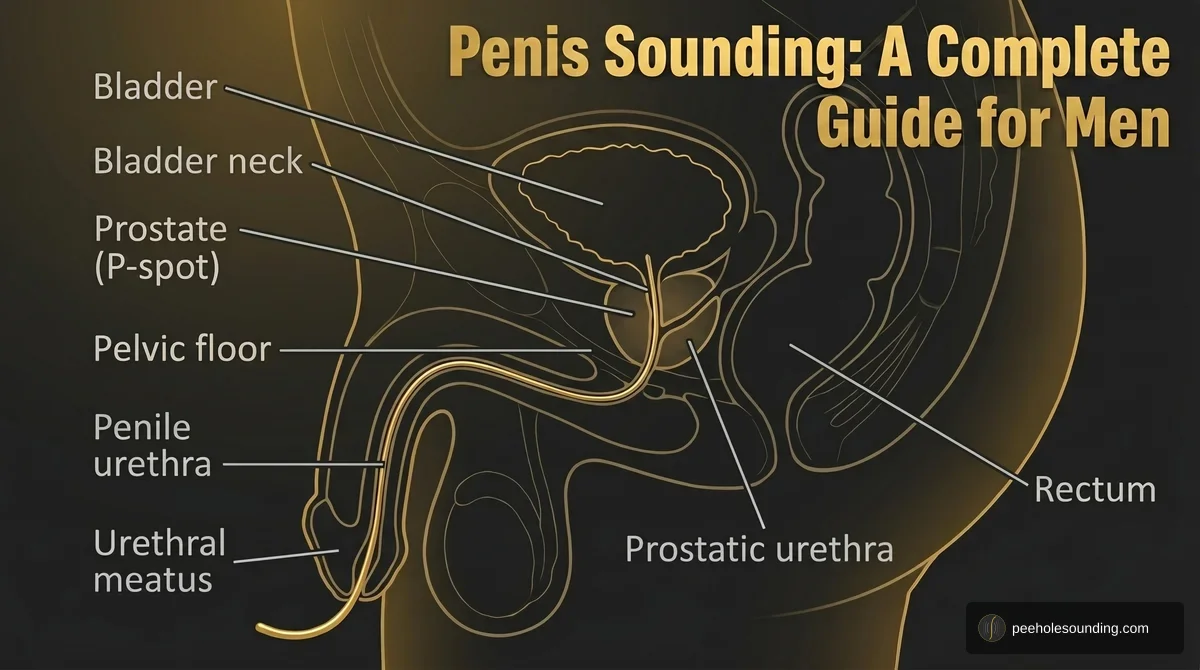
2. What's your anatomy? Male urethras run roughly 7 to 8 inches and gently curve toward the bladder. Female urethras are 1.5 to 1.6 inches and run straight. If you have a vulva, skip every long curved design (Van Buren, Guyon, Pratt). Those are built for male anatomy. Look for short straight sounds, short hollow sounds, or tapered dilator sets sized for a shorter canal.
3. What sensation are you after? Gentle fullness points you at Hegar or smooth silicone. Pinpoint pressure means a Rosebud. Rhythmic stretch-and-release is a beaded silicone. Internal vibration means a vibrating sounding toy. Prostate access means a Van Buren, but only once you have months of straight-sound experience.
4. Steel or silicone? Steel is heavy, rigid, fully sterilizable, and slides on its own with proper lube. Silicone is light, flexible, less intimidating, but creates more friction and can't be boiled. There's no wrong answer. Most people end up owning both. If you're anxious about rigidity, start silicone. If you want the toy to do half the work, start steel.
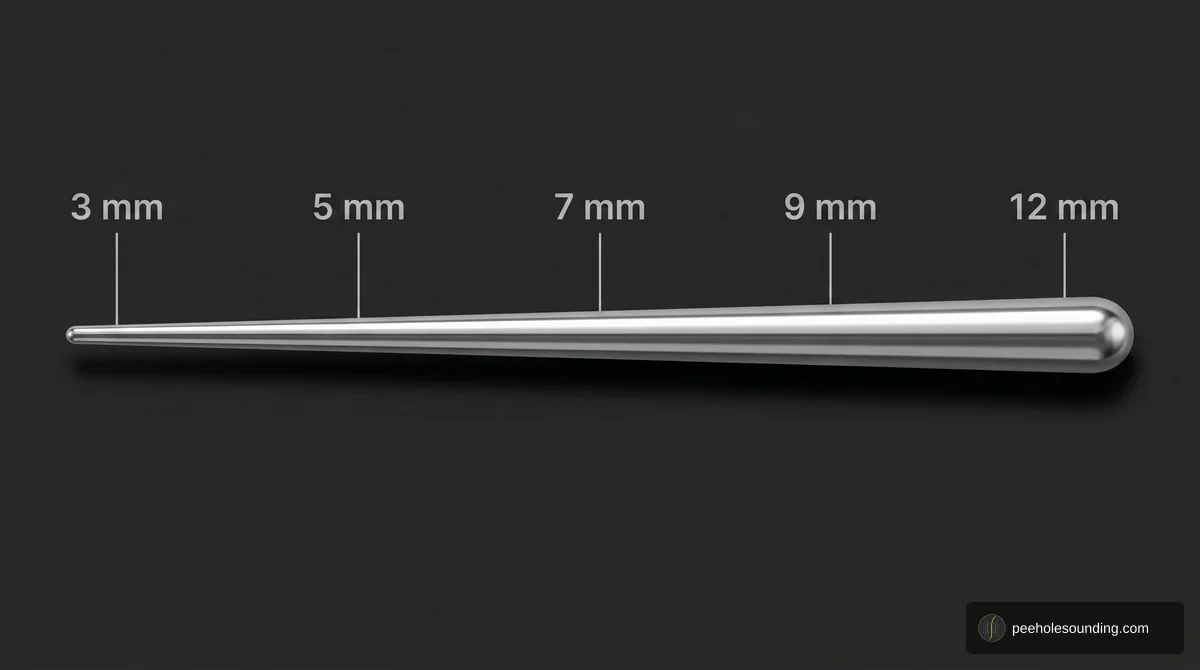
5. What size? Start around 9 to 15 Fr (about 3 to 5 mm). Do not start with the thinnest rod in any set. A too-thin sounding toy can poke into the urethral wall instead of following the natural pathway. That's how you get bleeding. A slightly thicker rod glides along the canal and is safer. For the full Fr / mm / inches conversion, see the sounding rods size chart.
Once you've answered all five, scroll the comparison table below and pick the row that matches. If you're still torn between two options, the cheaper Hegar set in surgical-grade steel is almost always the right call.
What Are Urethral Sounds?
Urethral sounds are smooth, slender instruments designed to be inserted into the urethra. They were originally medical tools. Doctors have used them for centuries to diagnose blockages, widen strictures, and access the bladder — rigid metal sounds such as Van Buren and McCrea instruments are still referenced in modern stricture management literature (Endoscopic Management of Urethral Stricture Disease and Bladder Neck Contractures, PMC). The word "sound" comes from the medical term for a probe used to explore a body cavity. It has nothing to do with audio.
Today, sounds are widely used for sexual pleasure. The urethra is lined with nerve endings that respond intensely to pressure and stretching, and sounds provide a type of deep internal stimulation that surface play simply can't replicate.
If you're brand new to this, start with my complete guide to what sounding is before getting into types. If you already know the basics and want to pick your first (or next) sound, you're in the right place.
Types of Urethral Sounds: Every Style at a Glance
Here's every major sounding toy type in one comparison table. Scan it to find what interests you, then read the detailed sections below.
| Type | Shape | Material | Difficulty | Best Sensation | All Genders? |
|---|---|---|---|---|---|
| Classic Medical Designs | |||||
| Hegar | Double-ended, slight curve each end | Steel | Beginner | Gentle fullness, mild stretch | Yes |
| Rosebud | Thin rod + round bulb tip | Steel | Beginner | Targeted pinpoint pressure | Yes |
| Dittel | Flat handle + rounded tip | Steel | Intermediate | Controlled fullness | Yes |
| Pratt | Double-ended, gradual curves | Steel | Intermediate | Deeper stimulation | Yes |
| Van Buren | Pronounced J-curve | Steel | Advanced | Deep urethral + prostate | Male-focused |
| Guyon | Extreme curve | Steel | Expert | Bladder exploration | Male-focused |
| Bakes | Moderate curve, bile duct origin | Steel | Advanced | Varied curved sensation | Yes |
| Silicone Variants | |||||
| Smooth silicone | Straight, flexible rod | Silicone | Beginner | Soft fullness, less intimidating | Yes |
| Ribbed silicone | Ridged texture along shaft | Silicone | Intermediate | Wave-like ripple on movement | Yes |
| Beaded silicone | Ball/bead pattern along shaft | Silicone | Intermediate | Pop-and-stretch rhythm | Yes |
| Tapered silicone | Graduated diameter increase | Silicone | Beginner | Progressive stretch training | Yes |
| Feature-Based Designs | |||||
| Through-hole / hollow | Hollow channel, open ends | Steel/silicone | Intermediate | Pressure around hollow core | Yes |
| Vibrating | Built-in motor | Silicone/steel | Intermediate | Internal vibration along length | Yes |
| Electrostim (e-stim) | Conductive, bipolar contacts | Steel | Advanced | Pulsing, tingling, contracting | Yes |
| Inflatable | Expandable after insertion | Silicone/latex | Advanced | Adjustable internal pressure | Yes |
| Female-Oriented Sounds | |||||
| Short straight sounds | 3 to 5 inch straight rods | Steel/silicone | Beginner | Fullness, sized for shorter canal | Female-focused |
| Short hollow sounds | Short through-hole design | Steel/silicone | Beginner | Wearable, fluid passage | Female-focused |
| Vibrating short sounds | Short rod + vibration | Silicone | Beginner | Urethral + clitoral combo | Female-focused |
| Tapered dilator sets | Graduated set, short lengths | Steel/silicone | Beginner | Progressive stretch training | Female-focused |
| Penis Plugs (Related Category) | |||||
| Solid plugs | Short, decorative rod | Steel/silicone | Beginner | Shallow fullness at glans | Male-focused |
| Hollow plugs | Short, through-hole | Steel | Beginner | Wearable, fluid passage | Male-focused |
| Glans ring plugs | Plug + ring for security | Steel | Beginner | Secured shallow stimulation | Male-focused |
| Prince Albert wands | Designed for PA piercing | Steel | Intermediate | Piercing-secured play | Male-focused |
| Sperm stoppers | Plug with stopper disc | Steel | Beginner | Shallow plug + ejaculation control | Male-focused |
Classic Medical Designs
These are the original steel designs, most based on medical instruments that have been around for over a century. They're the foundation of most people's sounding practice.
Hegar Sounds
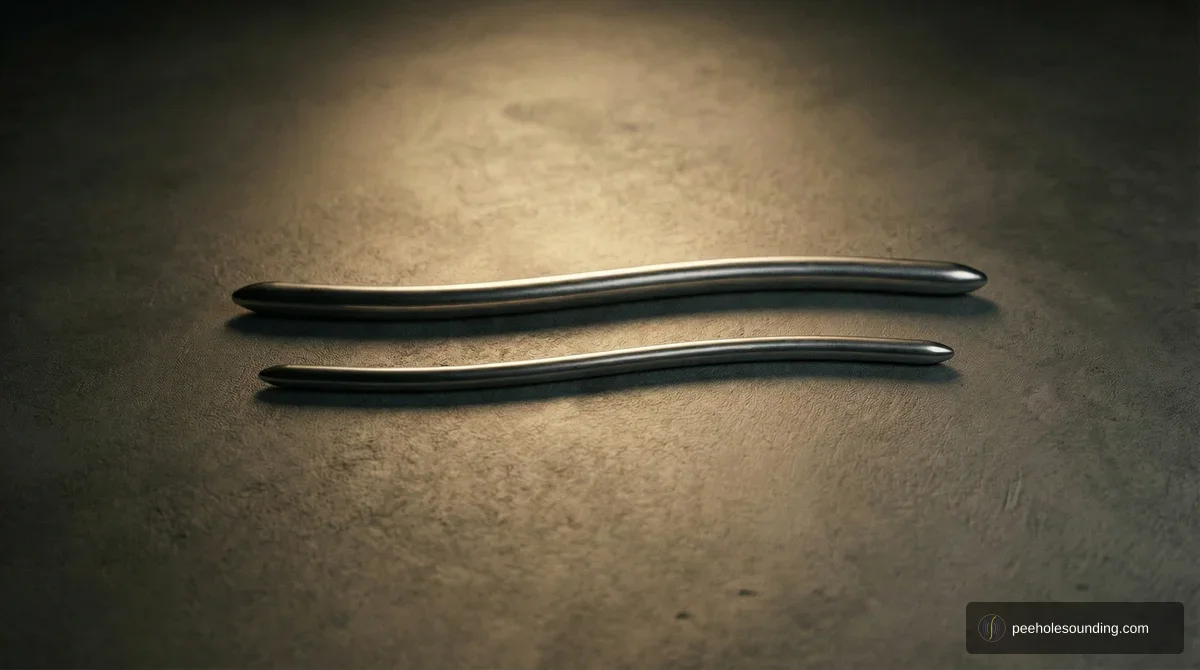
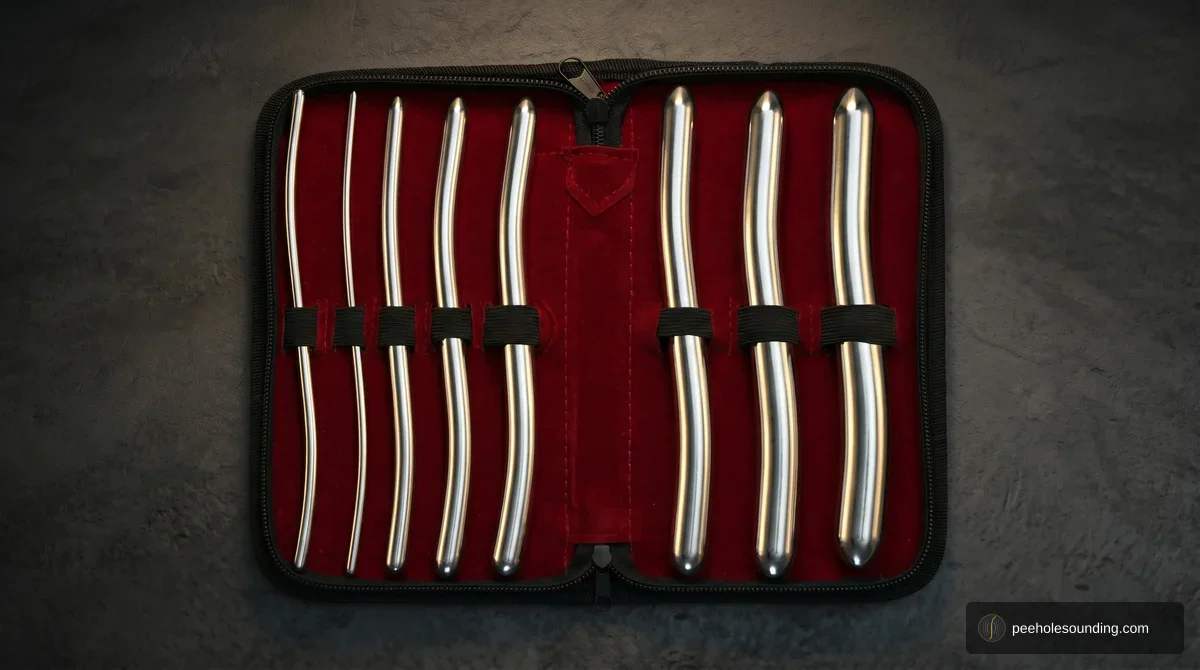
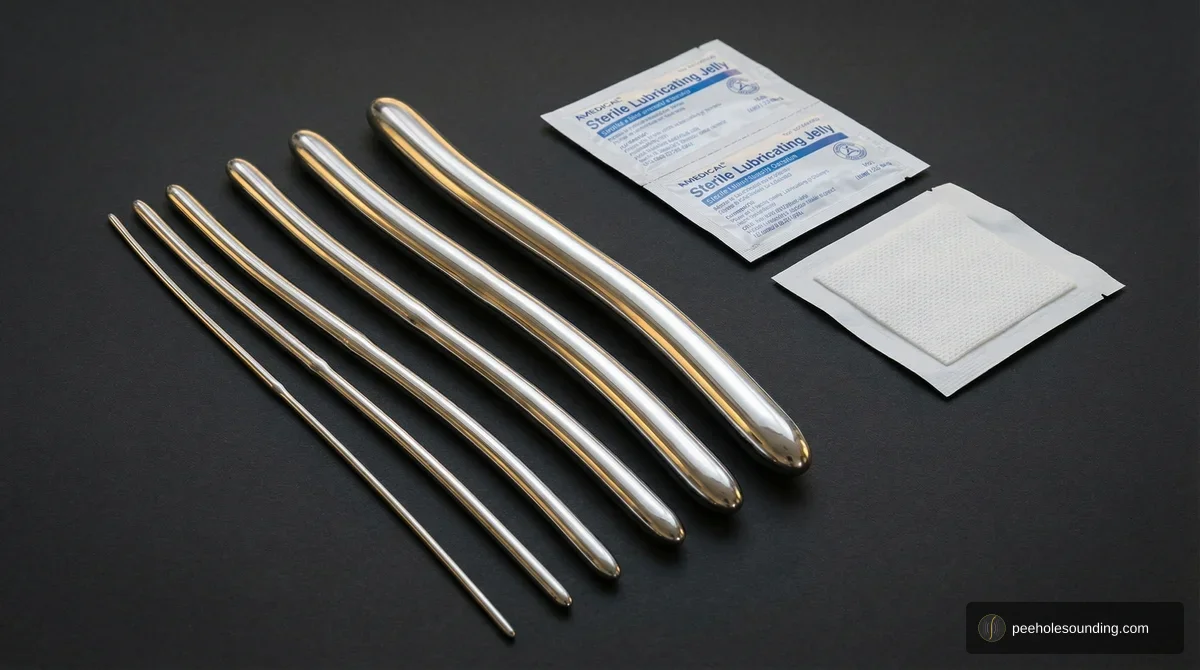
The beginner's best friend. Hegar sounds are double-ended with a slight curve at each end that gives them a gentle S-profile overall. Each rod has a different diameter on each end, so a single sound gives you two sizes to work with. Most sets ship with 8 to 18 rods covering a range of diameters. The design has been in continuous clinical use for more than a century and remains standard equipment for urethral dilation in current urology practice (Urethral Dilatation in Women: Urologists' Practice Patterns in the UK, PMC).
The slight curve follows the natural pathway of the urethra, making insertion feel intuitive rather than forced. They're relatively short compared to other types, which keeps things manageable while you're learning.
What they feel like: A smooth, gradual fullness. Nothing sharp or intense, just gentle stretching as the sound settles into place. For most beginners, the sensation is more "huh, that's interesting" than overwhelming. That shifts fast as you relax into what sounding actually feels like.
Sizing note: Start with the third smallest sound in your set, not the thinnest one. A sound that's too thin is actually more dangerous. It can poke into the urethral wall instead of sliding along the natural pathway. A slightly thicker sound gives you more control. (Cross-check your set's diameters against the full Fr / mm / inches reference.)
Hegars are what I still recommend to anyone asking me where to begin. If you buy one set and nothing else, make it Hegars. For set sizes, materials, and what to look for when buying, see Hegar sounds explained.
Rosebud Sounds
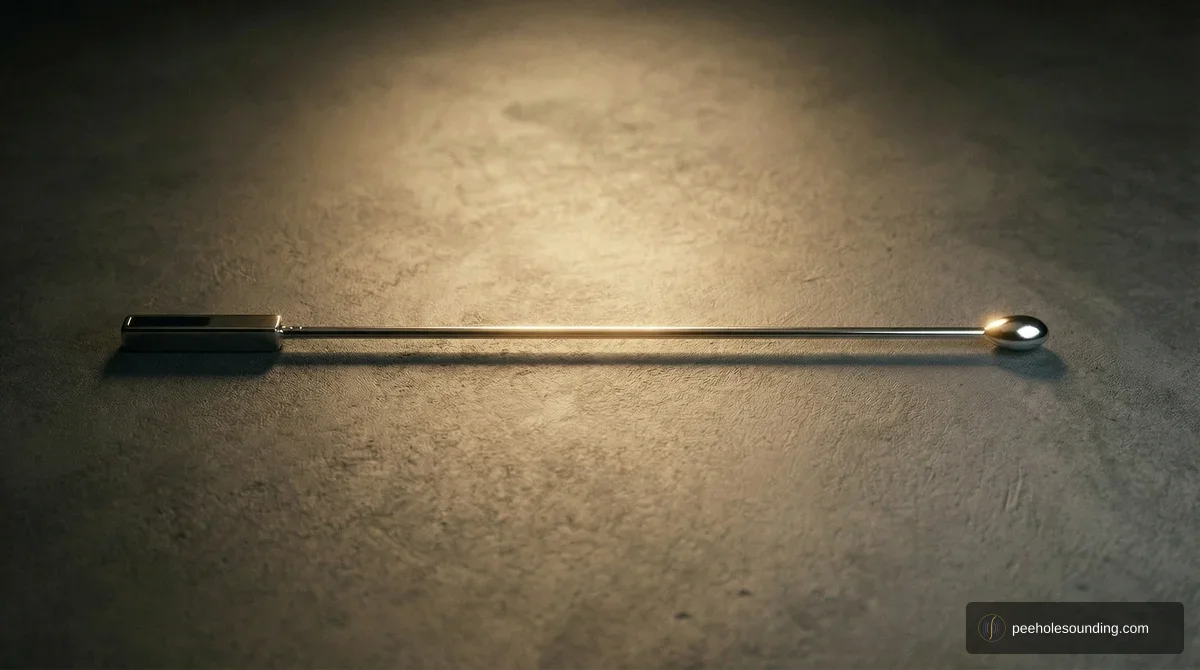
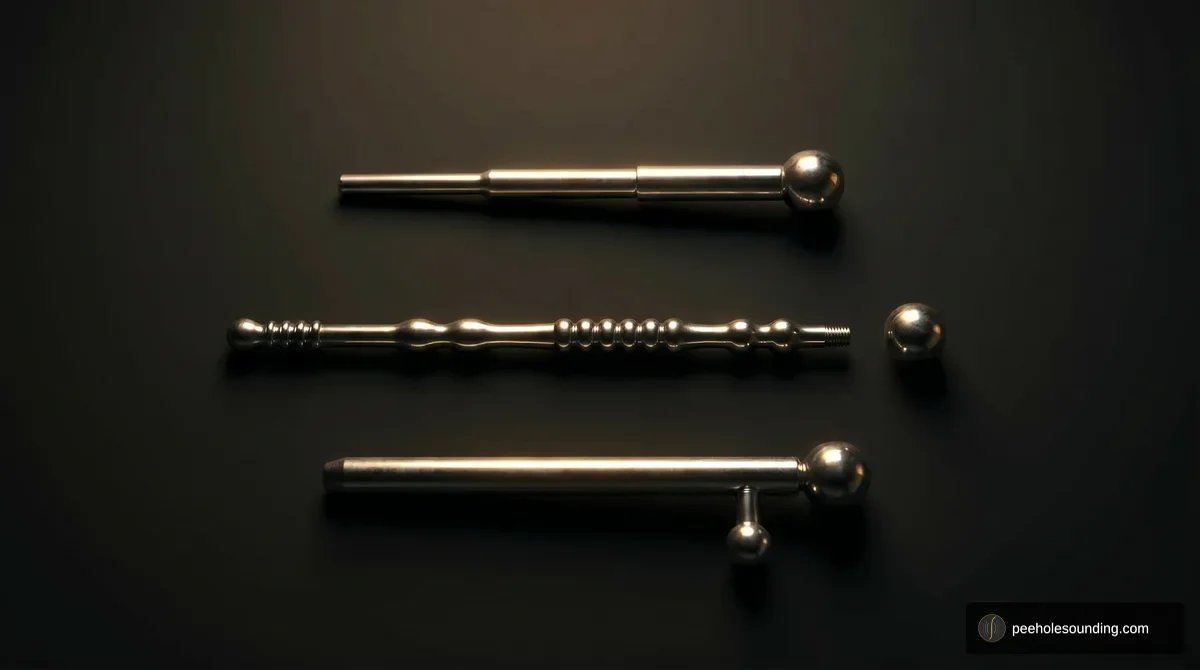
Rosebud sounds (also called bougie-à-boule) have a thin, straight shaft topped with a small round bulb. The bulb creates targeted, pinpoint pressure as it moves through the urethra.
What they feel like: Completely different from a Hegar. Instead of uniform fullness, you feel the bulb as a distinct point of pressure traveling through you. The first time I tried one after months of Hegars, the difference surprised me. It's like going from a flat palm massage to a fingertip press.
They work well even when the penis is erect, which isn't true of all sound types. Both men and women can use Rosebuds effectively.
Dittel Sounds
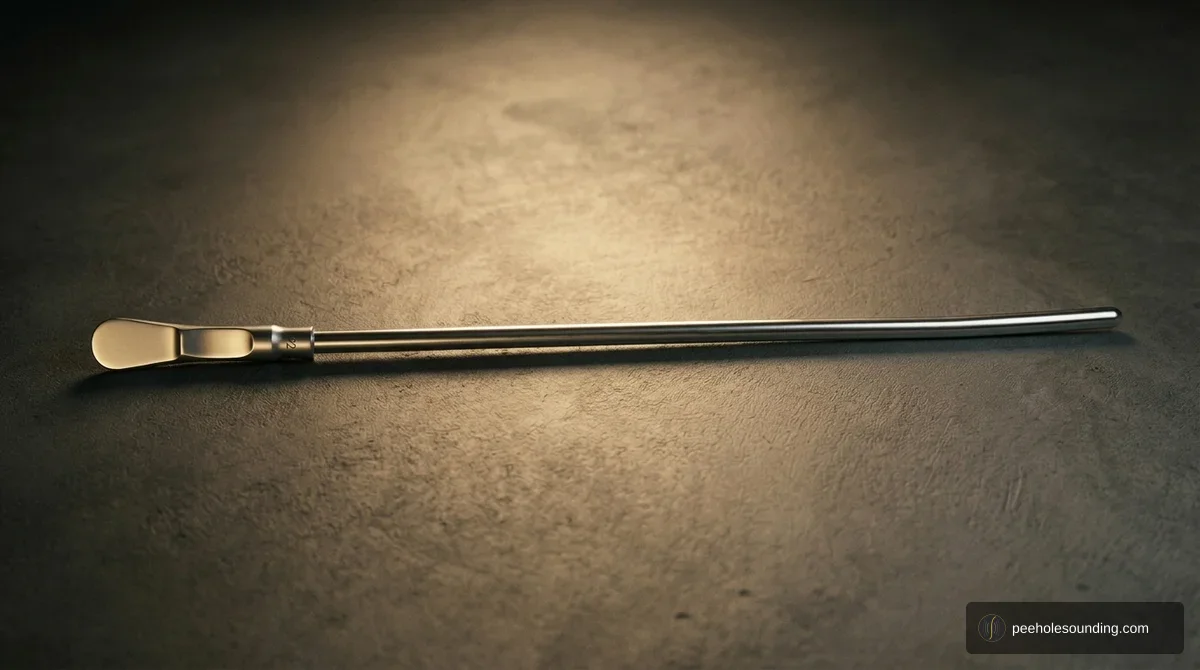
Dittel sounds are straight rods with a flat, paddle-like handle on one end and a smooth rounded tip on the other. The flat handle gives you excellent grip control during insertion.
What they feel like: Similar fullness to a Hegar, but the control you get from the flat handle makes a noticeable difference. You can maneuver more precisely, which reduces accidental pressure against the urethral walls.
A natural next step once you're comfortable with Hegars.
Pratt Sounds
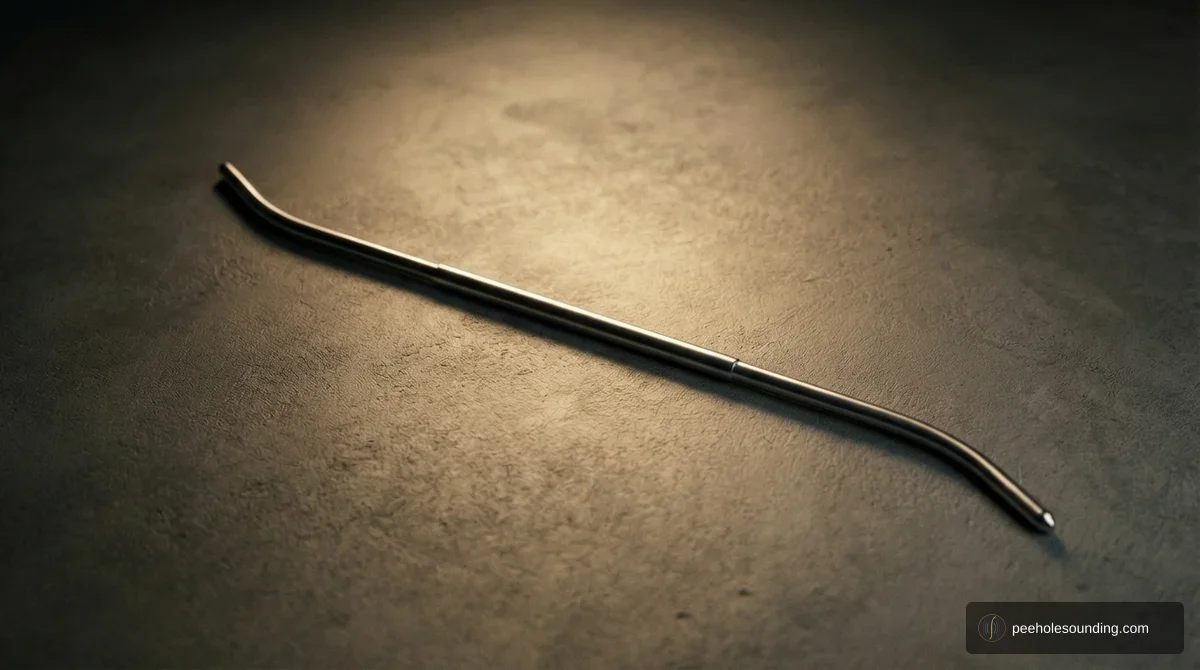
Pratt sounds are double-ended with gradual curves on each side, and they're long, often around a foot. Each end has a different diameter, giving you two sizes per rod.
What they feel like: The curve follows the urethral pathway more naturally than a straight sound, making deeper insertion feel smoother. I think of Pratts as the stepping stone. They teach you what deeper sounding feels like without the steep learning curve of a J-shaped design.
Pratts work for all genders and are a solid choice for anyone moving past beginner sounds.
Hank Sounds
Hank sounds are rigid steel rods with a tapered tip that steps up to a defined shoulder, a raised stop collar partway along the shaft. The taper makes the entry smooth. The collar is the real feature: it physically limits how far the rod can travel, so the instrument sets your depth instead of your hand.
That's why I don't think of Hanks as a beginner tool, even though the tip is forgiving. You're buying a fixed depth. Start on Hegars, where you control diameter and depth separately, and come to a Hank once you already know the depth you want to hold.
Van Buren Sounds
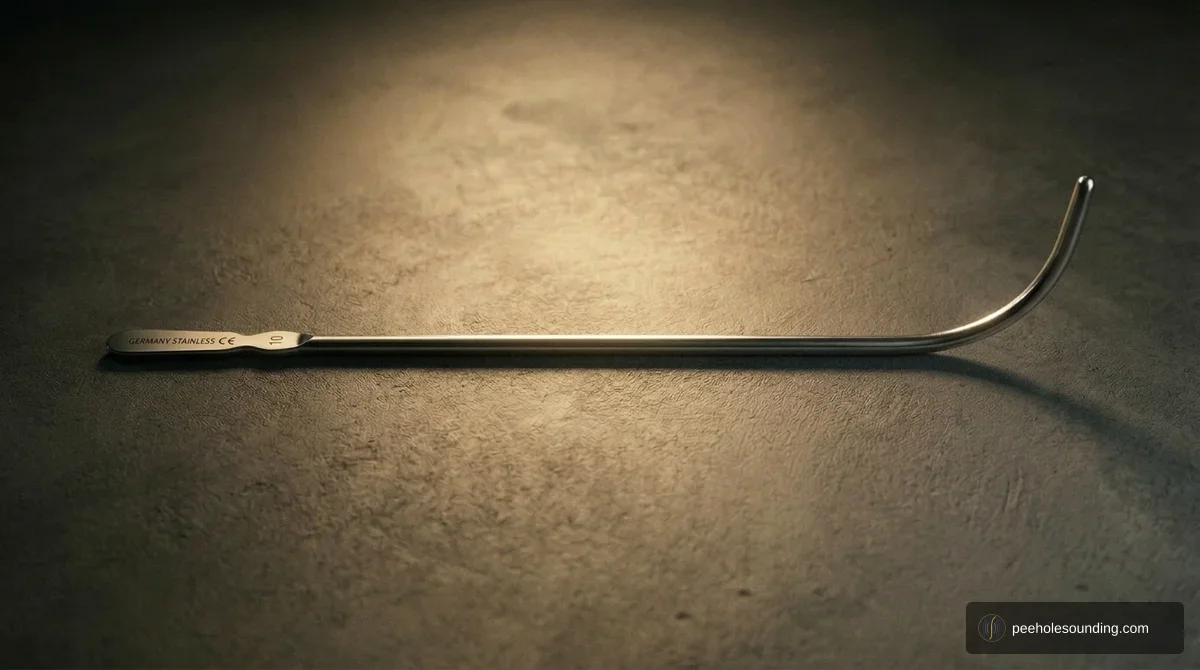
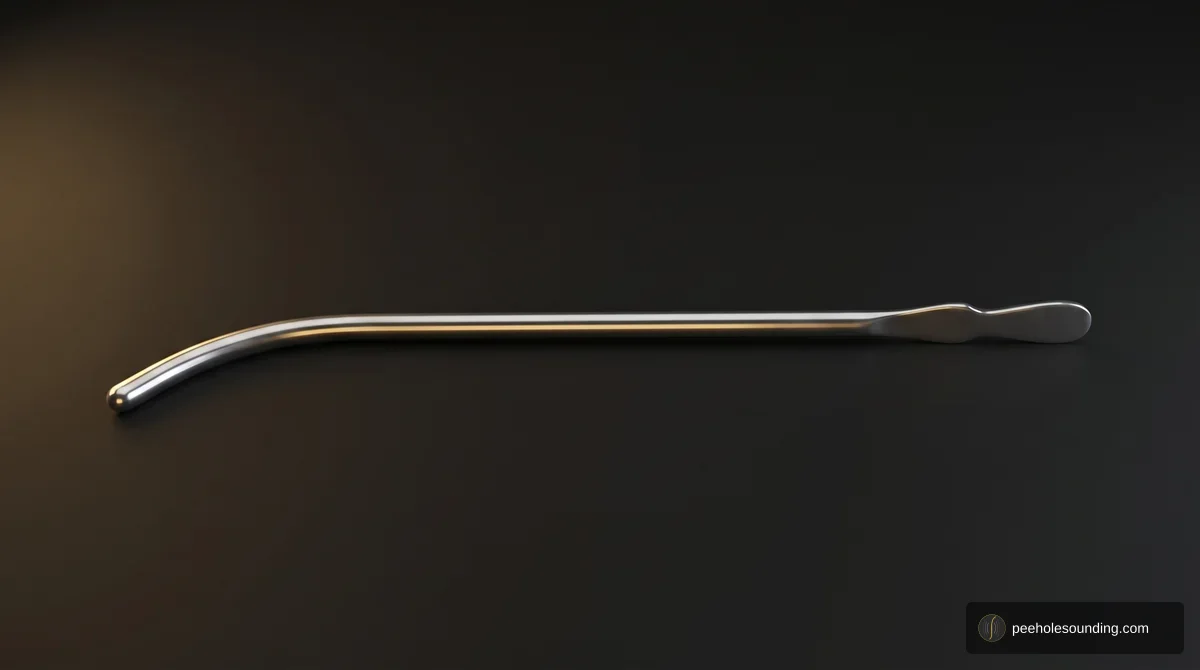
Advanced users only. Van Buren sounds have a pronounced J-shaped curve specifically designed to match the male urethral tract. They're long enough to reach the bladder, and the curve allows access to the prostate from inside. The full deep dive, including the Fr size chart and why the curve is shaped the way it is, lives in Van Buren sounds.
What they feel like: Intense. When the curve passes the prostate, there's a jolt of deep, focused pressure that's hard to describe. Some people find it overwhelmingly pleasurable. Others need several sessions to relax enough to enjoy it.
Safety is critical here. Never force past resistance. Always insert and remove while the penis is soft. These are not beginner sounds. Work your way up through Hegars and Pratts first. For prostate-reach technique specifically, penis sounding for men covers Van Buren angle and how to relax for deep insertion.
Guyon Sounds
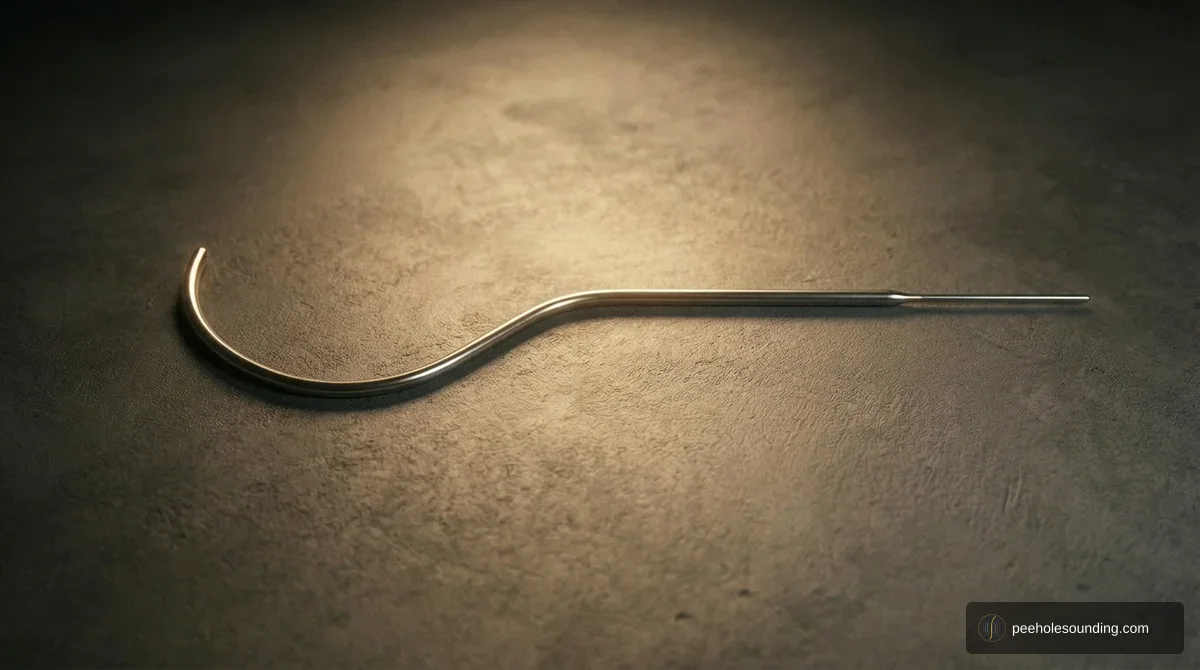
The most curved instruments in the classic lineup, even more pronounced than Van Burens. Designed for deep bladder exploration and expert-level play. Make sure you have significant experience with Van Burens first.
Bakes Sounds
Originally designed for bile duct dilation, Bakes sounds have been adopted for their unique curved profile that sits between a Pratt and a Van Buren. A niche choice for experienced users looking for variety in curved sounds.
Silicone Sound Variants
Silicone sounds deserve their own section because they come in far more varieties than most people realize. The base material is softer, flexible, and less intimidating than steel. Medical-grade silicone is the same material used in indwelling urinary catheters precisely because it is biologically inert, chemically stable, and non-irritating to mucosal tissue (Most Important Biomedical and Pharmaceutical Applications of Silicones, PMC). But the trade-offs are real: more surface friction, lighter weight (no gravity-assisted insertion), and they can't be boiled for sterilization.
Always use water-based lube with silicone. Silicone-based lubricant degrades the material.
Smooth Silicone Sounds
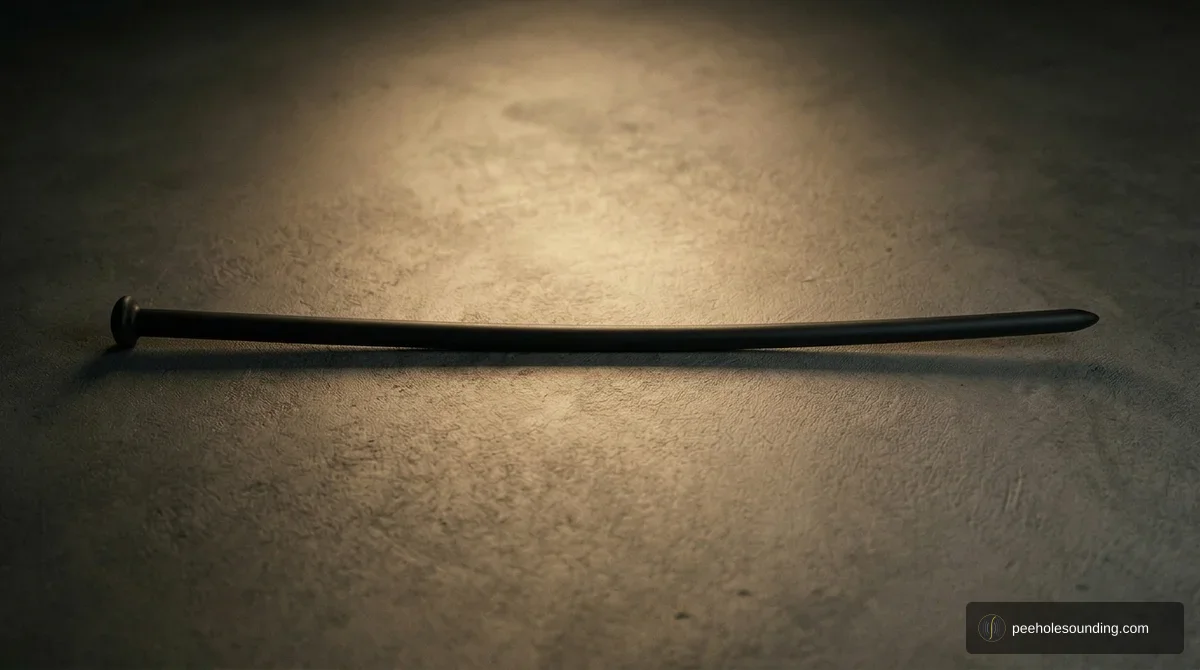
The simplest silicone option: a straight, flexible rod with a polished surface. These are the gentlest possible introduction to sounding. The flexibility means they bend with your body instead of requiring your body to accommodate a rigid shape.
Best for: Absolute beginners who are nervous about rigidity, or anyone exploring sounding with a partner and wanting a softer option.
Ribbed Silicone Sounds
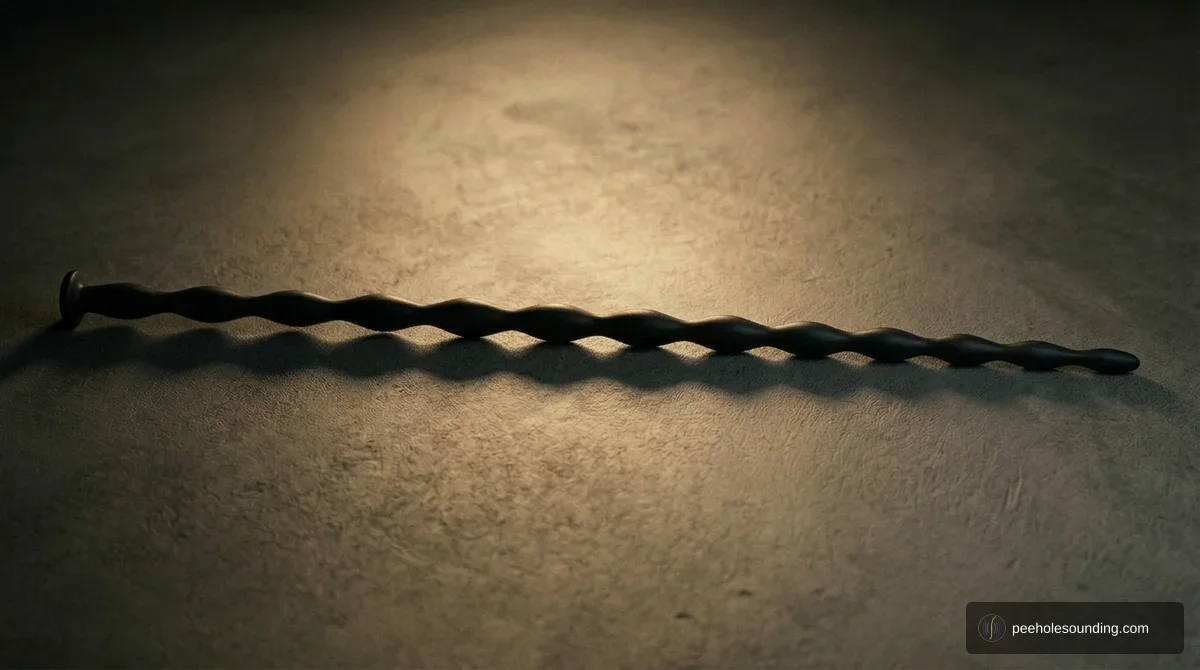
Ribbed sounds have raised ridges running along the shaft, either rings circling the circumference or spiral patterns wrapping around the length. As the sound moves in or out, each ridge creates a distinct bump of pressure.
What they feel like: A wave-like ripple effect on every stroke. The texture is subtle but unmistakable compared to a smooth sound. Some people find it adds a dimension that smooth sounds can't touch. Others find it overstimulating.
Important note: Textured surfaces require more lube and more careful cleaning. Ridges can trap bacteria if not cleaned thoroughly.
Beaded Silicone Sounds
Beaded sounds have a series of ball-shaped bulges spaced along the shaft. Each bead is a small stretch-and-release moment as it enters or exits.
What they feel like: A rhythmic pop-and-stretch pattern. The stretch as each bead passes the meatus (urethral opening) is the main event: a repeating cycle of pressure buildup and release. Think of the concept behind anal beads, applied to a much more sensitive space.
Difficulty note: Intermediate. The beads ramp up stimulation a lot, and insertion requires patience and generous lubrication. Not ideal for a first sound. Sizing, steel versus silicone, and how to get them back out without a fight are covered in urethral beads.
Tapered Silicone Sounds
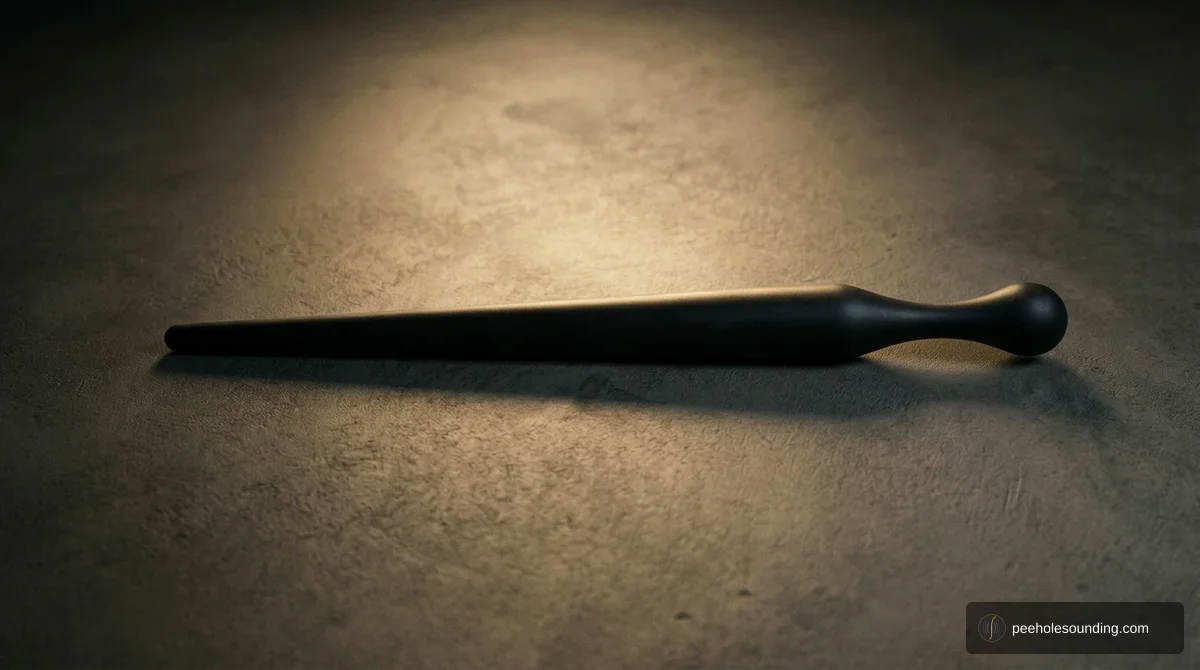 Tapered sounds start thin at the tip and gradually increase in diameter along their length. You insert to your comfort level, and the depth determines the stretch.
Best for: Progressive dilation training. These are popular with beginners working on gradually increasing their comfortable diameter, and they're useful for anyone returning to sounding after a break. For detailed dilation guidance, see my beginner dilation guide.
Feature-Based Designs
These categories cut across materials. You can find most of these in both steel and silicone versions.
Through-Hole (Hollow) Sounds
Through-hole sounds have a hollow channel running their entire length. This means you can urinate or ejaculate while the sound is inserted, making them popular for extended wear and partner play.
The sensation differs from solid sounds. Instead of complete filling, you feel pressure around a hollow core. Some people prefer it; others miss the fullness. Both steel and silicone versions exist.
Subtypes:
- Open-ended: both ends fully open for fluid passage
- Cum-through plugs: shorter, plug-length hollow designs for wear during sex
Vibrating Sounds
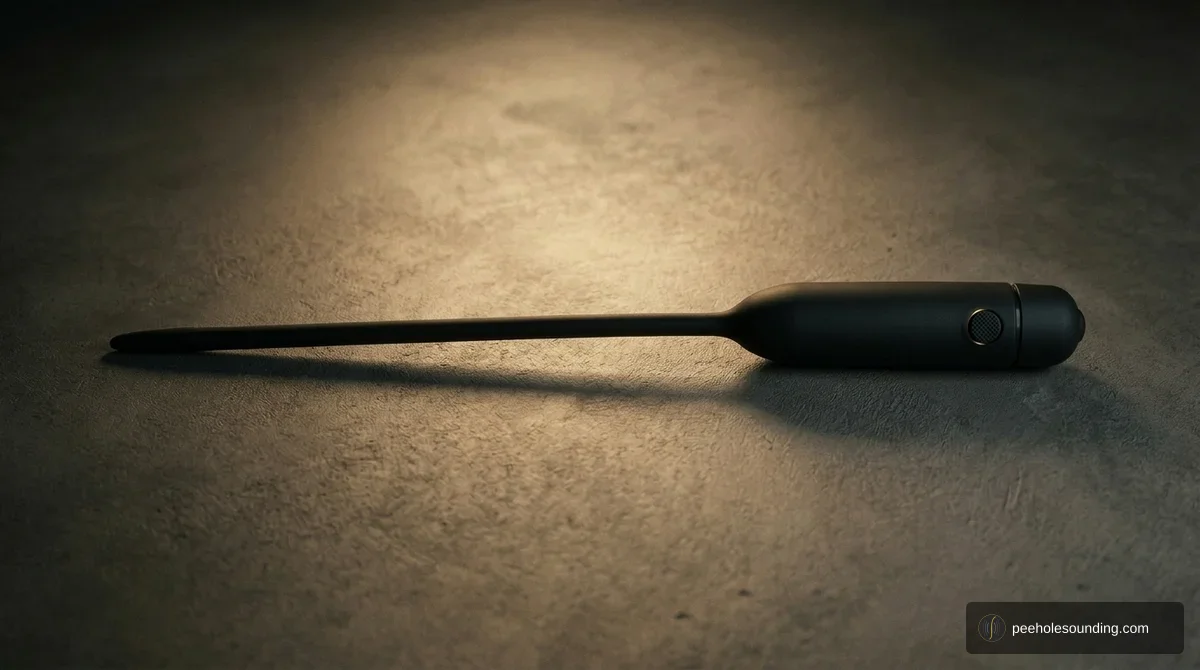
Vibrating sounds add a battery or rechargeable motor that delivers vibration through the shaft. The sensation of vibration inside the urethra is genuinely unique. It stimulates nerve endings along the entire length simultaneously.
Most vibrating sounds are silicone-bodied with a removable vibrating bullet. Some steel models exist but are less common. Quality varies enormously, and cheap marketplace versions can have rough seams, weak motors, or materials that aren't body-safe. Stick to reputable manufacturers.
Electrostimulation (E-Stim) Sounds
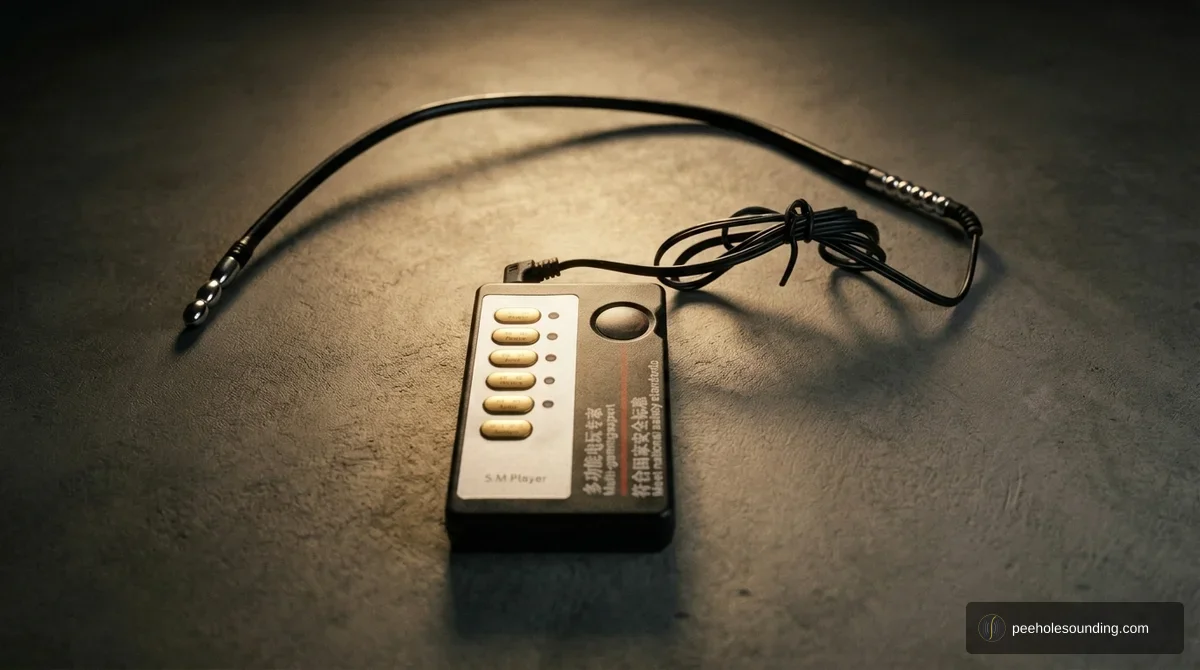
E-stim sounds are made from conductive metals and connect to an electrostimulation power box. They deliver controlled electrical impulses through the urethra, creating pulsing, tingling, and contracting sensations that no other sound type can produce.
This is advanced territory. You need proper e-stim equipment, experience with sounding, and a solid understanding of electrical safety. Bipolar designs (both contacts on the sound) are safer than monopolar setups. Never use with cardiac conditions or pacemakers.
The sound pictured above is the one I tested myself, and I wrote up how it actually feels (and where it falls short on cleaning) in my e-stim urethral sound review.
Inflatable Sounds
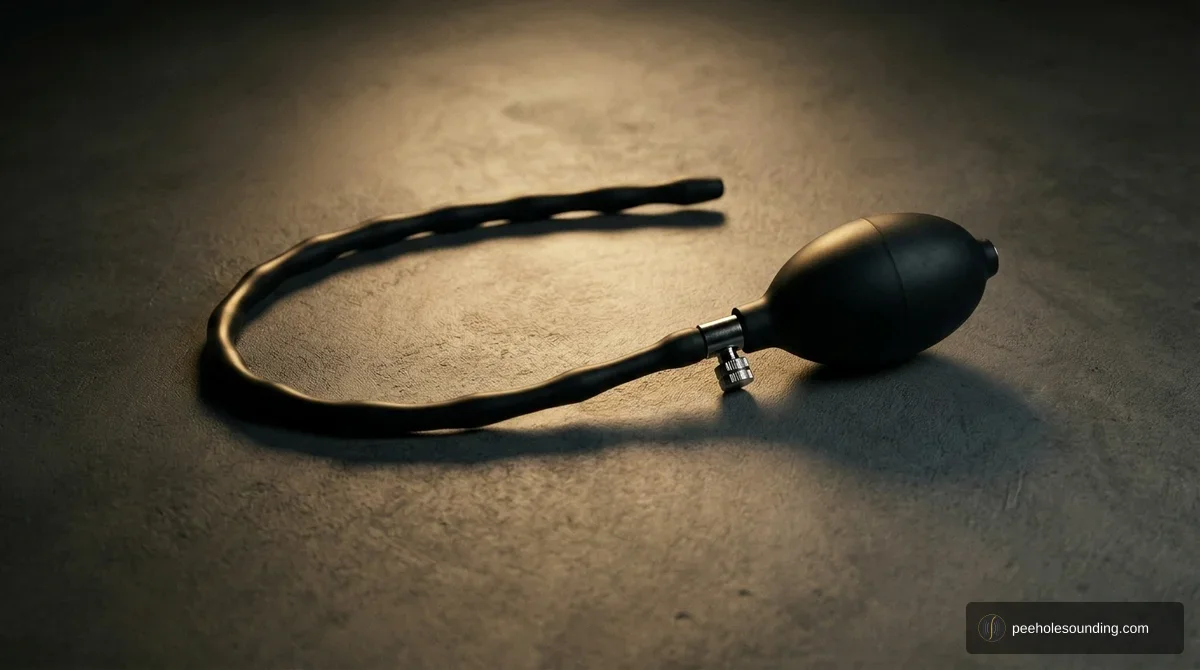
Inflatable sounds can be expanded once inserted, letting you adjust internal pressure and stretch after the sound is already in place. They're niche, and availability is limited, but they offer a sensation that no fixed-diameter sound can match: a gradual, controllable increase in fullness from the inside.
Sounds for Female Anatomy
The female urethra is significantly shorter (around 1.5 to 1.6 inches vs 7 to 8 inches in males), which means most classic sound designs are far too long. Deep curved sounds like Van Burens and Guyons are not appropriate at all. But that doesn't mean the options are limited.
For complete anatomy-specific guidance, see my female sounding guide.
Short Straight Sounds
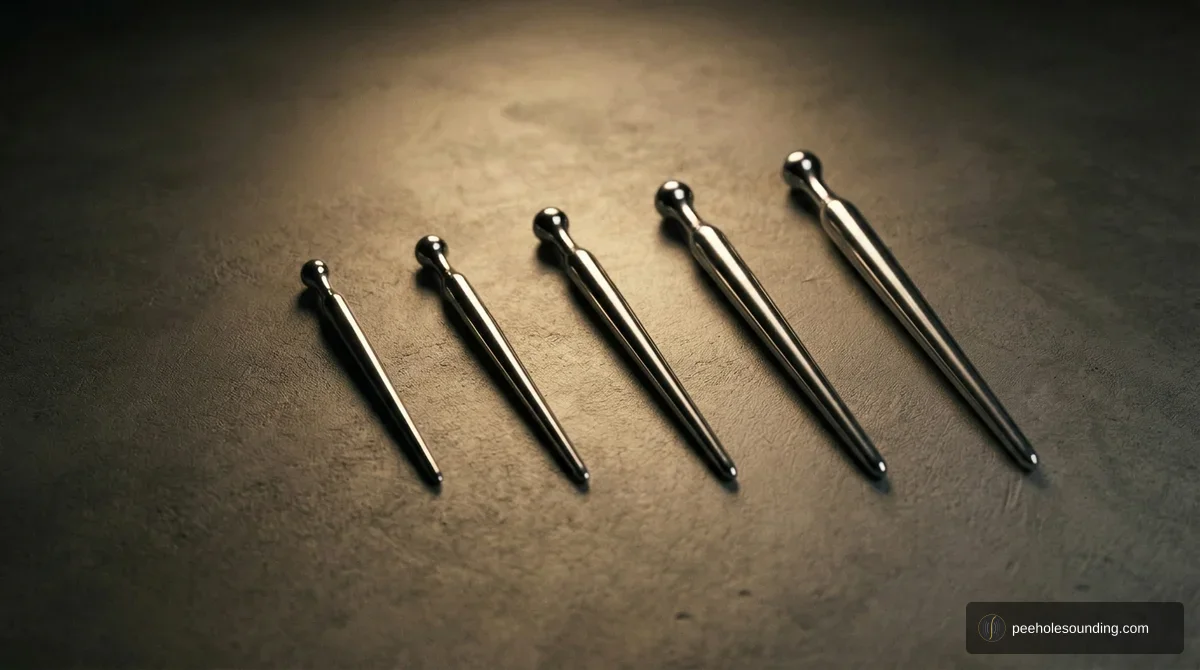
Purpose-built short sounds (3 to 5 inches) sized specifically for the female urethra. Available in both steel and silicone. These are the direct equivalent of a Hegar set but proportioned for a shorter canal. Look for sets with graduated diameters.
Short Hollow Sounds
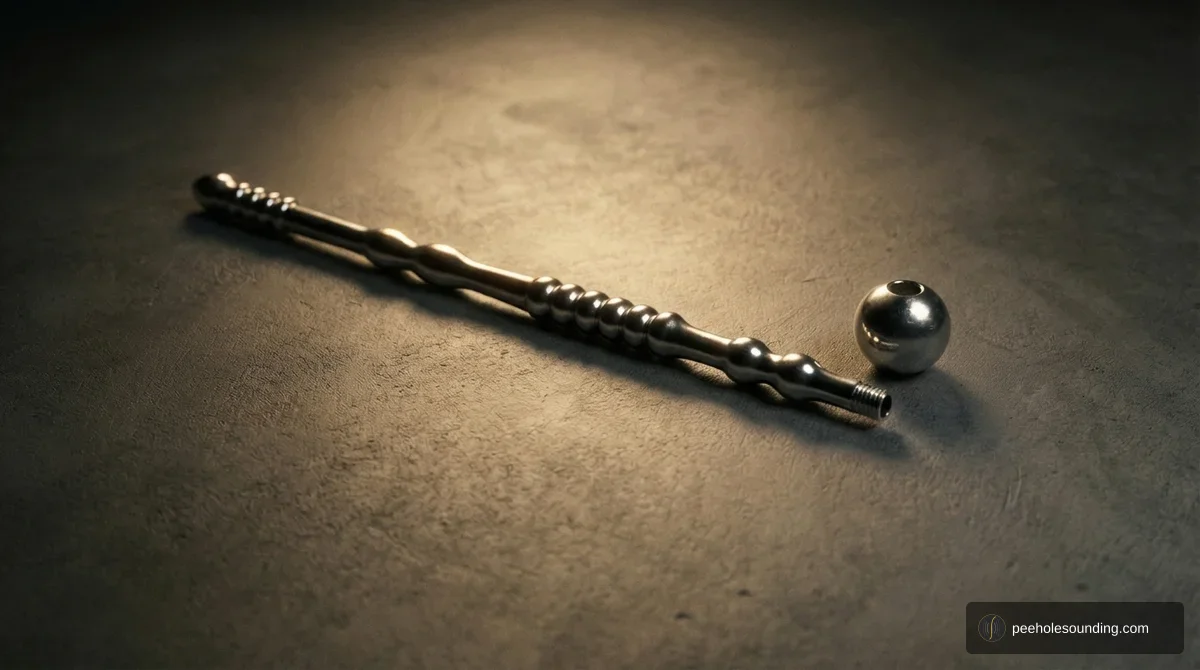
Short through-hole designs that allow fluid passage while inserted. Popular for extended wear because the hollow channel means no urinary disruption. Essentially a wearable urethral toy rather than a session-only instrument.
Vibrating Short Sounds
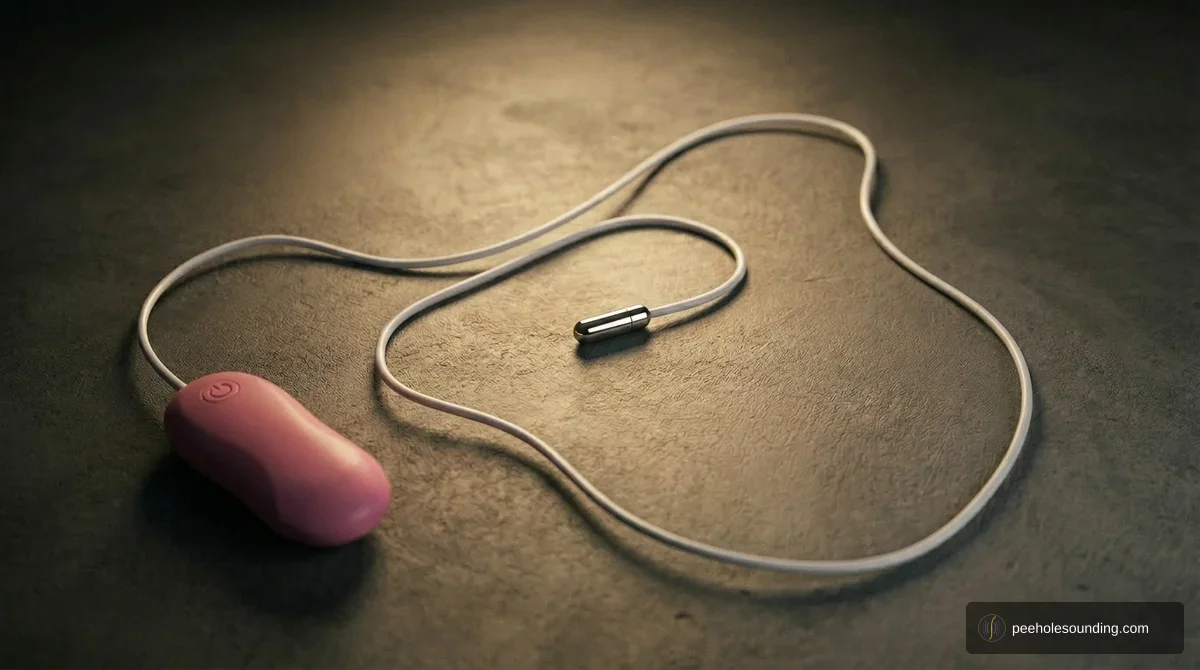
Short silicone sounds with a vibrating motor. Because the female urethra runs close to the clitoris and surrounding nerve-dense tissue, vibrating sounds can stimulate both the urethra and nearby structures simultaneously. This combination is unique to female anatomy and is one reason sounding can feel very different for women than for men.
Tapered Dilator Sets
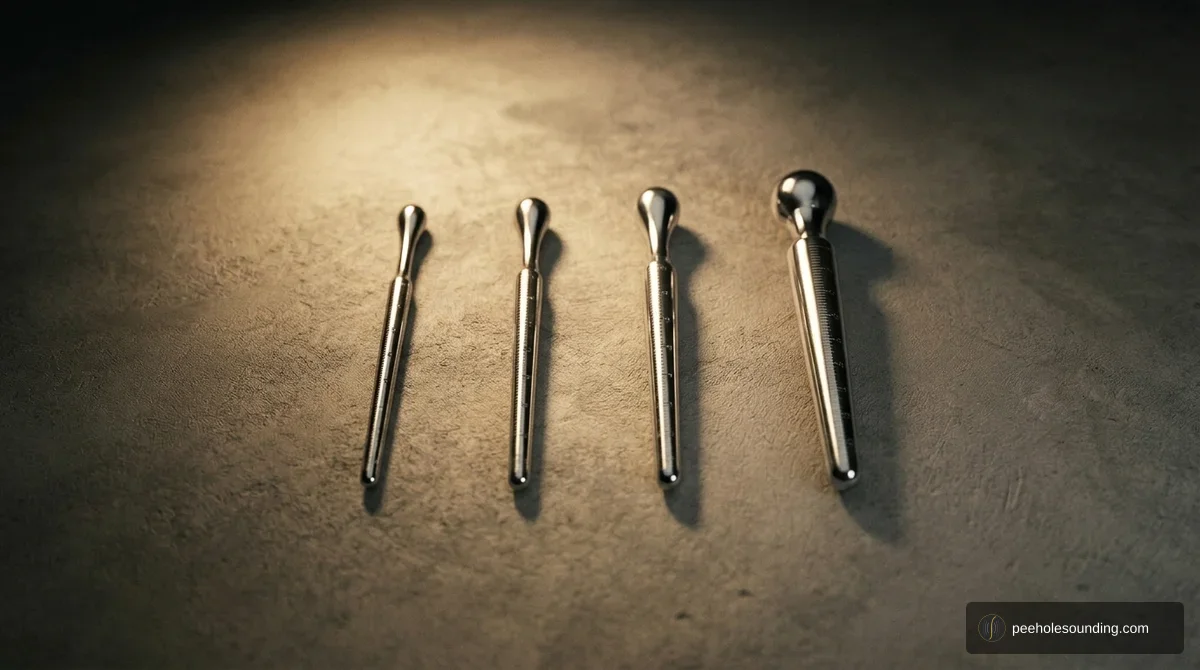
Graduated sets of short sounds that increase in diameter incrementally. These are the standard starting point for female sounding. They let you find your comfortable size and progress at your own pace. Both steel and silicone sets are available.
Penis Plugs: A Related Category
Penis plugs aren't urethral sounds, but they get confused constantly and many people use both. The key difference: plugs are short (1 to 3 inches), sit near the tip of the penis, and are often designed for casual or extended wear. Sounds are longer instruments for deeper, more deliberate exploration. For a full breakdown of plug types, materials, and what's worth buying, see best penis plugs.
| Feature | Urethral Sounds | Penis Plugs |
|---|---|---|
| Length | 3 to 12 inches | 1 to 3 inches |
| Depth | Deep urethral, can reach bladder | Shallow, stays near the glans |
| Primary use | Deliberate exploration sessions | Casual stimulation, wearable |
| Wearability | Session use only | Many designed for extended wear |
| Texture | Smooth or textured | Often ridged, beaded, or decorative |
| Beginner-friendly | Depends on type | Generally yes |
Solid Plugs
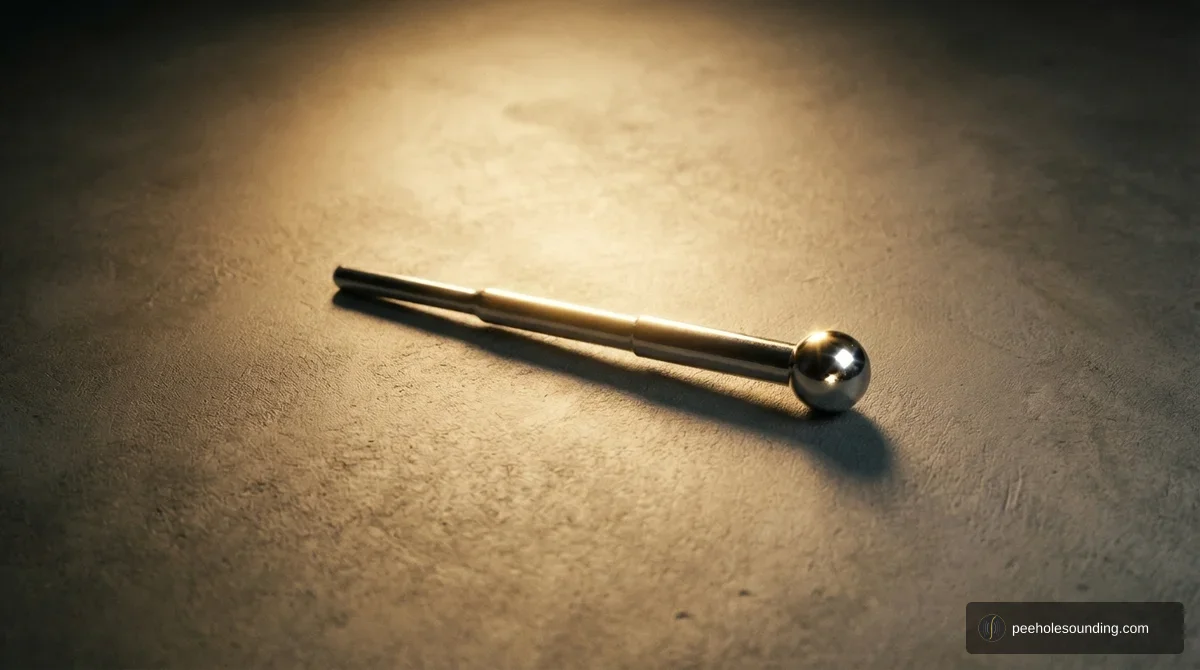
The simplest design: a short, smooth rod that sits in the urethra at glans depth. Often decorative, sometimes with a jeweled or sculpted external end. The entry point for most people curious about urethral play.
Hollow Plugs
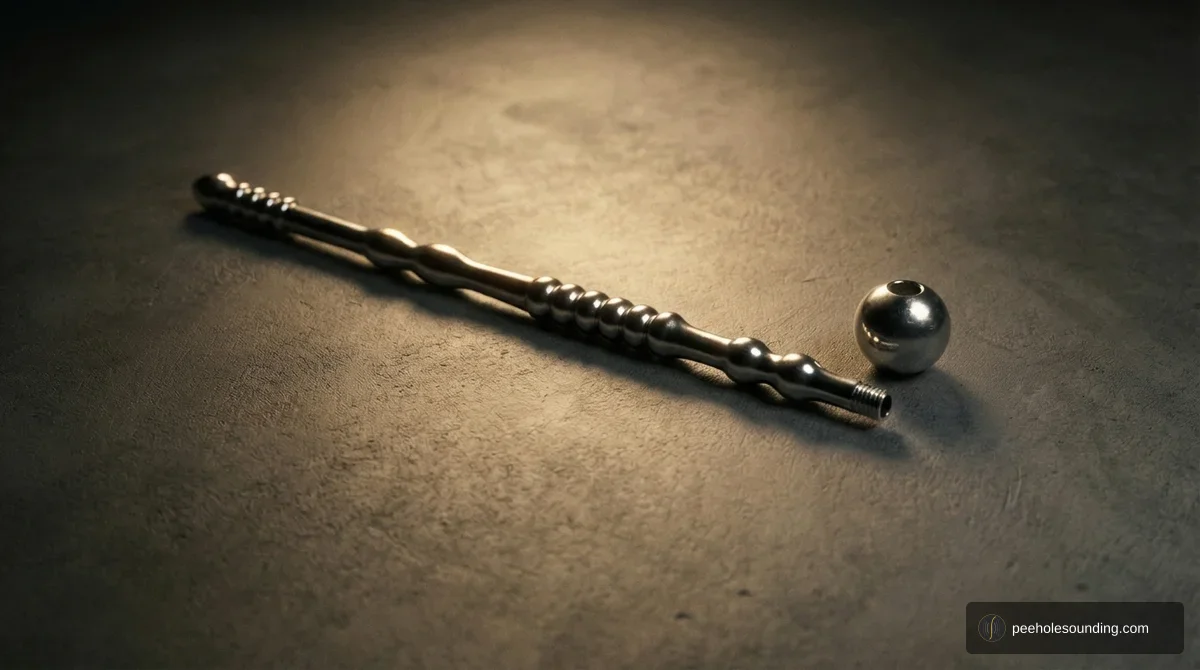
Short through-hole plugs that allow urination and ejaculation while worn. The practical choice for people who want to wear a plug during sex or for longer periods without functional disruption.
Glans Ring Plugs
A plug attached to a ring that fits around the glans. The ring keeps the plug securely in place. It can't accidentally slide in too deep or fall out. A good safety feature for beginners and for wearable play.
Prince Albert Wands
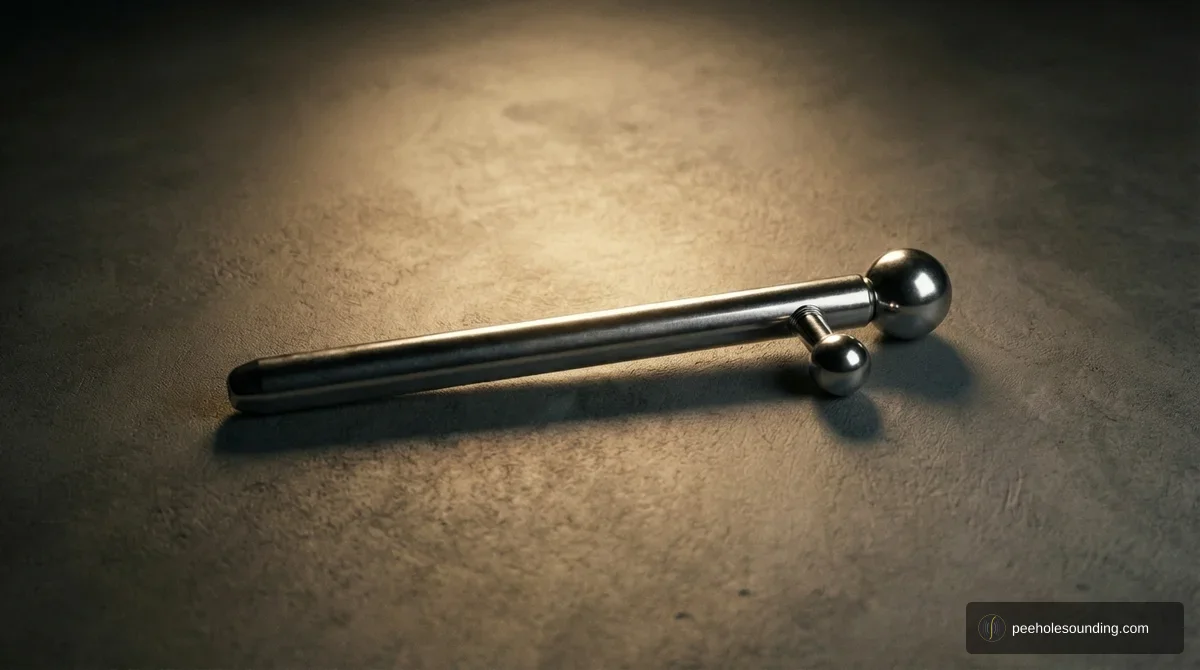
Designed specifically for people with a Prince Albert piercing. The wand threads through the piercing, locking it in place. Not usable without the piercing.
Sperm Stoppers
A plug with a flat disc or cap at the external end that sits flush against the meatus. The disc prevents the plug from sliding in and can partially block ejaculation, creating back-pressure that some people find intensely pleasurable.
Sound Materials Compared
The material affects everything: sensation, sterilization, weight, and durability.
| Material | Sterilization | Flexibility | Weight | Temp Play | Price |
|---|---|---|---|---|---|
| Stainless steel (316L) | Boil or autoclave | Rigid | Heavy, gravity insertion | Yes | $$ |
| Titanium | Boil or autoclave | Rigid | Lighter than steel | Yes | $$$ |
| Medical silicone | Wash only, no boiling | Flexible | Light | No | $ |
| Borosilicate glass | Boil or autoclave | Rigid, fragile | Medium | Yes | $$ |
| Plastic (disposable) | Single use only | Semi-flexible | Very light | No | $ |
Everyone develops their own preference over time. I use steel for most of my practice. The weight does half the work, and a good steel sound practically slides in on its own with proper lube and gravity. But I know plenty of people who swear by long ribbed silicone as their go-to because the texture and flexibility hit differently. There's no universally "best" material. It depends on what sensation you're chasing and what your body responds to. Glass is beautiful for temperature play, titanium for a lighter rigid option. Try a couple of materials before deciding.
For detailed sterilization protocols by material, check my safety guide.
How to Choose the Right Type
By Experience Level
Beginner: Hegar sounds, Rosebud sounds, smooth silicone, tapered silicone. Start here and build confidence.
Intermediate: Dittel sounds, Pratt sounds, through-hole designs, ribbed silicone, beaded silicone. You know the basics. Now explore different sensations.
Advanced: Van Buren sounds, Guyon sounds, Bakes sounds, e-stim, inflatable. You have significant experience and understand your anatomy.
By Desired Sensation
- Gentle fullness → Hegar sounds, smooth silicone
- Targeted pinpoint pressure → Rosebud sounds
- Textured stimulation → Ribbed or beaded silicone
- Progressive stretch → Tapered silicone, dilator sets
- Deeper stimulation → Pratt sounds
- Prostate access → Van Buren, Guyon sounds
- Internal vibration → Vibrating sounds
- Extended wear → Through-hole sounds, hollow plugs
- Electrical stimulation → E-stim sounds
- Adjustable pressure → Inflatable sounds
By Anatomy
Male anatomy: All types are suitable. Van Buren and Guyon sounds are specifically designed for the male urethral tract.
Female anatomy: Short sounds (3 to 5 inches), tapered dilator sets, short hollow sounds, vibrating short sounds. Avoid deep curved designs. See my female sounding guide for detailed guidance.
Starting size regardless of gender: Begin around 9 to 15 Fr (about 3 to 5 mm) diameter. Start with the third smallest in a set, not the thinnest. A slightly thicker sound is safer and easier to control.
For detailed sizing guidance, see my beginner dilation guide.
Safety Essentials for Every Type
Medical Disclaimer: This content is for educational purposes only and is not a substitute for professional medical advice, diagnosis, or treatment. Always consult a qualified healthcare provider before starting any new practices.
These rules apply regardless of which type you choose:
- Sterile lubricant, every time. Water-based, sterile, no exceptions. Apply generously to both the sound and the urethral opening.
- Never force a sound. If it doesn't slide smoothly, stop. Reapply lube, relax, try a smaller size. Gravity and patience do the work, not pushing.
- Sterilize before every session. Boil steel and glass for at least 10 minutes. Wash silicone thoroughly with antibacterial soap and warm water.
Type-Specific Safety Notes
- Curved sounds (Van Buren, Guyon): Only insert and remove while the penis is soft. Never force past resistance.
- Thin sounds: Don't start with the thinnest rod. It can puncture the urethral wall. Start thicker.
- Ribbed and beaded sounds: Require extra lube and more careful cleaning. Texture traps bacteria.
- Silicone sounds: Water-based lube only. Silicone-based lubricant degrades the material.
- E-stim sounds: Never use with a pacemaker or cardiac condition. Start at the lowest power setting.
- Inflatable sounds: Never over-inflate. Increase pressure gradually and stop at the first sign of discomfort.
When to See a Doctor
- Bright red blood (a small amount of pink-tinged urine can be normal after a first session, but bright red is not)
- Pain that doesn't resolve within a few hours
- Difficulty or inability to urinate
- Signs of infection: fever, cloudy urine, persistent burning after 24 hours
No shame in it. Doctors have seen it before. Be honest about what happened so they can help you effectively.
For the full safety protocol, see my complete risk mitigation guide.
Frequently Asked Questions
Related Guides
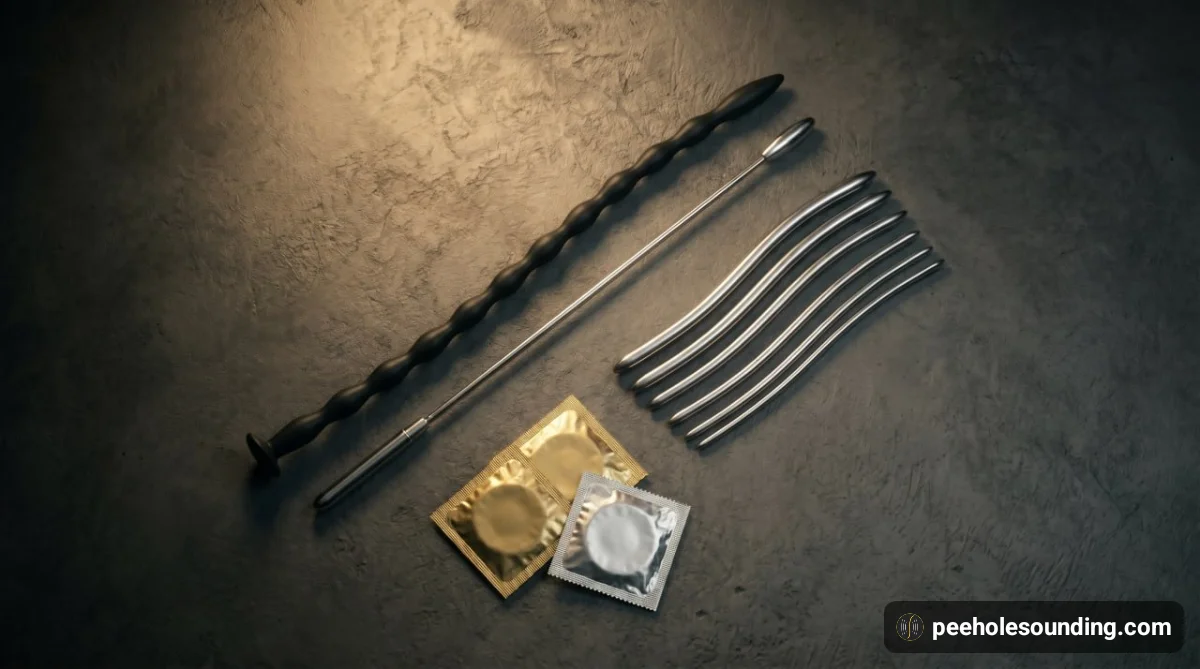
Urethral Play: The Complete Guide to Sounds, Plugs, Stretching & Vibration
Jun 19
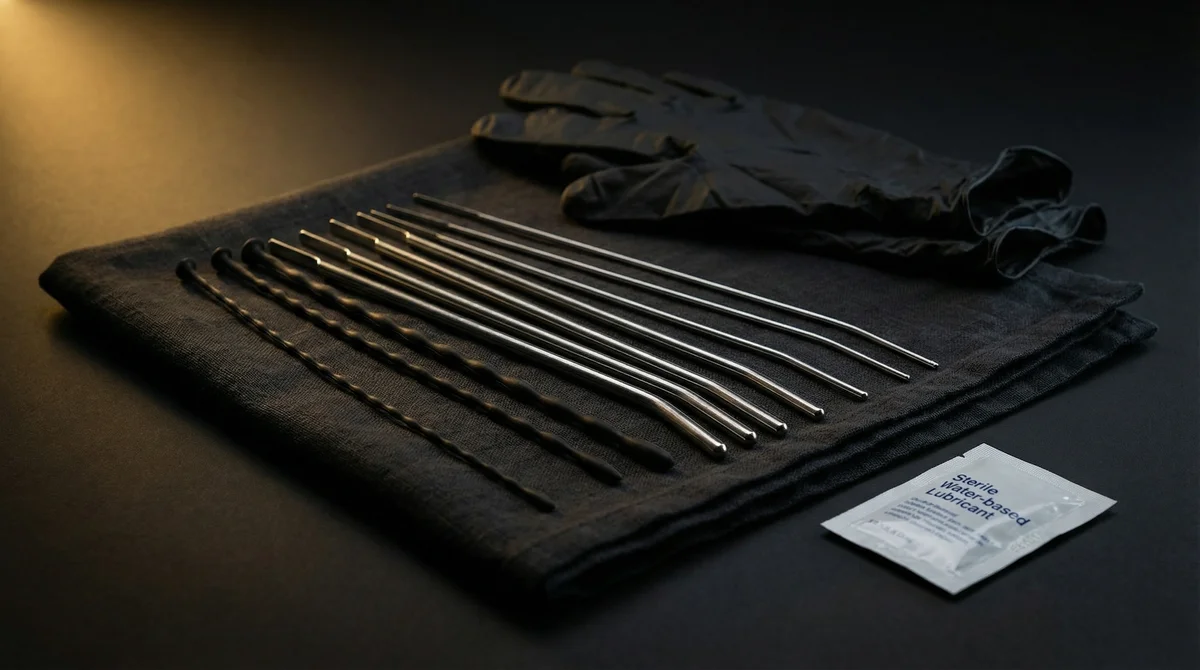
What Is Urethral Sounding? A Complete Guide to Safety, Pleasure & Getting Started
Feb 15
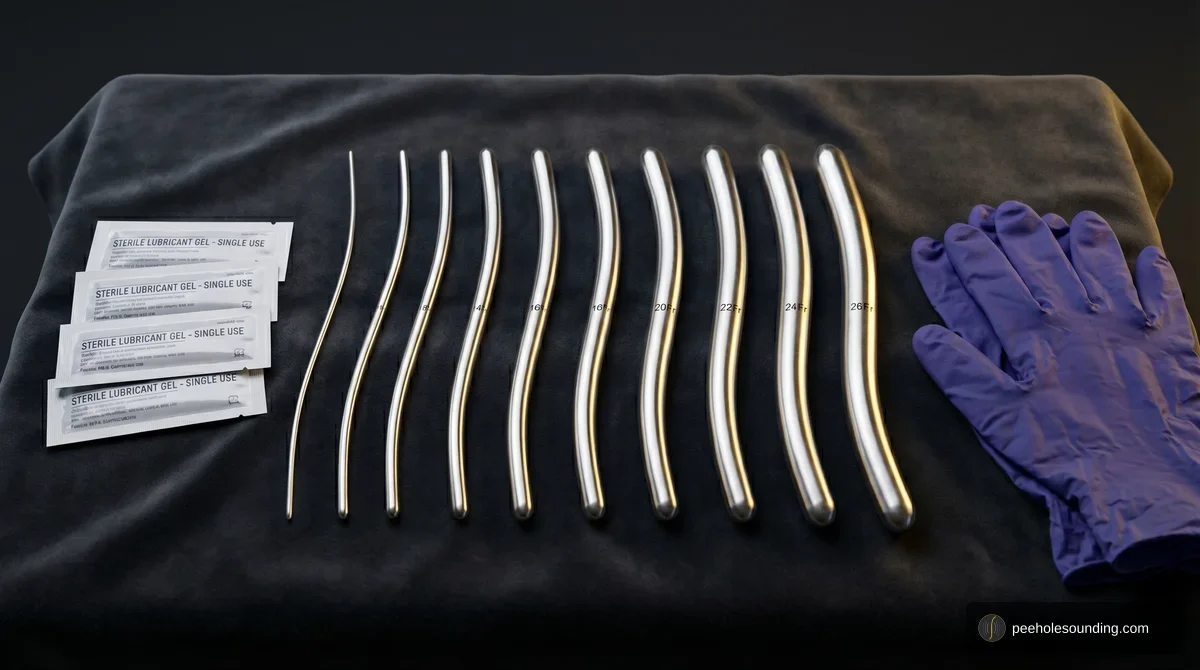
Urethral Sounding for Beginners: Sizes & First Session
Apr 5

Female Urethral Sounding: Beginner Techniques & Safety
Mar 30
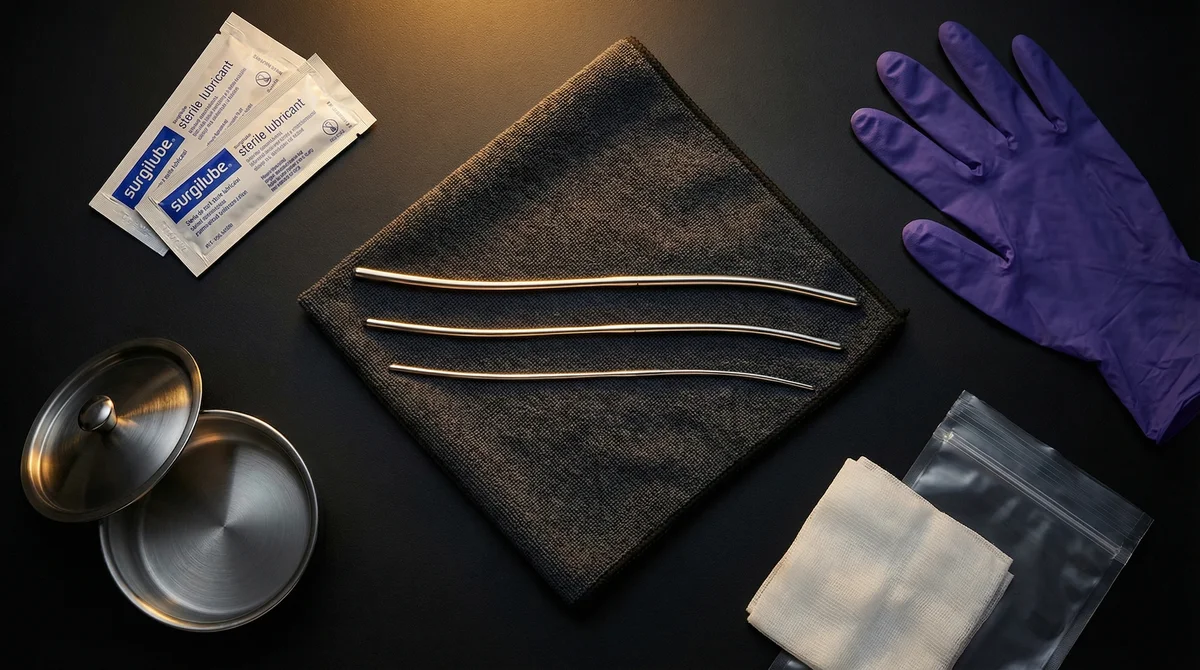
Is Sounding Safe? Sounding Safety Protocols & Risks
Mar 5
Hegar Sounds: Sizes, Full mm/Fr Chart & How to Choose
Apr 12
Best Penis Plugs in 2026: A Beginner-Friendly Buyer's Guide
Apr 16
Sounding Rods Sizes Chart: French Gauge to mm to Inches
Apr 28
Penis Sounding for Men: Sizes, Safety & Prostate Technique
May 9
How to Insert a Urethral Sound (Step-by-Step)
Mar 25
How to Clean and Sterilize Urethral Sounds
Mar 20
Van Buren Sounds: Why They Curve, Sizes & How to Use Them
Aug 7