Sounding Myths Debunked: 10 Misconceptions That Keep People From Exploring Safely
Urethral sounding myths debunked with facts from 10 years of experience. Separating fear from reality on pain, damage, safety, and who sounding is actually for.
 By Kevin Voss
I almost didn't try sounding because of one of those sounding myths that turn out to be completely wrong.
It was a forum post claiming sounding would permanently wreck my urethra. I spent the next two hours down a rabbit hole of horror stories, ER case reports, and medical sites that made it sound like sticking a thermometer in a light socket. I almost closed the tab and never thought about it again.
That was about ten years ago. I've been sounding regularly ever since, and most of what scared me that night was either wildly exaggerated or flat-out false.
Here's the problem: the internet is terrible at talking about sounding. Medical sites write about it like a disease you catch. Retail blogs minimize every risk to sell you a product. The actual truth (experience-based, honest, grounded in reality) is buried under layers of misinformation.
I'm not a doctor. This article is based on my personal experience and research. Always consult a healthcare provider for medical concerns.
This is the myth-busting guide I wish I'd found that first night. If you're curious but scared, or experienced but tired of correcting the same misinformation, this one's for you. New to sounding entirely? Start with my guide to what urethral sounding actually is first.
Why Sounding Myths Are So Persistent
Most sounding content online is written by people who have never touched a sound. Medical sites rely on ER case reports, which only document things that went wrong. You never see a study titled “10,000 sounding sessions that went completely fine.”
That creates a massive survivorship bias. The only stories that make it into medical literature are the worst-case scenarios: lost objects, infections from household items, injuries from reckless improvisation. Responsible practitioners having safe, enjoyable sessions don't generate case reports.
Product reviews have the same problem. People mostly leave reviews when something goes really well or really badly, and for a practice that already makes people nervous, the negative reviews hit harder. I spent hours reading one-star horror stories before I ever tried sounding, and they almost scared me off completely. What those reviews don't show you is the thousands of people who had a perfectly fine experience and just didn't feel the need to write about it.
Add the taboo factor (most people won't casually discuss urethral play at dinner) and you get a perfect environment for misinformation. Myths spread through Reddit threads, get copy-pasted across blogs, and eventually calcify into “common knowledge” that nobody questions.
Let's question them.
Myth 1: “Sounding Always Hurts”
Reality: Sounding should not hurt. Pain means something is wrong.
This is the single most common misconception, and it keeps more people from trying sounding than anything else. The truth? Most beginners are surprised by how little discomfort there is when you do it right.
What It Actually Feels Like
The dominant sensation is pressure and fullness, a feeling of internal depth that surface stimulation can't replicate. Many people describe warmth, a gentle stretching at the urethral opening, and for those with prostates, a focused intensity as the sound passes that area.
I remember my first time expecting it to feel like a catheter insertion at a hospital. It didn't. With proper lube and a correctly sized sound, it was strange. Unfamiliar. But not painful. Within a few sessions, “strange” had shifted to “genuinely pleasurable.” Curious about the sensation? I go deeper in my guide on whether sounding feels good.
Why This Myth Exists
People imagine sounding based on their worst catheter experience or a cringe-inducing ER story. Those situations involve medical urgency, anxiety, and often no regard for the person's comfort. Recreational sounding with proper equipment, sterile lube, and patience is a completely different experience.
This is especially true for women. If your only reference point for something entering your urethra is a catheter during a gynecological exam or a hospital visit, of course you'd assume sounding hurts. Those medical procedures are quick, clinical, and focused on getting the job done, not on your comfort. You're tense, you're in a sterile room under fluorescent lights, and nobody is asking how it feels. Recreational sounding is the opposite: you control the pace, you're relaxed, you're using proper lube, and the entire point is that it feels good. Comparing the two is like judging all food based on hospital cafeteria meals.
If it hurts, stop. Pain is your body telling you something is wrong: wrong size, insufficient lubrication, wrong angle, or a sign you should take a break. It's a safety signal, not an inevitability. I break down what each sensation actually means in does sounding hurt.
Myth 2: “It's Only for Men”
Reality: People of all genders practice and enjoy urethral sounding.
This is one of the most persistent myths in the sounding community, and it erases a lot of practitioners. Women absolutely can and do practice urethral sounding, and many find it intensely pleasurable.
Female Urethral Sounding Is Real
The female urethra is shorter than the male urethra (typically 3–4 cm in length with a multi-layered mucosa, smooth muscle, and striated sphincter complex), which means the technique is different, but the nerve endings are just as responsive (Jung et al., Clinical and Functional Anatomy of the Urethral Sphincter, PMC, 2012). Some women report that urethral stimulation creates sensations they can't get through any other type of play, particularly because of the proximity of the urethra to the clitoral complex.
I've written a full guide to female urethral sounding that covers anatomy, technique, and equipment specifically for women. It's one of the most-requested topics on this site, because almost nobody else covers it with real depth.
Why This Myth Persists
Most online guides default to male anatomy. The prostate stimulation angle dominates the conversation, which makes it easy to assume sounding is a “penis thing.” It's not. Anyone with a urethra (which is everyone) can explore this.
I've done this with partners of different genders. The fundamentals (hygiene, sterile lube, going slow, communication) are identical regardless of anatomy.
Myth 3: “Sounding Will Permanently Stretch Your Urethra”
Reality: Occasional sounding with properly sized sounds does not permanently change your urethra.
This one has a grain of truth buried under a mountain of exaggeration. Let's separate the facts from the fear.
What the Evidence Actually Says
The urethra is elastic tissue, designed to stretch and return to its resting size. Urethral dilation is actually a legitimate medical procedure used by urologists to treat strictures, and the tissue recovers afterward (Urology Care Foundation, Urethral Stricture Disease).
Occasional sounding with sounds that fit your current size does not cause permanent stretching. Your urethra relaxes to accommodate the sound during a session and returns to its normal diameter afterward. This is how the tissue is designed to work.
The Nuance Nobody Mentions
Where this myth gets its power is from progressive stretching: deliberately using larger and larger sounds over months or years. If you aggressively upsize to extreme diameters, yes, at a certain point the tissue may not fully return to its original size.
But here's the thing: that's a deliberate, advanced practice that takes significant time and intent. A beginner using a standard Hegar set is nowhere near that territory. Using a sound that fits comfortably is not going to “wreck” your urethra.
Myth 4: “You'll End Up in the ER”
Reality: ER visits from sounding are rare and almost always involve improvised household objects, not proper sounds.
This myth gets fueled every time a sensational news story surfaces about someone who went to the emergency room with a foreign object stuck in their urethra. What those stories almost never mention: the object was a pen, a wire, a battery, or some other item never designed for urethral insertion.
Take one of the more recent case reports. In 2020, a 29-year-old woman ended up in the ER after a Vesper necklace vibrator (about 12mm in diameter and 10cm long) accidentally entered her urethra during sex with her partner. Neither of them noticed it happening. The device migrated into her bladder and had to be removed via cystoscopy (Marchand et al., Case Reports in Obstetrics and Gynecology, 2020). The object wasn't designed for urethral insertion, had no stopper or flared base, and was small enough to slip in unnoticed. That's not a sounding accident. It's an accidental insertion of an object that was never meant to go there.
In ten years of sounding, I've never had a single ER visit. Not once. And I don't know any experienced practitioner who uses proper equipment and has ended up in one either.
What Actually Sends People to the ER
Read the medical case reports (I have, more than I'd like to admit) and a clear pattern emerges. The vast majority of sounding-related ER visits involve:
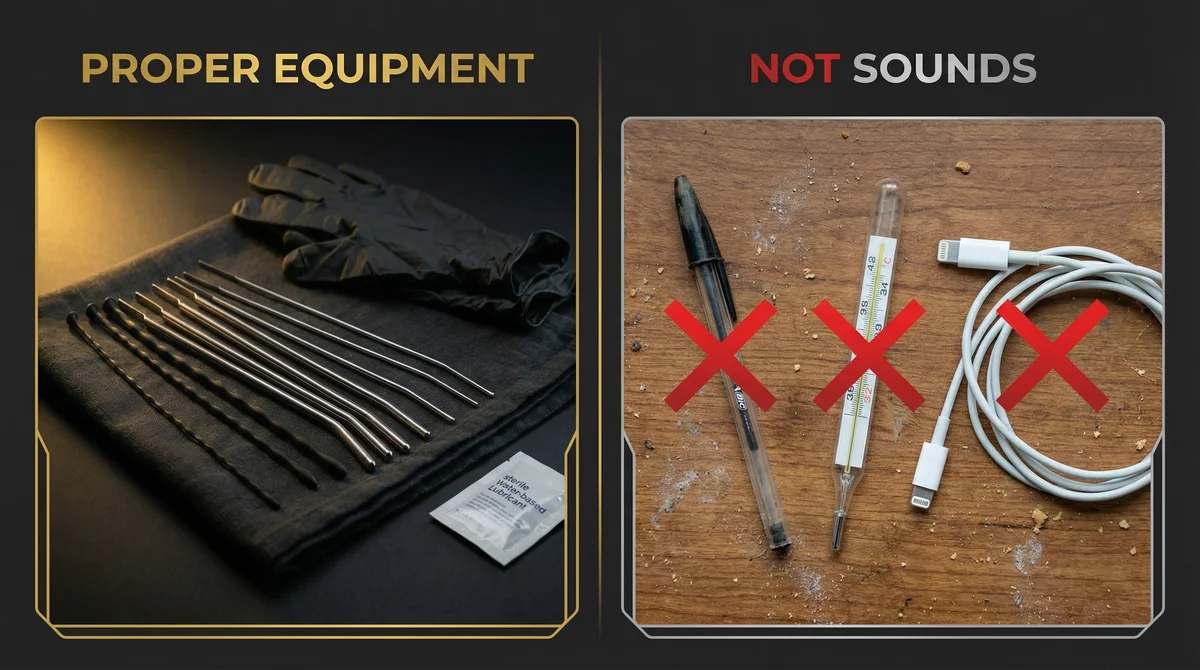
- Household objects without a flared base or stopper (pens, thermometers, wires, USB cables)
- Objects that broke or fragmented inside the urethra
- Insertion without any lubricant, causing tears
- Forced insertion past resistance
Notice what's missing from that list? Proper urethral sounds used with sterile lube and basic technique. A clinical review of urethral foreign body cases confirms the same pattern: presenting complications (mucosal tears, false passages, strictures) are associated with improvised objects and repeated forced insertion, not medical-grade instrumentation (Bedi et al., Current Urology Reports, 2016).
How Proper Equipment Prevents Emergencies
Medical-grade urethral sounds are designed with safety in mind. They have smooth, polished surfaces. They're sized in standard increments. Many have flared or wider ends to prevent them from slipping in too far. They're made from non-porous materials that can be fully sterilized.
The ER horror stories are about improvisation and accidents with the wrong objects, not sounding. Using the right equipment with basic precautions makes emergency complications extremely unlikely. What “the right equipment” means in practice, down to material grades and what to skip, is in my sounding kit guide. The shapes themselves are covered in types of urethral sounds.
Myth 5: “Sounding Causes Incontinence”
Reality: There is no evidence that sounding with proper equipment causes bladder control problems.
This one scares people more than almost any other myth, and it's understandable why. Nobody wants to trade sexual pleasure for adult diapers. But the fear isn't supported by evidence.
The urethral sphincters (the muscles that control urine flow) sit well above where most sounds reach during typical sessions. Inserting a sound doesn't weaken or damage these muscles. Medical urethral dilation, which involves stretching the urethra more than recreational sounding does, is not associated with incontinence in clinical practice.
Could it theoretically happen? Yes, but only if you actually damage the sphincter itself. That's deep sounding territory, well into advanced levels where the sound reaches the bladder neck area. And even then, it would take genuine injury, not normal use, but something going seriously wrong at depth. If you're using standard-length sounds at beginner or intermediate levels, the sphincter isn't even in play.
Ten years in. Regular sounding sessions. Zero bladder control issues. I hear the same from every experienced practitioner I know. If sounding caused incontinence, the community would be shouting about it. They're not.
Myth 6: “Any Lubricant Will Do”
Reality: The wrong lube can directly cause the infections and injuries people blame on sounding itself.
This isn't a myth that says sounding is dangerous. It's a myth that makes sounding dangerous by promoting carelessness about lubricant choice.
Why Sterile Lube Matters
Your urethra is a mucous membrane. It's not skin. It absorbs substances differently, it's more vulnerable to bacterial introduction, and it has a direct pathway to your bladder and kidneys.
Non-sterile lubricant (including most personal lubes from the drugstore) can contain bacteria, additives, sugars, or glycerin that have no business inside a urethra. Flavored lubes, warming lubes, silicone-based lubes, and oil-based lubes are all wrong for urethral play.
And if you're using silicone sounds, there's an extra trap: never use silicone-based lube with silicone toys. Silicone against silicone causes the material to degrade. The surface breaks down, becomes tacky and porous, and a porous sound inside your urethra is a fast track to infection. Stick to sterile water-based lube with any sound material, but with silicone sounds it's not just a preference. It's a hard rule.
What to Actually Use
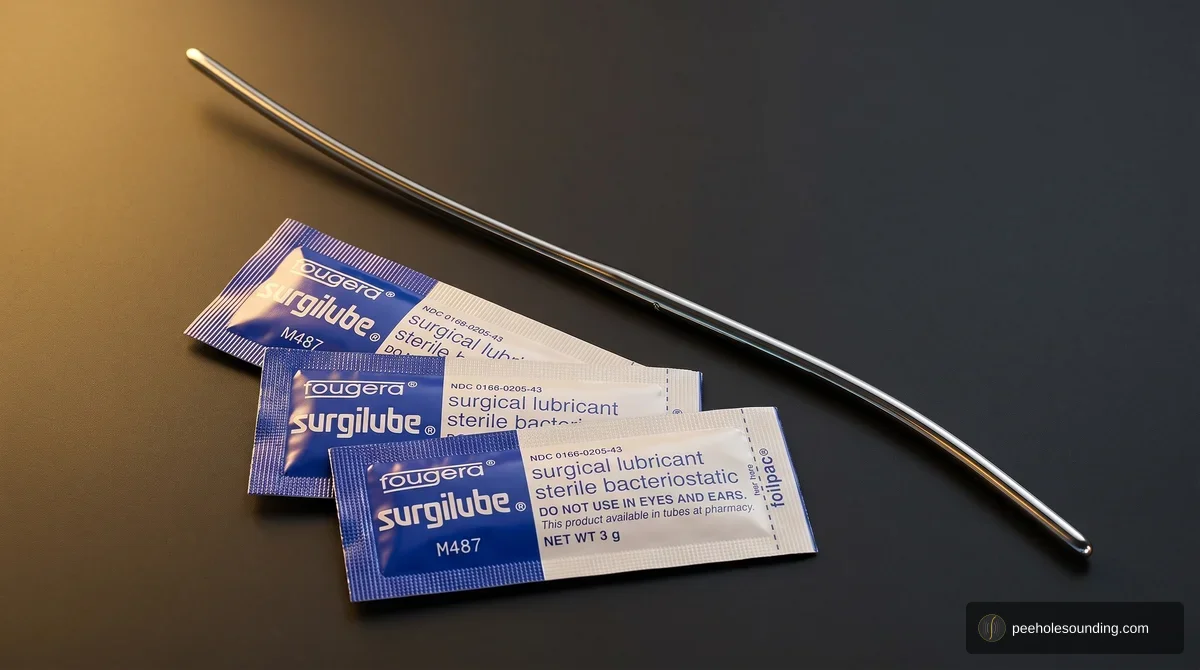
Sterile, water-based surgical lubricant. That's it. Sterile single-use packets designed for catheter insertion are the standard. They're inexpensive, available online, and the single easiest way to prevent the most common sounding complication (UTIs).
If you take one thing from this article: get the right lube. It matters more than what brand of sounds you buy. My lube guide names the products worth buying and the ingredients that disqualify one.
Myth 7: “You Need Medical Training to Sound Safely”
Reality: You need education, patience, and respect for the practice, not a medical degree.
Some medical sites claim sounding should “only be performed by healthcare professionals.” That framing treats recreational sounding as identical to diagnostic urethral catheterization in a hospital setting. They're not the same thing.
What You Actually Need to Know
Safe sounding requires a handful of skills, all of which are learnable:
- Sterilization protocol: how to properly sterilize your sounds before every session
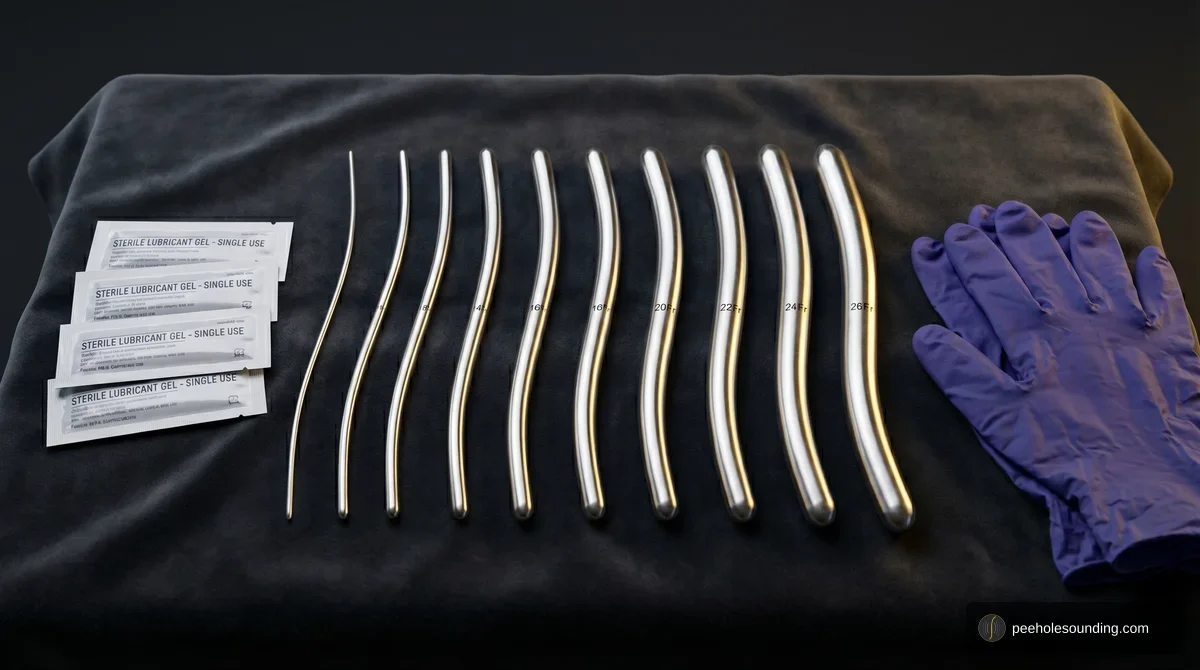
- Sizing knowledge: how French gauge sizing works and why starting small matters
- Lubrication: sterile, water-based, generous
- Technique: never force, let gravity assist, read your body's signals
- Aftercare: urinate after every session, watch for signs of infection in the following days
I learned all of this from the internet and a lot of patience. No medical degree required. I made mistakes along the way, which is exactly why I built this site, so you can learn from mine instead of making your own.
The Grain of Truth
You absolutely DO need to educate yourself before trying this. Sounding is not something to attempt drunk, impulsively, or with whatever's lying around the house. The myth gets it wrong on credentials, but right on seriousness. This practice deserves respect and preparation. Check out safety protocols and risk mitigation for a solid starting point.
Myth 8: “Sounding Causes Cancer”
Reality: There is zero medical evidence linking urethral sounding to cancer.
This is one of the stranger myths floating around, and it has no basis in medical literature. No study, case report, or clinical guideline has ever established a connection between urethral sounding and cancer development.
The confusion likely stems from a general misunderstanding about chronic tissue irritation. Yes, repeated untreated injuries and chronic inflammation can, in some contexts, increase cancer risk in certain tissues. But gentle, lubricated stimulation of the urethra with proper equipment is not “chronic tissue irritation,” any more than regular sexual intercourse is.
Bottom line: if this myth is holding you back, let it go. It's not real.
Myth 9: “Sounding Is Always a Solo Activity”
Reality: Partner sounding is practiced, intimate, and can be deeply connecting.
Sounding gets stereotyped as a solitary, secretive practice. While many people do enjoy it solo (and there's nothing wrong with that), partner play is absolutely a thing, and it can be one of the most intimate forms of sexual play two people can share.
Partner Sounding Is a Thing
Having someone you trust slowly insert a sound while you guide them through the sensations requires a level of communication, vulnerability, and connection that most sexual activities don't demand. Many couples who try it describe it as surprisingly intimate.
I'll be honest: partner sounding is the deepest and most enjoyable connection activity I've ever experienced. There's something about letting someone into that level of physical vulnerability, guiding them through something so intimate, that creates a bond I haven't found in any other form of play.
I've done this with partners of different genders, and the core dynamic is always the same: the person receiving controls the pace. Always. The person inserting follows their cues, communicates constantly, and never pushes past what feels comfortable.
Safety Considerations for Partner Play
Partner sounding adds one extra layer of complexity: the person inserting can't feel what the person receiving feels. That makes verbal communication non-negotiable. Establish a system before you start. A simple “go,” “pause,” and “stop” works fine.
All the same hygiene and sterility rules apply. Both people should wash their hands. The sounds must be sterile. The lube must be sterile. No shortcuts because there are two people involved.
Myth 10: “If It Doesn't Hurt, Everything Is Fine”
Reality: Absence of pain doesn't mean absence of risk. Some complications are silent.
This is the opposite of Myth 1, and in some ways it's more dangerous. Just because something doesn't hurt doesn't mean it's going perfectly.
Silent Risks You Should Know About
Micro-tears in the urethral lining can occur without noticeable pain, especially if you're using a sound that's slightly too large or if lubrication runs low during a longer session. These micro-tears are entry points for bacteria, which is why sterilization and lube matter even when everything “feels fine.”
Never use numbing agents (lidocaine gels, benzocaine sprays, or similar). They mask your body's pain response, the exact signal that tells you when something is wrong. If you need to numb yourself to insert a sound, the sound is too large or something else needs to change.
UTI symptoms can appear hours or even days after a session. The session itself felt great, but the infection was introduced during it.
What “Fine” Actually Looks Like
After a good session, you should feel: no pain, no visible blood, and no significant burning during urination. A brief mild stinging sensation the first time you pee afterward is common and typically fades within a few hours.
Anything beyond that (persistent burning, visible blood in urine, fever, unusual discharge) means it's time to pay attention and potentially see a doctor.
The Real Risks: What You Should Actually Worry About
I've spent this entire article telling you what's not true. Now let me be honest about what is.
Sounding does carry real risks. They're manageable and largely preventable, but they exist and pretending otherwise would be irresponsible.
Urinary tract infections are the most common complication. They're caused by bacteria entering the urethra during insertion, usually from non-sterile equipment or non-sterile lube (NIDDK, Bladder Infection (UTI) in Adults). Prevention: sterilize everything, use sterile lube, urinate after every session.
Urethral tears or irritation can happen from sounds that are too large, insufficient lubrication, or forcing a sound past resistance. Prevention: start with a size that enters easily, use plenty of sterile lube, and never force anything.
Lost objects are rare with proper equipment but possible with improvised items that lack a flared base. Prevention: use actual urethral sounds designed for this purpose.
When to See a Doctor
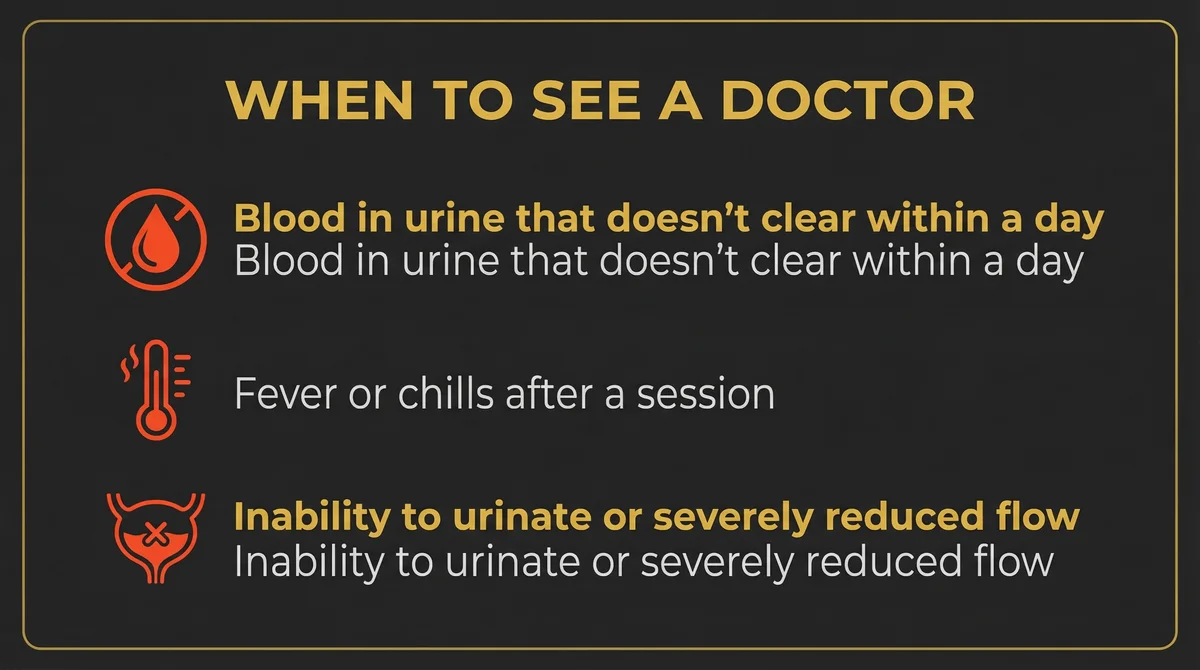
See a healthcare provider if you experience:
- Blood in urine that doesn't clear within a day
- Fever or chills after a sounding session
- Persistent burning during urination lasting more than 24 hours
- Inability to urinate or severely reduced flow
- Unusual discharge from the urethra
Don't be embarrassed. Doctors and urologists have seen it before. Your health matters more than a moment of awkwardness.
Frequently Asked Questions
Moving Past the Myths
The biggest risk in sounding isn't the practice itself. It's bad information. Myths keep curious people away from something they might genuinely enjoy, and they give practitioners a false sense of what's actually dangerous versus what's perfectly fine.
Every myth in this article has the same root cause: people talking about sounding without actually doing it. Medical sites report on worst cases without context. Forum posts repeat misinformation without verification. The result is a fog of fear that makes the whole practice seem far more dangerous than it is.
Sounding carries real risks, but they're manageable, preventable, and well-understood. With accurate information, proper equipment, and basic hygiene, this is a practice that millions of people enjoy safely.
If this article cleared up your concerns and you're ready to learn more, my guide on what urethral sounding is is a solid next step, and the beginner sounding guide walks through a first session end to end. Already past the basics? The does sounding feel good guide goes deeper into what to actually expect from the experience.
Related Guides
What Is Urethral Sounding? A Complete Guide to Safety, Pleasure & Getting Started
Feb 15
Sounding Pleasure: What It Feels Like & Why People Chase It
Feb 22

Female Urethral Sounding: Beginner Techniques & Safety
Mar 30
Is Sounding Safe? Sounding Safety Protocols & Risks
Mar 5
Urethral Sounding for Beginners: Sizes & First Session
Apr 5
Best Lube for Sounding: Sterile Picks That Actually Work
Apr 20