Penis Dilator: Buyer's Guide & How It Differs from a Sound
Honest buyer's guide to penis dilators with size chart, materials breakdown, and a clear answer on how a dilator actually differs from a urethral sound.
 By Kevin Voss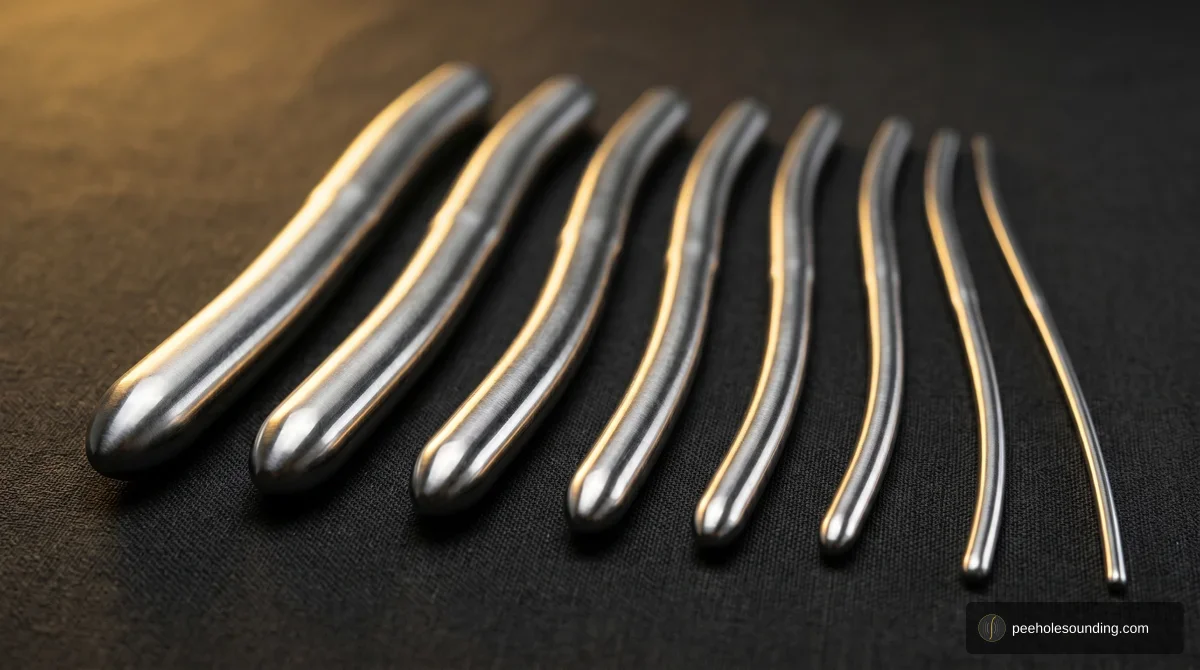
A penis dilator is a smooth, slender rod that is inserted into the urethra to widen it. Doctors prescribe them to treat strictures after hypospadias repair, circumcision, or BXO (a skin condition that scars the urethral opening). Adults also use them recreationally for urethral sounding. A dilator differs from a urethral sound mainly in intent: dilators are used to gradually stretch the urethra over a planned schedule, while sounds are typically used in a single session for sensation. The physical tools often overlap. A Hegar set is both.
| Dilator | Urethral Sound | Penis Plug | |
|---|---|---|---|
| Primary use | Widen the urethra over time | Stimulate / sensation | Wear inside the urethra |
| Typical length | 5-11 in (12-28 cm) | 5-11 in (12-28 cm) | 1-4 in (2.5-10 cm) |
| Use pattern | Scheduled (daily to weekly) | Single sessions | Worn during sex or longer |
| Who uses it | Stricture patients + sounders | Sounders | Sounders, plug wearers |
I'm not a doctor. This article is based on my personal experience and community-accepted practice. Always consult a healthcare provider for medical concerns.
If you landed here clinically. If a urologist mentioned dilation for a stricture, BXO, or post-surgical recovery, this article is not your treatment plan. Follow your urologist's schedule and their device recommendation. Patient instructions from organizations like the NHS and the Cleveland Clinic are written for your situation. Everything below is written for the recreational urethral sounding community, which uses similar tools for a very different purpose.
What a penis dilator actually is
When I started sounding about ten years ago, I couldn't tell whether “dilator” meant a different toy or just a different word for what I already had. The honest answer is: both, depending on who's talking.
A penis dilator is a slender, rounded rod (usually 5 to 11 inches long) that you insert into the urethra to stretch it. The same hardware shows up in two very different worlds. In a urologist's office, it's a medical instrument for treating a narrowing called a stricture. In the sounding community, the same rod (sometimes literally the same Hegar set) is a tool for slow, deep internal stimulation.
This is why the search results look so confusing. Half the pages talk about it as a treatment plan, half as a sex toy. Nobody bridges the two. That's the gap this guide is trying to fill. For the broader catalog of what's out there, see the complete types of urethral sounds guide.
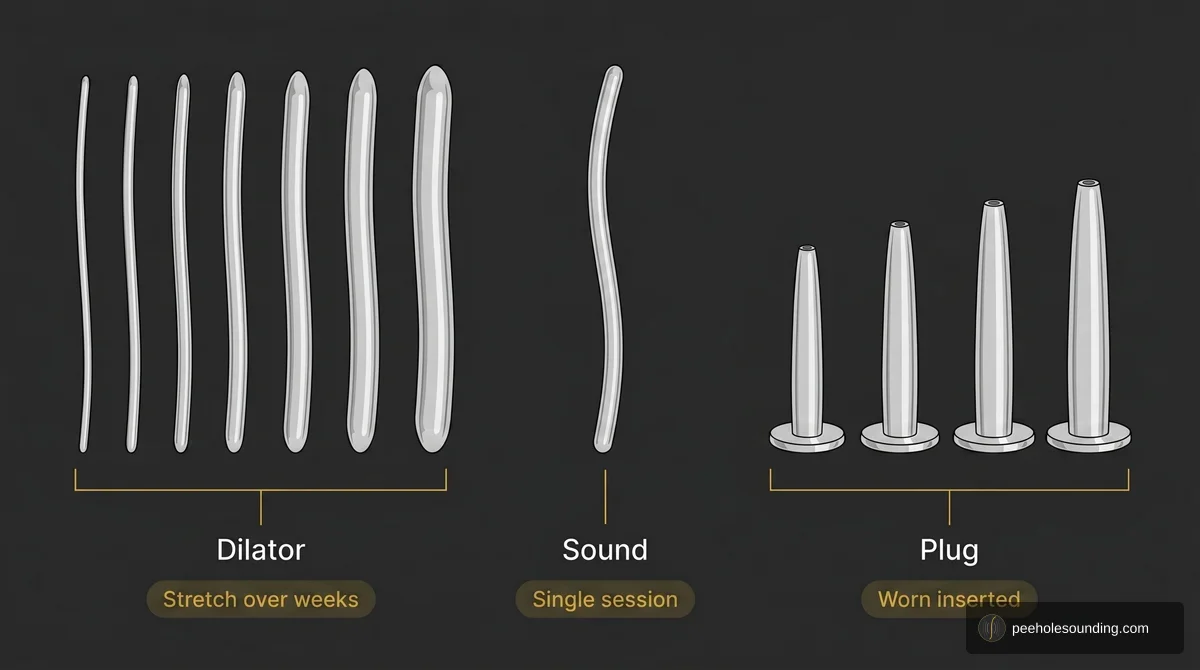
Penis dilator vs urethral sound vs penis plug
Bottom line: same family, different intent. Most of the time, the difference isn't the physical object. It's how you use it.
Side-by-side comparison
| Dimension | Dilator | Urethral Sound | Penis Plug |
|---|---|---|---|
| Primary purpose | Widen the urethra | Internal stimulation | Stay seated during play |
| Typical length | 5-11 in | 5-11 in | 1-4 in |
| Typical width | 3-10 mm (9-30 Fr) | 3-10 mm (9-30 Fr) | 4-10 mm |
| Use schedule | Daily to weekly, planned | One-off session | Worn during sex or for stretches |
| Common materials | Steel, silicone, single-use catheter | Steel, silicone, glass | Steel, silicone, glass |
| Who reaches for it | Stricture / BXO patients + sounders | Sounders | Sounders, plug wearers |
When the same tool fills both roles
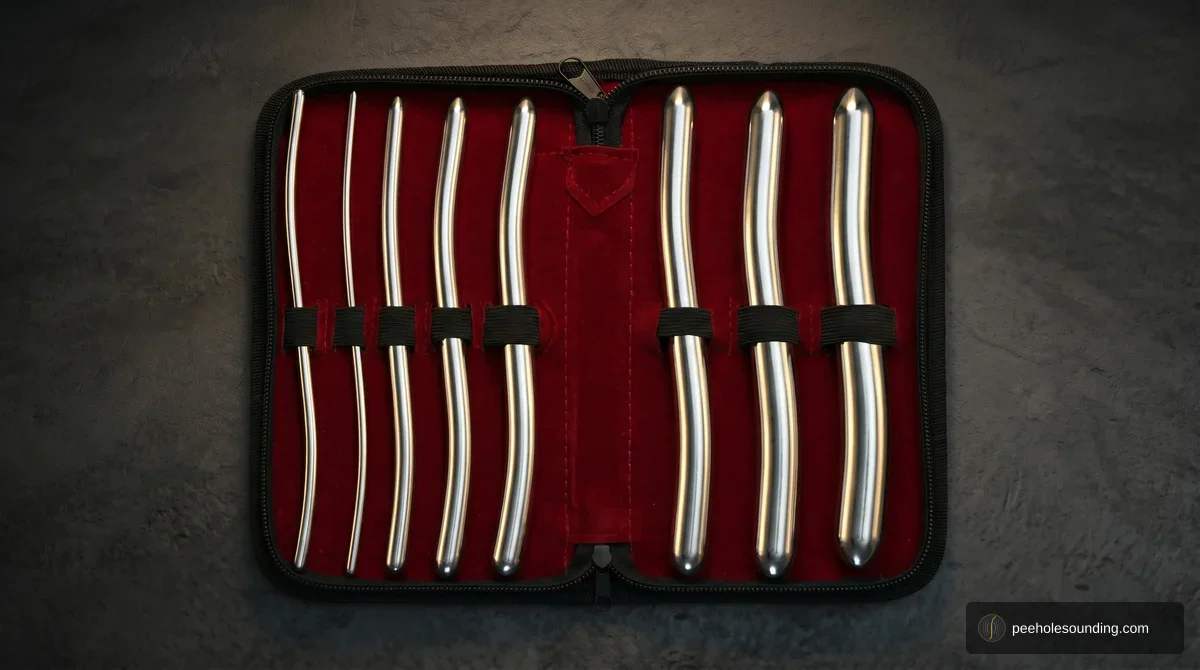
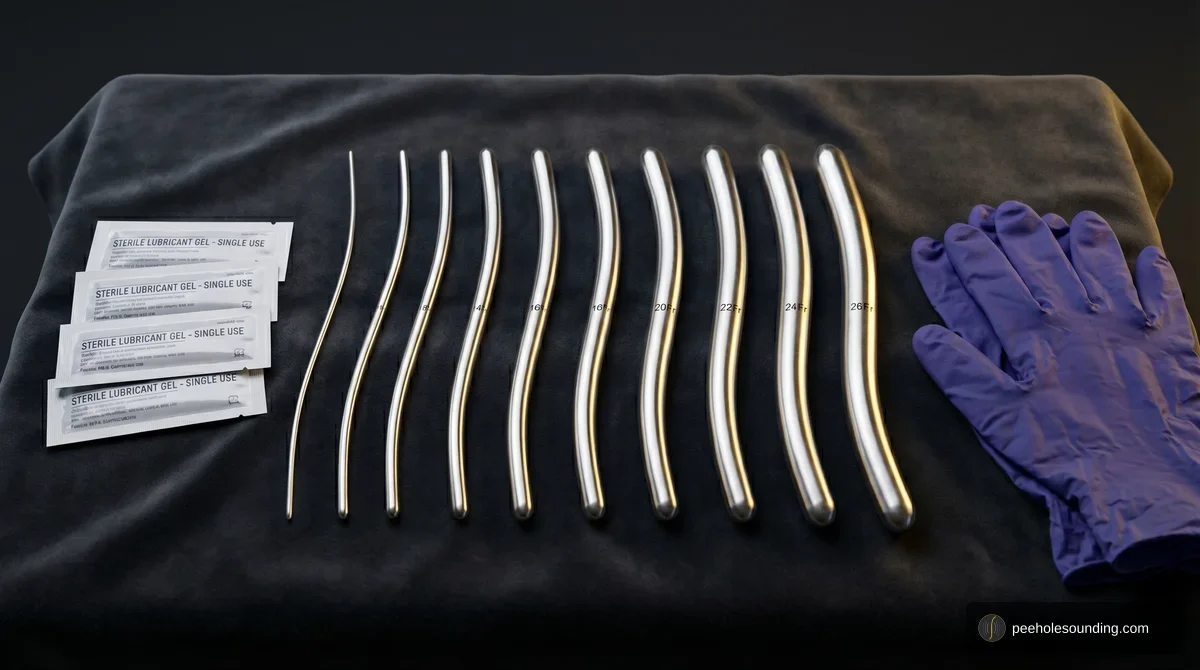
Hegar sets are the clearest example. Urologists buy graduated Hegar dilators in steel to manage strictures in clinic. Sounders buy the exact same Hegar sets (sometimes from the same medical suppliers) for pleasure practice at home. The rod doesn't care what you call it. The difference lives in your reason for using it. For the full breakdown of how Hegars work as a tool, see Hegar sounds explained.
Where the terminology actually splits
Here's the rule of thumb I use:
- Dilator: implies a schedule. You're stretching something over weeks or months.
- Sound: implies a session. You're using it once, for sensation, then putting it away.
- Plug: implies staying inserted. Shorter, often textured or with a glans ring. If you want a plug, the best penis plugs guide is the right entry point.
Why people use penis dilators
In the sounding community, there are two practical reasons people reach for a dilator:
- Urethral stimulation. The urethra is lined with nerve endings, and the deep, internal pressure of a dilator is hard to get any other way. For a lot of people that's the whole point.
- Gradual size progression. Some practitioners use dilators specifically to widen comfortably over time, so they can later handle larger sounds or plugs without forcing anything. For the dedicated stretching practice, the urethral stretching guide covers the technique.
Most people end up doing a blend of both. They start with sounding for sensation, develop an interest in stretching, and end up calling their tools dilators without changing what they own. (Medical dilation for strictures or post-surgical recovery is its own world, prescribed and supervised by a urologist. See the callout at the top of this article if that's your situation.)
Types of penis dilators
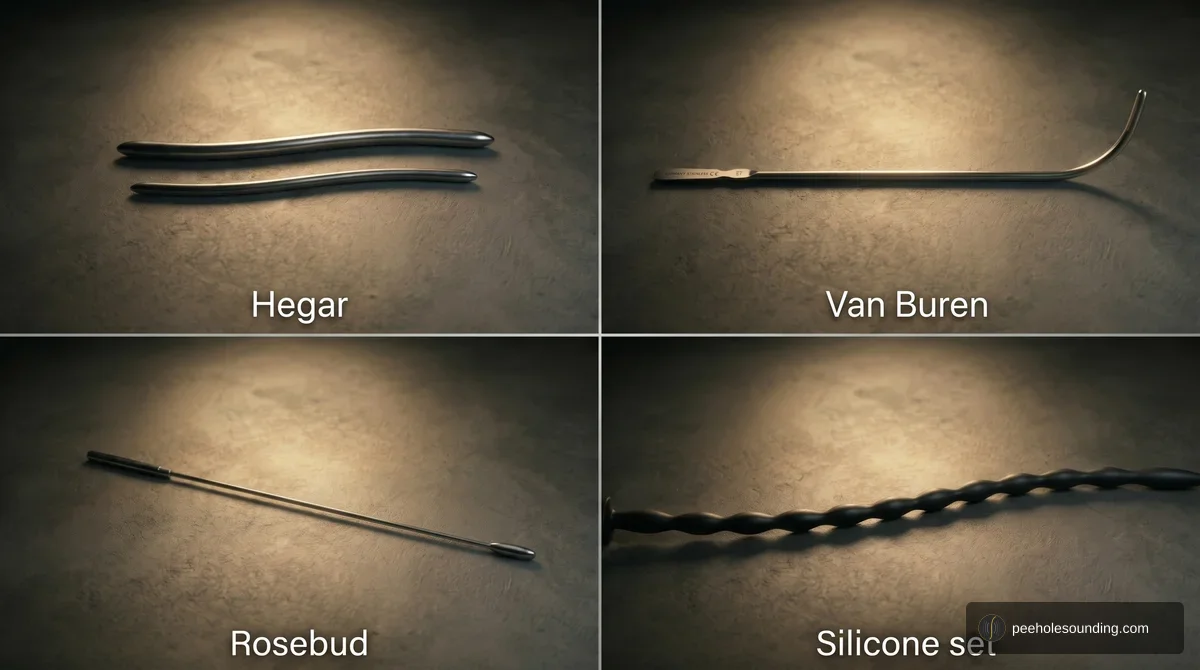
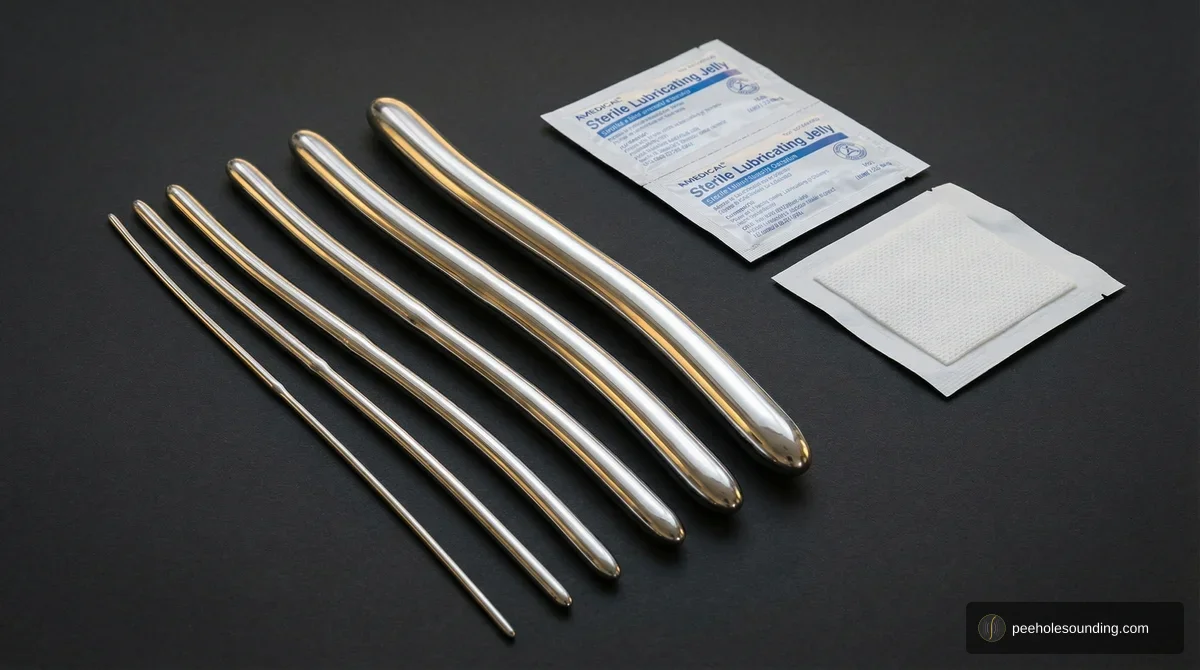
Dilators share their form factor with urethral sounds, so the families are the same: Hegar (smooth tapered rods sold in graduated sets, the most versatile shape and what I recommend as a first set), Van Buren (slight curve that follows the male urethra past the prostatic bend, better once you can handle a straight Hegar), Rosebud and textured (bulbous tips or ridges, sensation-forward rather than neutral, not a first piece), and silicone sets (soft, forgiving, cheap to replace, best for absolute beginners but sterilization options depend on the silicone grade).
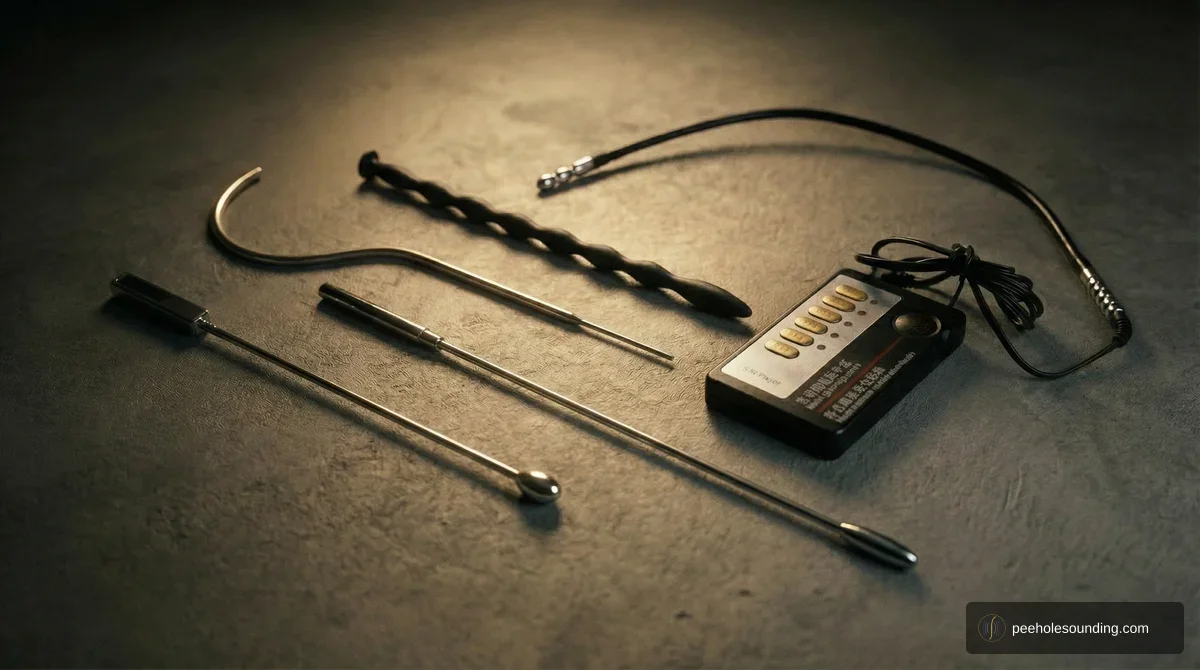
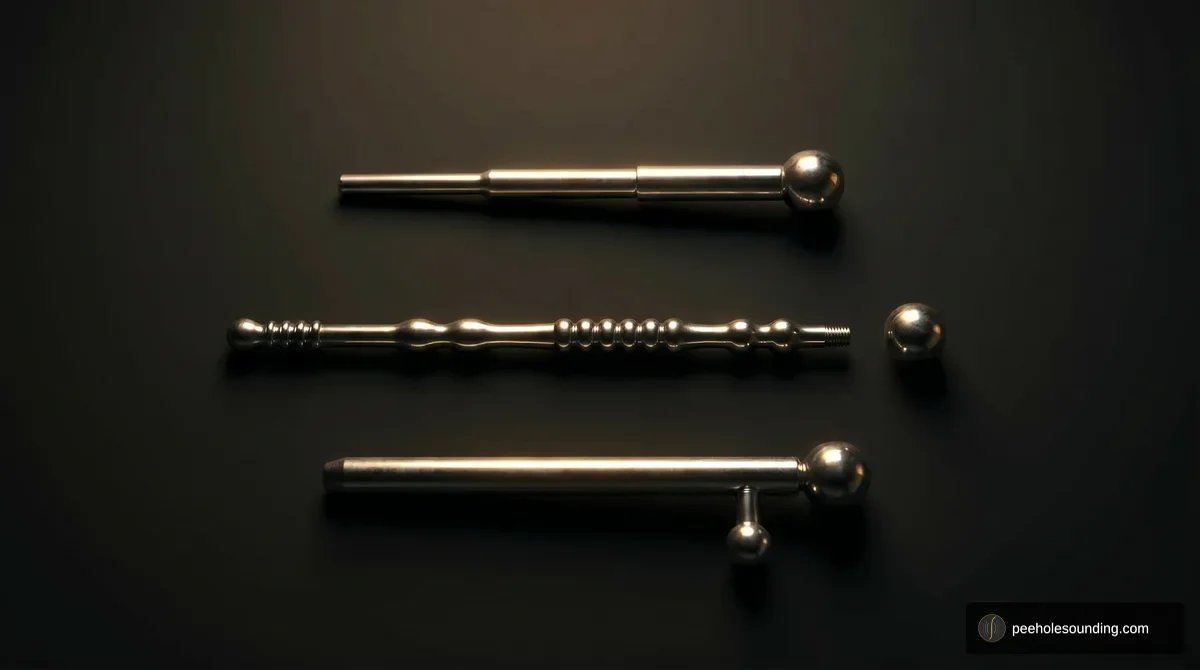
For the full breakdown including the medical designs less commonly sold as dilators (Pratt, Dittel, Guyon, Bakes) plus the silicone variants (ribbed, beaded, tapered) and feature-based options (hollow, vibrating, e-stim), see the complete types of urethral sounds guide. The same shapes, the same trade-offs, the same buying advice.
Materials: what to buy, what to avoid
The material decides three things: how you can sterilize the tool, what it feels like inside you, and how long it lasts.
Stainless steel (look for 316L)
Surgical-grade 316L stainless is what I keep coming back to. It's sterilizable by boiling, heavy enough to feel weighty in the hand, and conducts temperature noticeably (cold or warmed in water before insertion changes the sensation a lot). Properly cared for, a steel set lasts a lifetime.
Medical-grade silicone
Forgiving and body-warm. The right pick for the first six to twelve months of practice if you want something that won't feel intimidating. Only buy silicone where the listing names a sterilization method. Otherwise you can't safely clean it between sessions.
What to walk away from
- Glass. It looks gorgeous and it's smooth, but it's fragile. A drop or a hairline crack mid-session means a chipped rod near a body cavity, and especially if it somehow breaks inside the urethra you're looking at an ER trip with shards to retrieve. Steel and medical silicone do everything glass does without that failure mode.
- Listings that say “medical grade” without naming a steel grade (316L or 304).
- Mystery alloys: “stainless steel composite”, “surgical alloy”.
- Painted, coated, or chrome-plated rods: the coating can chip.
- Soft jelly, TPR, or PVC: these are porous and cannot be sterilized. Not safe inside the urethra.
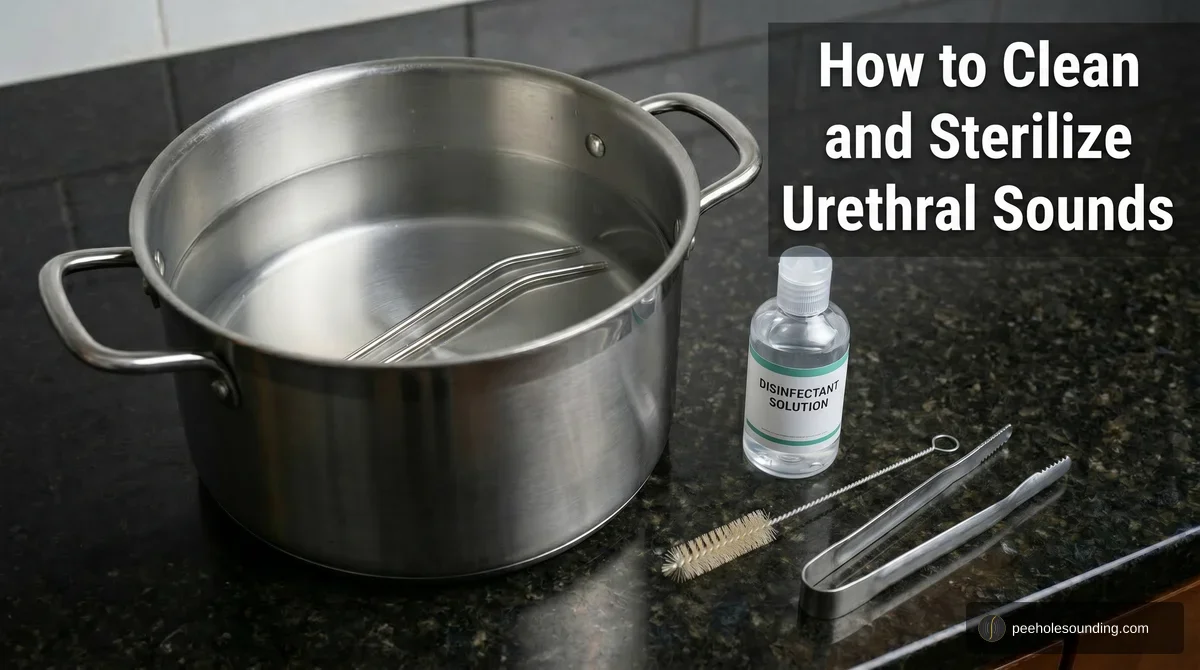
For the full sterilization workflow once you've picked your material, follow how to clean and sterilize urethral sounds.
Sizing: French gauge, millimeters, and inches
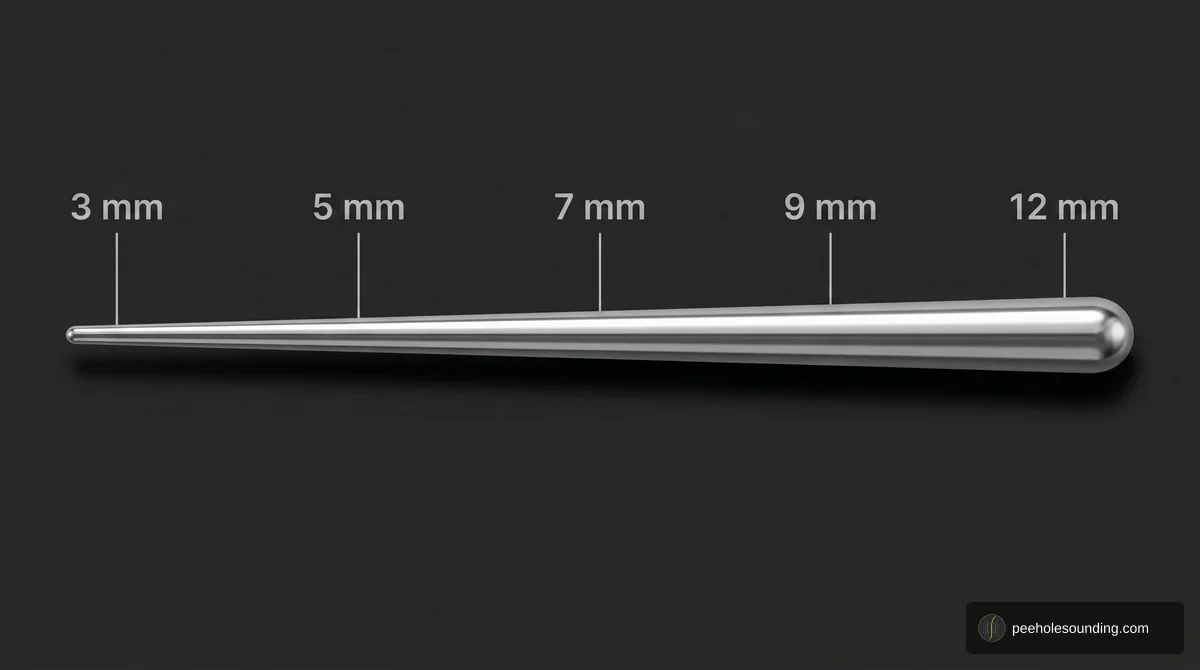
Most penis dilators sold in the US list their size in French gauge (Fr), sometimes alongside millimeters or fractional inches. The math: French gauge equals diameter in millimeters multiplied by 3. So a 9 Fr rod is about 3 mm (roughly 1/8 inch); a 15 Fr is about 5 mm (3/16 inch).
Quick reference chart
| French (Fr) | Millimeters | Inches | Notes |
|---|---|---|---|
| 9 Fr | 3.0 mm | 1/8 in | Beginner starting size |
| 12 Fr | 4.0 mm | 5/32 in | Common beginner range |
| 15 Fr | 5.0 mm | 3/16 in | Top of beginner range |
| 18 Fr | 6.0 mm | ~1/4 in | Intermediate |
| 22 Fr | 7.3 mm | ~9/32 in | Intermediate to advanced |
| 26 Fr | 8.7 mm | ~11/32 in | Advanced |
| 30 Fr | 10.0 mm | ~3/8 in | Advanced |
Where to start as a beginner
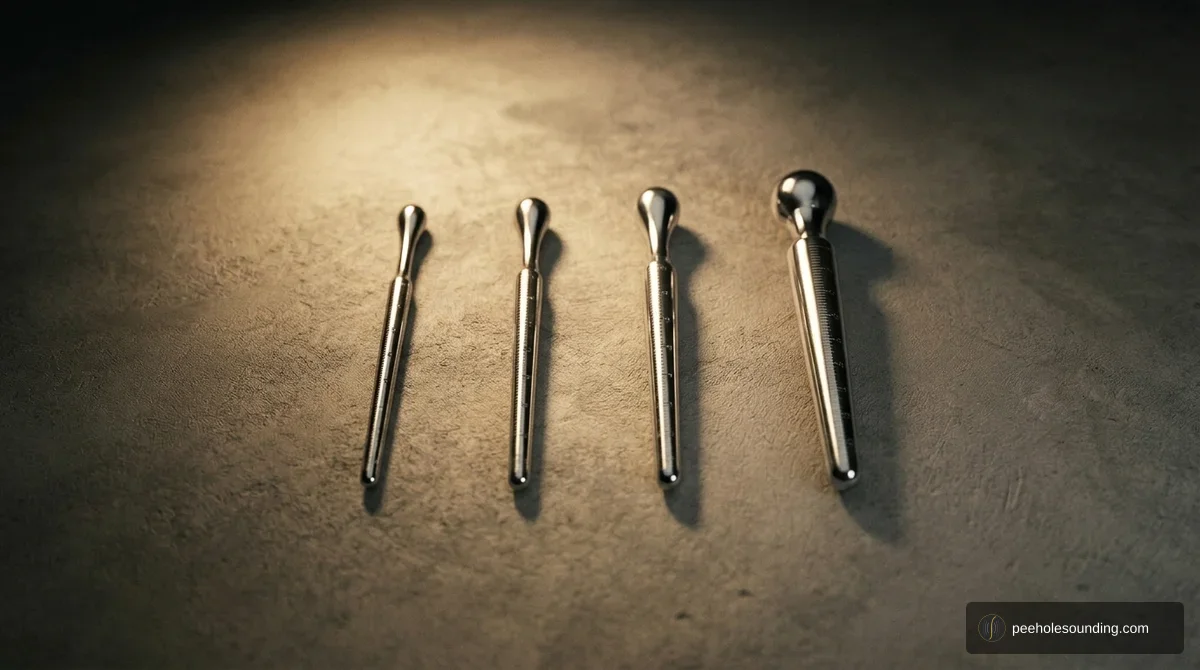
The recommended beginner range is 9 to 15 Fr (3 to 5 mm, or roughly 1/8 to 3/16 inch). That covers nearly everyone, regardless of anatomy. The full reasoning (including different starting sizes for women and for thicker-shafted Van Burens) is in the what size sounding rod guide. The complete Fr / mm / inch conversion lives in the sounding rods sizes chart.
How to step up safely
Wait until your current size feels easy: no resistance, no discomfort, smooth in and smooth out. Then move up one size per session. Never skip sizes. If pain or pinpoint bleeding shows up at the new size, drop back a step and stay there a few more sessions. For the full progression method, including how long to hold each size before moving up and how to read your body's signals, see the urethral stretching guide.
How to choose your first penis dilator
Recommended pick: a Hegar set in 316L stainless steel
This is what the community settles on for a reason. A graduated Hegar set covers your starting size through years of progression in one purchase, sterilizes by boiling, is easy to inspect for damage, and has no mystery about what it's made of. Buy the kit, not a single rod. The size you'll actually be comfortable starting at is something you find by trying, and a kit means you don't reorder. Look for an 8 to 12 rod set in surgical-grade 316L steel with the sizes etched on each rod.
Alternative: a graduated silicone set
If the idea of cold steel inside you feels like too much for a first session, a medical-grade silicone set is the softer entry point. Soft, forgiving, body-warm, cheap enough that mistakes don't hurt your wallet. The trade-offs are real though: not every silicone tolerates boiling (check the label for the sterilization method), and silicone wears faster than steel, so you'll replace the set every few years. Most people who start on silicone eventually graduate to a Hegar set anyway.
Listing and seller red flags
Material warnings are above. These are about the listing itself, the things that tell you the seller doesn't know or doesn't care what they're shipping you.
- No size markings on the rod itself. You need to know what you're holding mid-session, not guess from the box.
- No flared base or grip. A flared end is what stops a dilator from going somewhere you can't retrieve it from.
- Reviews mentioning burrs, sharp edges, or flaking finish. Trust them.
- The same listing reposted under five brand names. Classic Amazon white-label flag: the seller doesn't know what factory made the rod.
How to use a penis dilator safely
This is a quick safety walkthrough. The deep procedure guide is how to insert a urethral sound. The technique is identical.
Before you start
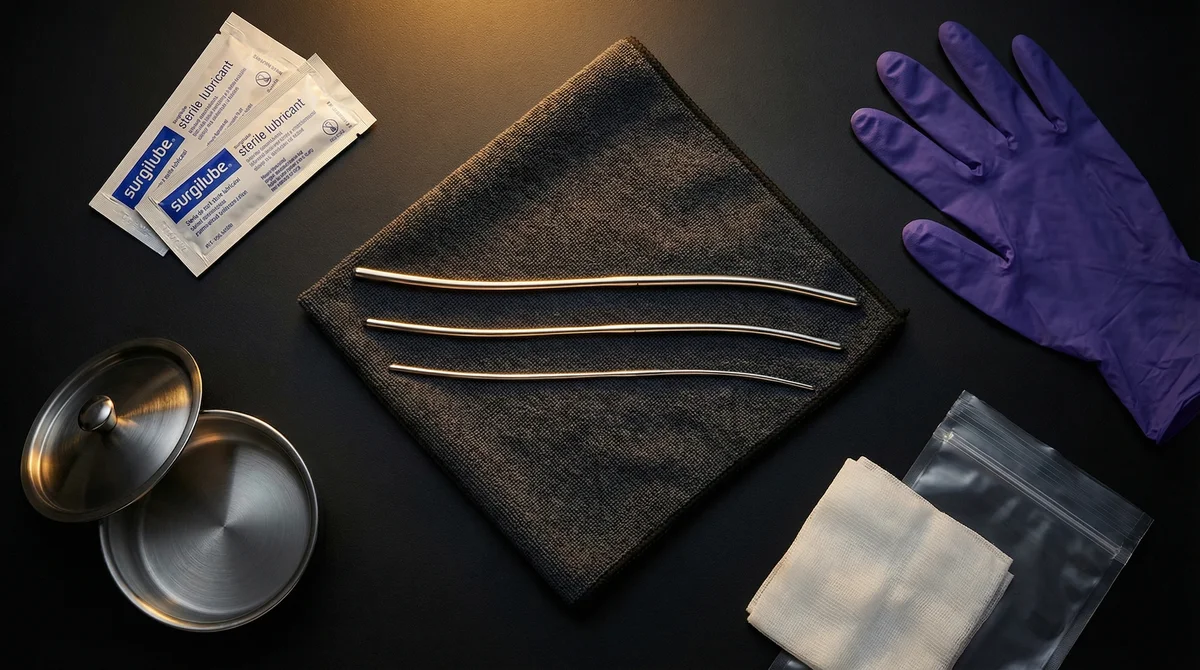
Sterilize the dilator properly (don't skip this). Empty your bladder. Wash your hands and the head of your penis. Set up a clean surface, your sterile water-based lube, and the dilator at body temperature. The full sterilization protocol is at how to clean and sterilize urethral sounds.
Lube: only sterile water-based
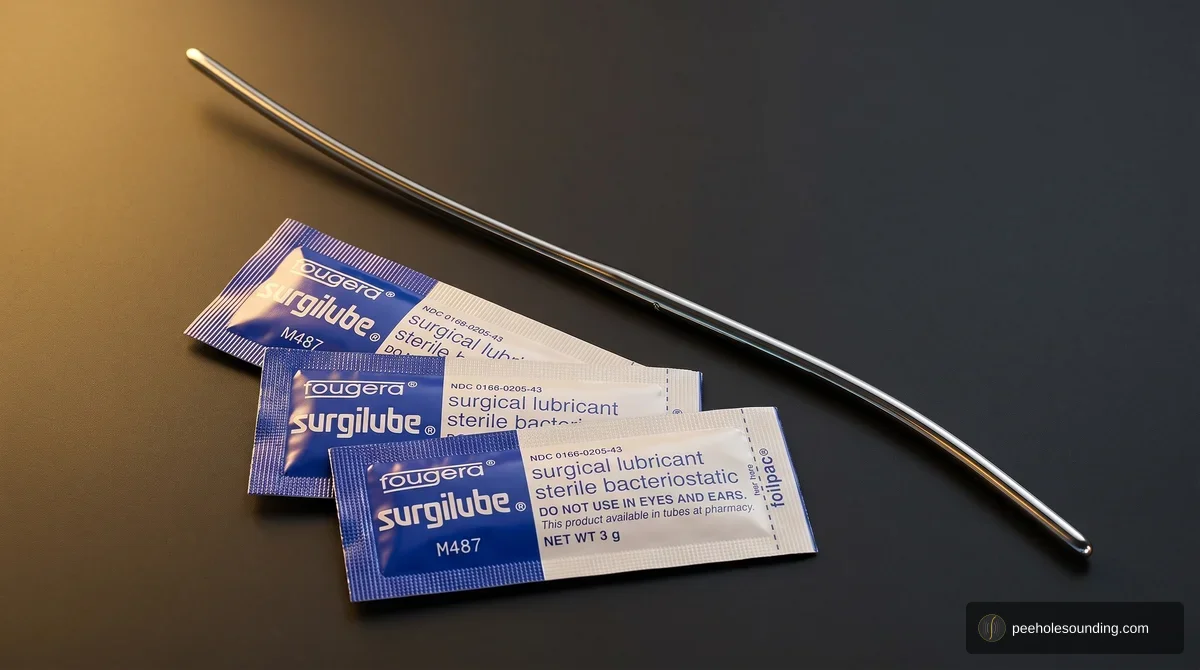
Sterile, water-based lube made for urethral play. That's the only correct answer. Never oil-based (UTI risk). Never silicone lube on a silicone dilator (it degrades the material). The community's recommended brands are covered in the best lube for sounding.
Insertion
Hold the penis upright with a slight stretch. Apply lube to the rod and the meatus. Let gravity and the lube do almost all the work. The rod should slide in, not be pushed. The first session, go about an inch in (1 to 2 cm). Build depth over weeks, not minutes.
Pain vs pleasure: what's normal
A mild stretch sensation at the meatus is expected. A brief sting the first few sessions is normal. A few pink spots on the rod or in your urine afterwards can happen too, especially when you're still learning your starting size. Persistent bleeding, sharp pain, or genuine resistance are stop signals. Stop, add more lube, drop a size, or end the session.
When to stop and when to call a doctor
Stop immediately if anything feels wrong. Call a doctor if you have bleeding lasting more than 24 hours, difficulty urinating, fever, or any sign of a urinary tract infection. The full safety pillar is at safety protocols and risk mitigation.
Penis plugs: when to choose one instead
If a long rod feels like more than you want inside you for a session, the adjacent product class is the penis plug: shorter (typically 1 to 4 inches), often textured or fitted with a glans ring, designed to be inserted once and worn rather than actively moved in and out. Plugs are the better entry point if what you're after is the sensation of being plugged during sex or for stretches of daily wear, not the deeper stretching and stimulation a dilator gives. Same materials, same safety rules, different buying decision. The full breakdown of which plug to start with is in the best penis plugs guide.
Frequently Asked Questions
A penis dilator respects you when you respect it. Start small, sterilize religiously, use the right lube, and walk through the beginner urethral sounding guide before your first session. The safety protocols guide is the page worth bookmarking once you're a few sessions in.
Related Guides
Sounding Toy Guide: Types, Materials & How to Choose
Mar 10
Best Penis Plugs in 2026: A Beginner-Friendly Buyer's Guide
Apr 16
Hegar Sounds: Sizes, Full mm/Fr Chart & How to Choose
Apr 12
What Size Sounding Rod Should Beginners Start With?
Mar 15
Sounding Rods Sizes Chart: French Gauge to mm to Inches
Apr 28
How to Insert a Urethral Sound (Step-by-Step)
Mar 25
Best Lube for Sounding: Sterile Picks That Actually Work
Apr 20
How to Clean and Sterilize Urethral Sounds
Mar 20
Is Sounding Safe? Sounding Safety Protocols & Risks
Mar 5
Urethral Sounding for Beginners: Sizes & First Session
Apr 5